
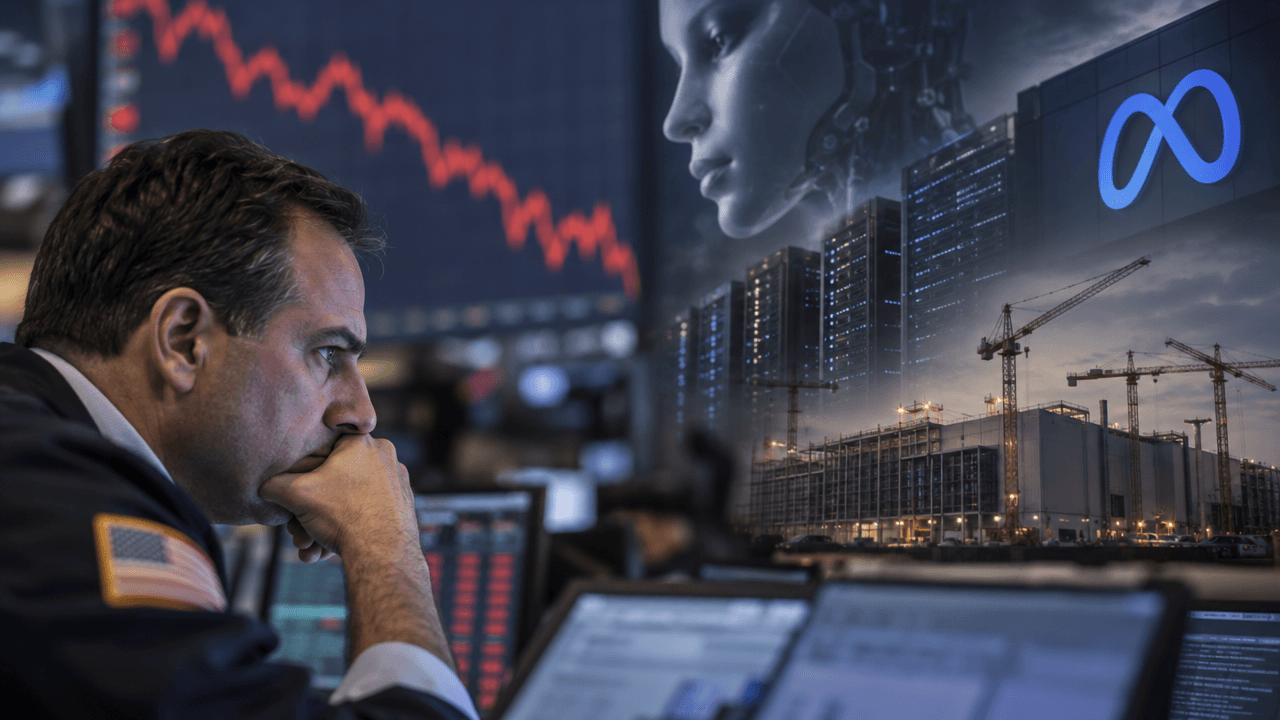
U.S. technology futures weakened Friday as investors continued to retreat from artificial-intelligence stocks, questioning whether the enormous cost of building AI infrastructure can produce returns quickly enough to justify current valuations. The pressure follows a steep decline in the previous session, when the Nasdaq Composite fell 2.6% and the S&P 500 dropped 1.2%. [2]
The latest move is more than a routine pullback in high-growth shares. It reflects a broader reassessment of the AI investment cycle, including corporate spending plans, cash flow, financing needs, and the time required for new products to become profitable. For traders, the central issue is shifting from whether AI demand exists to whether companies can convert that demand into sustainable earnings and free cash flow.
Why Technology Futures Are Under Pressure
Technology futures often react sharply when investors reduce exposure to expensive growth stocks. Companies in the technology and communications sectors typically have high expectations embedded in their share prices. When earnings, guidance, or spending plans create doubts about future profitability, the market can reprice those stocks quickly.
That process was visible Thursday. The Nasdaq’s 2.6% decline was its worst single-day performance in more than four months, while the S&P 500 lost 1.2%. The technology-heavy Nasdaq also fell more sharply than the broader market because major AI-linked companies represent a substantial share of its index weighting. [5]
Investors also moved toward the relative safety of government bonds, pushing Treasury yields lower as stocks sold off. That pattern suggests the decline was driven not only by profit-taking but also by a more defensive shift in market positioning. [2]
META’S CASH FLOW WARNING
Meta Platforms became a focal point for the selloff after reporting negative quarterly free cash flow of approximately $2.12 billion. The result was a major change from the company’s recent cash-generating profile and marked its first cash outflow in more than a decade, according to market reports. [1][4]
Meta’s revenue remained strong, but investors focused on the cost of its AI ambitions. The company raised the lower end of its full-year capital expenditure forecast, now expecting spending of $135 billion to $145 billion. [1] That spending is intended to support data centers, computing capacity, advanced models, and other infrastructure required for AI development.
The market reaction illustrates an important distinction: strong revenue growth does not automatically mean strong cash generation. Capital expenditures are paid before the benefits of new infrastructure are fully realized. If spending rises faster than operating cash flow, free cash flow can deteriorate even when sales and earnings appear healthy.
Meta shares fell nearly 7% during Thursday’s session, helping pull other large technology companies lower. [1] The message to investors was clear: AI leadership may require years of heavy investment, and shareholders are becoming less willing to ignore the near-term financial burden.
The Bigger Ai Investment Question
The current selloff does not prove that AI demand is weakening. Companies continue to invest heavily because they expect AI services, automation, advertising tools, cloud computing, and digital assistants to generate significant long-term value. The concern is whether the expected returns will arrive soon enough, and at a scale large enough, to offset the cost of development.
This creates a difficult balance for technology executives. Spending too little could leave a company behind competitors. Spending too much could reduce cash flow, increase borrowing needs, dilute shareholders, or pressure profit margins. Meta’s reported plans to raise capital through non-voting shares further highlight the possibility that some AI expansion will require additional financing. [4]
For markets, this raises the standard for future earnings reports. Investors may pay closer attention to capital expenditure guidance, data-center commitments, infrastructure utilization, operating margins, and free cash flow rather than focusing only on revenue growth or user numbers.
What Traders Should Watch Next
Traders should begin with price action in the Nasdaq futures and major AI-related stocks. A weak opening followed by continued selling would suggest that investors remain concerned about sector-wide exposure. Conversely, a recovery after the opening bell could indicate that the initial decline was primarily a positioning adjustment rather than the start of a deeper trend.
Market breadth is another useful signal. If only a handful of mega-cap technology shares decline, the weakness may remain concentrated. If semiconductor companies, software stocks, cloud providers, and smaller growth shares fall together, it would point to broader risk reduction.
Earnings guidance may matter more than headline results. A company can beat revenue expectations and still see its stock decline if management raises spending faster than expected. Traders should compare planned investment with expected operating cash flow and ask whether management has explained when those investments are likely to generate measurable returns.
Risk management is especially important during this type of market rotation. Rather than assuming that a sharp decline automatically creates a buying opportunity, traders can define entry levels, maximum losses, and invalidation points before taking a position. Simulated trading offers a practical way to test these decisions without exposing real capital while volatility remains elevated.
A Shift From Ai Enthusiasm To Ai Accountability
The technology sector’s long-term AI story remains intact, but the market is demanding stronger evidence that the story can become a profitable business model. The selloff following Meta’s results shows that investors are no longer rewarding aggressive spending without carefully examining its financial consequences.
U.S. technology futures may stabilize if companies demonstrate improving cash generation, disciplined investment, and clear evidence of demand. Until then, elevated volatility is likely to continue as markets separate sustainable AI businesses from companies priced mainly on future expectations.
For traders, the key lesson is to look beyond the excitement surrounding new technology. Revenue growth, capital intensity, cash flow, valuation, and guidance must be analyzed together. In the current environment, the most important AI question is not simply how fast a company can build, but how effectively it can turn that investment into durable shareholder value.