
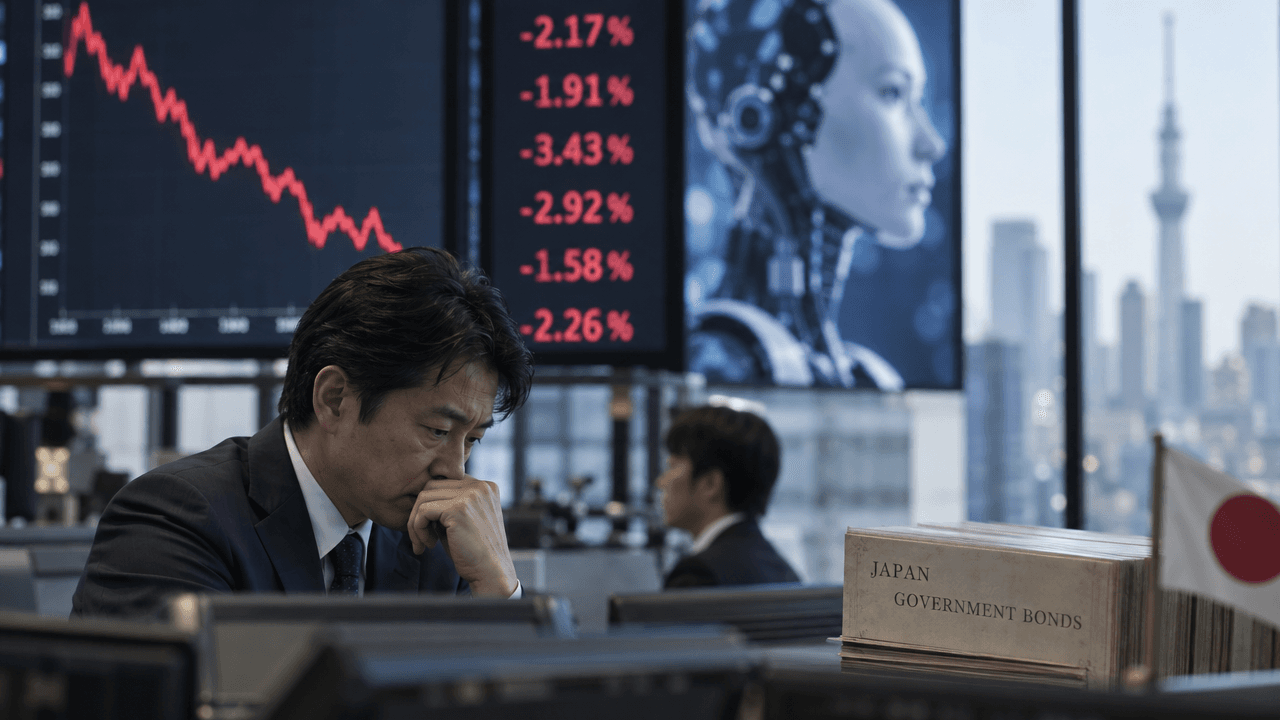
Asian markets opened the week with no clear direction, as investors weighed renewed technology-sector weakness against signs of resilience in other parts of the region. Japan’s Nikkei 225 slipped approximately 0.3% to around 63,082, with declines among major technology companies offsetting earlier gains. The broader mood remained cautious as traders questioned whether elevated artificial-intelligence valuations can be supported by future earnings and cash flow. [1]
For traders, the session illustrated an important market reality: headline index moves can appear modest even when leadership beneath the surface is changing rapidly. A small decline in Japan’s benchmark may conceal sharp losses in individual semiconductor, memory, or software companies. At the same time, non-technology sectors and selected regional markets may continue to attract capital.
Markets Search For Direction
Asian equities traded unevenly, reflecting a tug-of-war between risk appetite and defensive positioning. Some markets found support as investors looked beyond technology, while Japan remained under pressure because of its heavy exposure to exporters, chip-related companies, and other growth stocks.
The weakness followed a difficult period for technology shares globally. Investors have become increasingly focused on the scale of AI infrastructure spending and whether companies will generate adequate returns from enormous investments in data centers, chips, and computing capacity. This does not necessarily mean that the long-term AI theme has ended. Instead, it suggests that markets are becoming more selective about which companies can convert technological demand into sustainable profits.
That distinction matters. A company may operate in a fast-growing industry but still have an unattractive stock if its valuation already assumes years of exceptional growth. When expectations are high, even respectable earnings can trigger a sell-off if guidance disappoints or costs rise faster than revenue.
Why Japanese Technology Stocks Are Vulnerable
Japan’s Nikkei is particularly sensitive to technology and cyclical growth sentiment. Semiconductor equipment manufacturers, chip suppliers, electronics companies, and other exporters can benefit significantly when global demand is strong. However, those same shares can experience outsized declines when investors reduce exposure to risk.
One notable example was Kioxia Holdings, whose shares fell sharply after cautious guidance raised concerns that AI-related memory demand could lose momentum. [3] A single company’s outlook does not determine the future of the entire sector, but it can influence broader sentiment when investors are already questioning whether AI spending has moved too far, too quickly.
Currency movements also remain relevant. A weaker yen can support Japanese exporters by increasing the value of overseas earnings when translated back into yen. Yet currency support may not be enough to offset a broad technology sell-off. When global investors reduce exposure to growth stocks, earnings sensitivity and valuation concerns can dominate foreign-exchange benefits.
Bonds And Valuations Send A Caution Signal
The movement of capital toward bonds is another important part of the market story. When investors become less comfortable with expensive equities, government bonds can offer a defensive alternative, particularly if traders expect economic growth to slow or volatility to increase. Recent reporting described investors moving toward safety as concerns grew that massive AI spending might not deliver sufficient returns. [12]
Bond yields also affect stock valuations mathematically. The value of a company depends partly on the present value of its expected future cash flows. When yields rise, those future profits are discounted more heavily, which can reduce the theoretical value of high-growth companies. Technology shares with distant or uncertain earnings are often more sensitive than established companies with stable dividends and predictable cash generation.
This relationship helps explain why technology stocks can weaken even without a dramatic change in current business conditions. Markets are constantly repricing future expectations, interest rates, financing costs, and risk premiums.
What Traders Should Watch Next
The immediate focus will be on corporate earnings, guidance from chip manufacturers, and evidence of whether AI capital expenditure is producing measurable revenue growth. Investors should pay close attention not only to sales figures but also to margins, free cash flow, debt levels, and management commentary about future spending.
European equity futures were mixed, suggesting that caution was not limited to Asia. [9] Traders will also monitor bond yields, currency markets, energy prices, and upcoming economic data for clues about the broader risk environment.
For SimFi traders, this is an opportunity to practice disciplined decision-making without allowing a single headline to dictate every trade. Useful steps include:
1. Check market breadth rather than relying only on the index. If a benchmark is down slightly but technology stocks are falling sharply, sector risk may be much greater than the headline suggests.
2. Identify correlations. Japanese technology shares may respond to movements in U.S. technology futures, semiconductor indexes, bond yields, and the yen.
3. Define risk before entering. Use a predetermined stop level or maximum loss rather than increasing exposure after a decline simply because a stock appears cheaper.
4. Separate theme from valuation. Strong long-term AI demand does not guarantee that every AI-related stock will rise in the short term.
5. Watch confirmation. A single weak session is less informative than a sustained pattern of lower highs, deteriorating breadth, and negative earnings revisions.
The Bigger Market Lesson
Monday’s mixed Asian session was less about a collapse in the global technology story and more about a reassessment of its price and funding requirements. Japan’s 0.3% decline showed how sensitive major indexes remain to technology leadership, while bond demand highlighted the market’s desire for protection amid uncertainty.
The key lesson is that markets can remain structurally optimistic about innovation while becoming tactically cautious about valuations. Traders who recognize that difference can avoid binary thinking. Instead of asking whether AI is “over” or “unstoppable,” they can evaluate individual companies, earnings quality, balance sheets, and risk-reward conditions.
For simulated traders and real-world investors alike, the most durable edge is preparation. Track the sectors driving the index, understand how bond yields influence valuations, and build a plan that can withstand volatility. In an environment where technology enthusiasm is being tested, patience and selectivity may matter more than chasing the next market leader.