
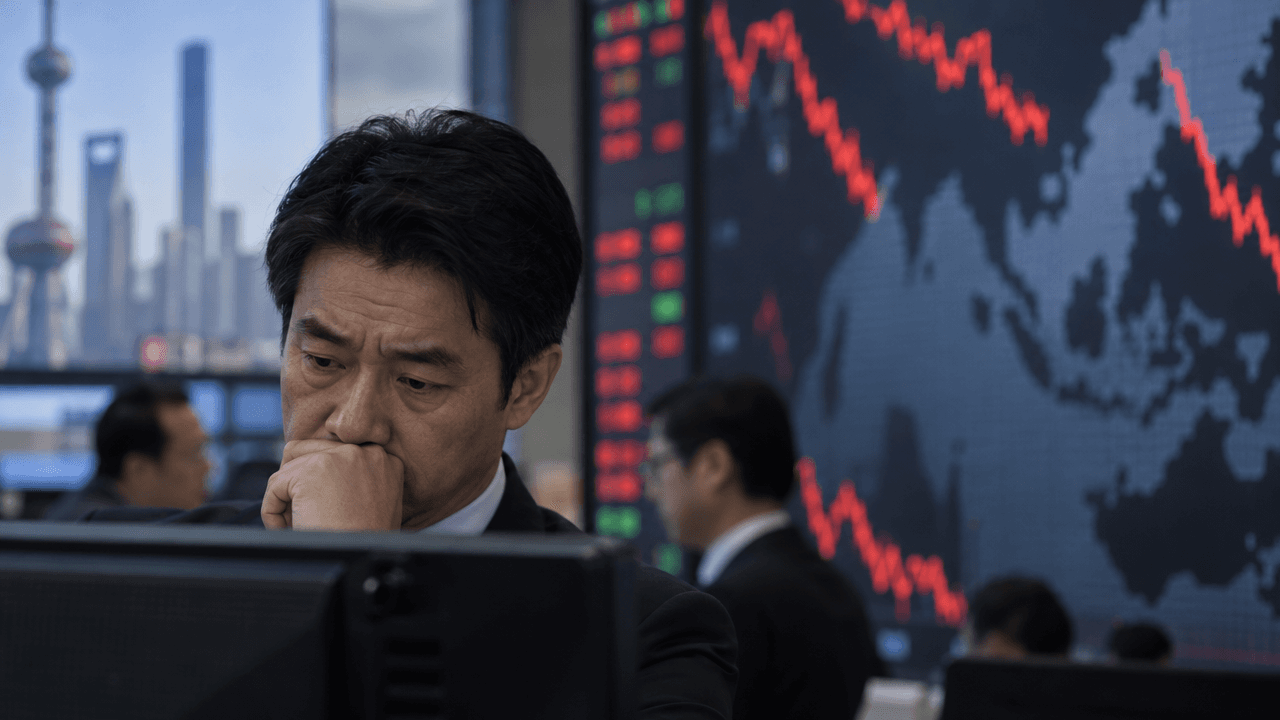
Asian markets weakened as losses in artificial intelligence and semiconductor shares spread across the region, exposing how quickly investor confidence can change when high valuations meet questions about profitability. South Korea suffered some of the sharpest declines, with the KOSDAQ falling 3.62%, while the KOSPI dropped about 3.5%. Japan’s Nikkei also moved lower, and Hong Kong and mainland Chinese markets remained volatile as investors reassessed the outlook for technology spending and riskier assets. [4][8]
The decline was not simply a reaction to one disappointing company result. Instead, it reflected a broader debate about whether the enormous investment flowing into data centers, chips, and computing infrastructure will generate returns quickly enough to justify current share prices. For traders, the episode is a reminder that strong long-term themes can still experience abrupt and widespread corrections.
Why Ai Valuations Are Under Pressure
The AI investment cycle has created powerful gains for chipmakers, equipment suppliers, cloud companies, and software businesses. However, those gains have also pushed valuations to elevated levels. Investors are now asking whether projected earnings can keep pace with the expectations already reflected in stock prices.
Building AI infrastructure requires substantial capital. Companies must spend on advanced processors, data centers, electricity, networking equipment, and specialized talent before revenue from new services is fully established. If spending continues to rise while monetization develops more slowly, investors may begin to question profit margins, cash flow, and debt levels.
That concern has become particularly important as financing costs remain significant. Heavy borrowing can magnify pressure on companies that are investing aggressively but have not yet demonstrated consistent returns. Reports noting concerns about AI financing, infrastructure costs, and the profitability of massive investments helped drive renewed weakness in Asian technology shares. [4][14]
The Regional Market Impact
South Korea was at the center of the selloff. The KOSDAQ, which contains many growth-oriented technology, biotechnology, battery, and smaller-cap companies, closed at 764.10, down 3.62%. Selling extended beyond major chipmakers, affecting secondary batteries, materials, parts, and equipment companies. [8]
The broader KOSPI also declined sharply, reflecting pressure on companies closely linked to the global semiconductor cycle. When investors reduce exposure to AI-related assets, markets with large technology and memory-chip sectors can experience outsized moves. South Korea is especially sensitive because its equity market includes major exporters whose earnings depend on global electronics demand.
Japan’s Nikkei also fell as investors reduced exposure to technology and AI-linked shares. The Japanese market has attracted international capital because of corporate reforms, a weaker yen at various points, and strong interest in automation and semiconductor equipment. Those positive factors can support the market over time, but they do not prevent short-term profit-taking when global technology sentiment turns defensive.
In Hong Kong, technology shares were among the weakest performers, while mainland Chinese stocks were mixed and volatile. The Hang Seng dropped 2.9% in one session and Hong Kong technology shares fell 4.6%, while the CSI 300 moved close to technical bear-market territory after losing roughly 20% from its June high. [2][3]
Why China Added To The Uncertainty
China’s market weakness reflected more than the global AI selloff. Investors were also disappointed by fading expectations for substantial economic stimulus, uneven corporate earnings, and concerns about a prolonged slowdown in consumption. These domestic issues made Chinese shares less able to absorb an external shock from global technology markets.
Mainland investors have shown interest in AI-related companies, but the sector remains vulnerable when enthusiasm runs ahead of earnings. A decline in global technology stocks can therefore affect Chinese AI shares through both sentiment and valuation. At the same time, uncertainty over policy support reduces the likelihood that a broad market rebound will develop quickly.
The result is a more complicated trading environment. A stock may have a compelling long-term technology story but still decline if investors believe economic growth, policy support, or near-term earnings are insufficient.
What Traders Should Watch Next
The first indicator to monitor is whether selling remains concentrated in high-valuation technology shares or spreads into banks, consumer companies, industrials, and other sectors. A narrow correction may represent a normal repricing of growth expectations. A broader decline would suggest that investors are reducing risk across portfolios.
Earnings guidance will also be important. Investors should look for evidence that AI-related revenue is becoming large enough to offset infrastructure spending. Management commentary on capital expenditure, order growth, chip demand, and free cash flow may matter more than headline quarterly earnings.
Traders should also track market breadth, currency movements, and trading volume. Sharp declines accompanied by heavy turnover can indicate institutional repositioning, while a rebound led by only a few large companies may not signal a durable recovery. Volatility in the Korean won, Japanese yen, and Chinese yuan can provide additional clues about regional risk appetite.
For SimFi traders, this environment offers a useful exercise in risk management. Rather than chasing a rebound after a major selloff, traders can define entry levels, establish invalidation points, and size positions according to volatility. Diversification across markets and sectors can reduce dependence on one crowded theme. A watchlist should include both AI leaders and less-correlated areas such as financials, utilities, healthcare, and consumer companies.
The Bigger Lesson
The AI theme remains influential, but influence is not the same as immunity from market cycles. Investors can support a technology’s long-term potential while simultaneously believing that certain shares have become too expensive in the short term.
Asian markets weakened because that distinction became impossible to ignore. The selloff shows how concerns about spending, funding, valuations, and regional growth can reinforce one another. For traders, the most important lesson is to separate a company’s long-term opportunity from the price being paid today.
Periods of market stress reward preparation rather than prediction. By monitoring earnings quality, capital spending, valuation, breadth, and liquidity, traders can respond to changing conditions with greater discipline. The next phase of the AI cycle will depend not only on innovation, but on whether investment ultimately produces sustainable and measurable returns.