
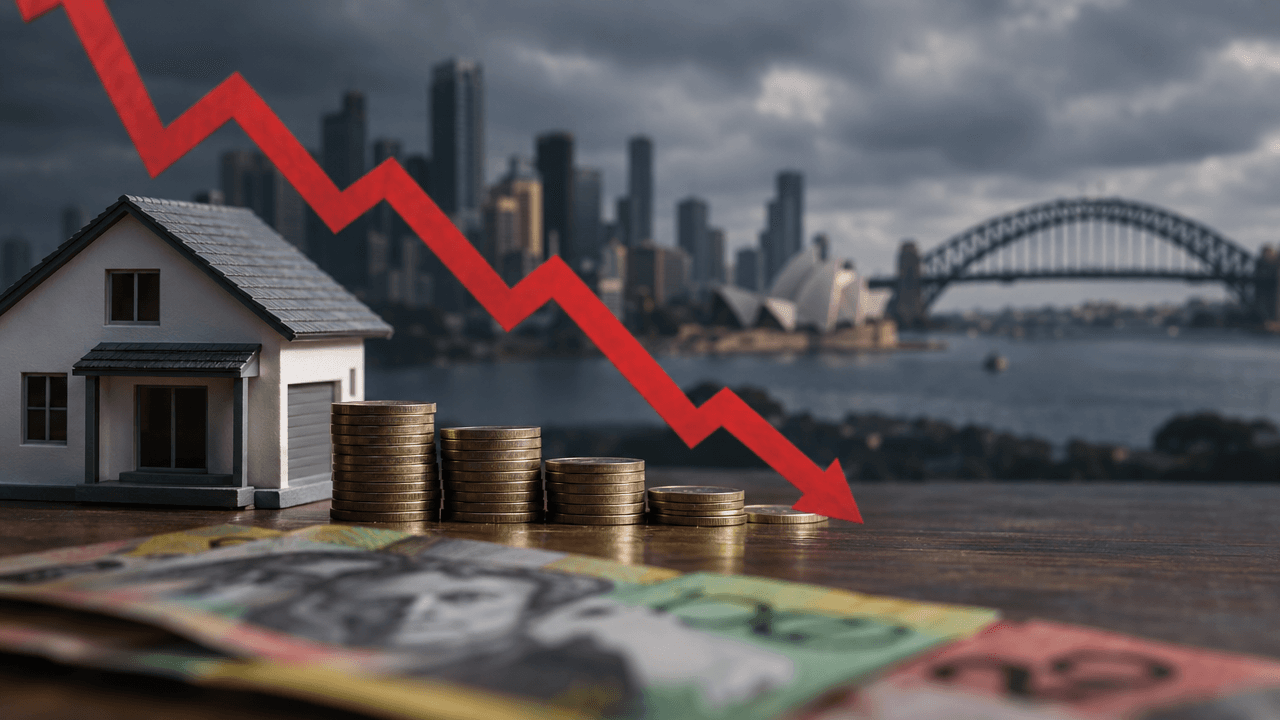
Australia’s housing-finance market has suffered its sharpest quarterly contraction on record, revealing a sudden loss of momentum beneath the property sector. The value of new dwelling-loan commitments excluding refinancing fell 15.5% in the September quarter to A$81.16 billion, while the number of new loans declined 15.0% to 111,878. The value decline was the largest since the Australian Bureau of Statistics began recording the series in 2002. [3][9]
The result was significantly weaker than expected. Westpac had forecast a 10% quarterly decline, while the median market expectation was closer to 8.5%. The release also marked a third consecutive quarterly fall in investor lending, suggesting that the weakness is not simply a one-month fluctuation but part of a broader deterioration in housing credit demand. [1]
Investors Drive The Collapse
Property investors were at the centre of the downturn. The number of new investor loan commitments fell 30.6% during the quarter to 35,301, while the value of investor lending dropped 32.3% to A$24.705 billion. Both declines were the largest on record for their respective series. [3]
The scale of the retreat is important because investor activity can have an outsized influence on housing turnover, construction demand and financial-market sentiment. Investors often respond quickly to changes in borrowing costs, rental yields, taxation and expectations for property prices. When this group steps back, fewer transactions take place and the pipeline for future housing activity can weaken.
Owner-occupier lending also declined, but by a considerably smaller 5.3% in both volume and value. That contrast indicates that the September-quarter slump was not caused solely by households abandoning the housing market. Instead, it points to a sharp repricing of the risk-reward calculation for investors, combined with more cautious borrowing by owner-occupiers. [1]
Why The Housing Data Matters
Housing finance is a forward-looking indicator. A loan commitment today can support a property purchase, renovation or construction project in the months ahead. A large decline therefore matters beyond the banking sector: it can affect real-estate turnover, building activity, household spending and employment across construction-related industries.
The latest figures also suggest that the housing recovery may be losing breadth. A market supported mainly by existing homeowners or a limited group of buyers is more vulnerable than one receiving steady demand from investors, first-home buyers and owner-occupiers simultaneously.
Higher borrowing costs are one likely factor behind the pullback. Rising repayments reduce the amount investors can borrow and make negatively geared properties less attractive. Tax-policy changes aimed at restraining demand may also have encouraged investors to delay purchases or reassess whether new properties offer sufficient returns. Market reporting has linked the investor retreat to both higher rates and tax changes, although the ABS data itself records the outcome rather than assigning a single cause. [4][8]
Pressure On Australian Growth
The housing sector is closely connected to domestic economic growth. Fewer new loans can translate into fewer property transactions, lower spending on furnishings and renovations, and weaker demand for construction services. Financial institutions may also become more conservative if deteriorating lending data is accompanied by rising arrears or softer property prices.
The effect should not be overstated. Housing finance is only one part of the Australian economy, and a decline in new lending does not mean every existing mortgage holder is under immediate stress. Refinancing activity, government spending, exports and business investment can offset some of the weakness.
Nevertheless, the direction is concerning. Westpac’s analysis expects further weakness in the fourth quarter, while the annual pace of new dwelling finance had already swung to an 18.1% decline. That combination of a record quarterly fall and negative annual growth increases the risk that housing becomes a drag on domestic demand rather than a source of support. [1]
What It Means For The Australian Dollar
The Australian dollar can come under pressure when domestic data points to weaker growth. A housing-finance slump may lead traders to reduce expectations for future interest-rate increases or bring forward expectations of policy easing. Lower expected interest rates generally reduce the appeal of holding a currency, particularly when other economies offer stronger growth or higher yields.
The currency is also influenced by global risk appetite, commodity prices, China’s economy and interest-rate differentials. For that reason, weak housing data alone will not determine the direction of the Australian dollar. However, it adds to the bearish side of the argument by suggesting that higher borrowing costs are weighing more heavily on households and investors.
Currency traders should therefore treat the report as a pressure signal rather than a standalone trade trigger. A sustained decline in the Australian dollar would be more convincing if accompanied by weaker consumer spending, softer employment, declining business confidence or a clearly more dovish central-bank outlook.
Practical Takeaways For Traders
First, separate the headline from the composition. Total housing finance fell 15.5%, but investor lending fell more than twice as sharply in percentage terms. That distinction provides more information than the overall figure alone.
Second, monitor confirmation data. Upcoming releases on building approvals, housing prices, consumer confidence, employment and household credit can show whether the lending slump is spreading through the wider economy.
Third, watch interest-rate expectations. Weak housing activity may influence Australian bond yields and the Australian dollar if markets conclude that monetary policy has become restrictive enough to slow demand materially.
Fourth, avoid assuming that weaker lending automatically means falling house prices. Credit demand, housing supply, migration, rental conditions and regional differences all matter. A slowdown in transactions can occur before prices respond.
For SimFi traders, the key lesson is risk management around macroeconomic releases. A housing report can affect several markets at once, including AUD currency pairs, Australian equity indices, government bonds and financial stocks. The most disciplined approach is to define the trade thesis, identify invalidation levels and avoid excessive leverage when the market may already have priced in the news.
Conclusion
Australia’s record housing-finance decline is a significant warning that borrowing demand is weakening, particularly among property investors. The 15.5% fall in total loan value and 32.3% collapse in investor lending point to a housing market facing tougher financial conditions and greater uncertainty. [3]
For the Australian dollar, the data creates downside pressure by raising questions about domestic growth and the future path of interest rates. The next stage will depend on whether owner-occupier demand stabilises, whether investor activity continues to retreat and whether weakness spreads into employment and household spending.
The most useful response for traders is not to react to one number in isolation. It is to track the trend, compare incoming data with market expectations and build decisions around evidence rather than headlines.