
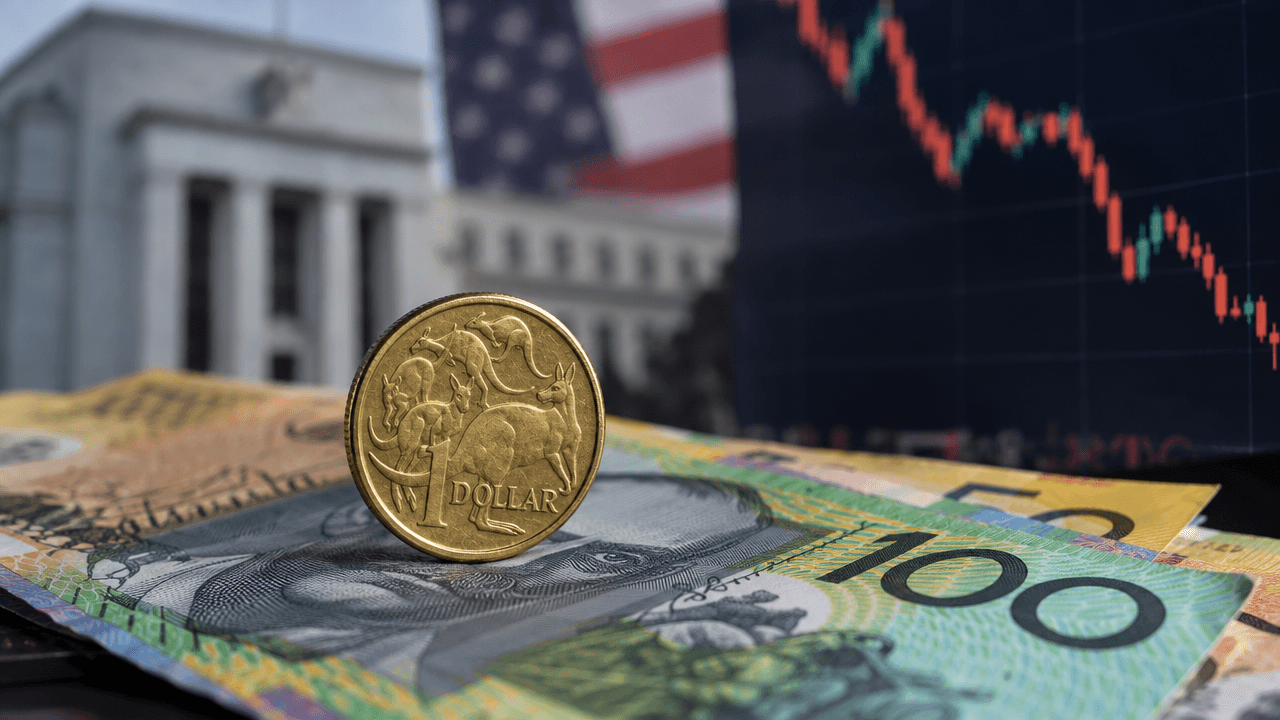
The Australian dollar is struggling to hold the $0.68 level as a powerful combination of U.S. dollar strength, rising Treasury yields and defensive market sentiment weighs on the currency. AUD/USD slipped to approximately $0.68 on Friday after reaching $0.6798 overnight, its lowest point since late January. The decline also pushed the pair below technical support near $0.6835, leaving traders watching whether the next major target could be $0.67. [1]
Why The Australian Dollar Is Under Pressure
The primary driver is the widening contrast between U.S. and Australian interest-rate expectations. Markets have increased bets that the Federal Reserve could deliver a larger-than-usual interest-rate increase at its next meeting. Expectations for a 50-basis-point hike reportedly rose to 15%, up from 12% a day earlier. [1]
Higher expected U.S. interest rates tend to support the dollar because they can increase the return available from holding U.S. assets. As investors adjust their portfolios toward those assets, demand for the greenback rises. The effect is particularly significant for currencies such as the Australian dollar, which are often sensitive to changes in global liquidity and investor risk appetite.
At the same time, support from Australian interest-rate expectations has faded. Weak housing data and declining consumer and business confidence have reduced expectations for another Reserve Bank of Australia rate increase in the near term. This has narrowed the perceived yield advantage of Australian assets and made the Aussie less attractive relative to the U.S. dollar. [7]
THE ROLE OF U.S. TREASURY YIELDS
Bond yields are central to the current currency move. When Treasury yields rise, the U.S. dollar often benefits because global investors can earn more from dollar-denominated government debt. Rising yields may also signal expectations of tighter monetary policy or stronger inflation pressures.
For the Australian dollar, the impact can be especially direct. The currency has proven vulnerable to the sharp increase in U.S. yields, with analysts warning that AUD/USD could test $0.67 if yields continue climbing. [1]
This does not mean that every increase in Treasury yields automatically produces a weaker Aussie. The underlying reason for the move matters. Yields rising because of stronger U.S. economic growth can sometimes support global risk appetite and demand for commodities. However, yields rising because markets expect more aggressive Federal Reserve tightening can create financial conditions that are less favorable for risk-sensitive currencies.
That distinction is important for traders. A sustained rise in yields accompanied by a stronger dollar would suggest continued pressure on AUD/USD. Conversely, a retreat in yields could give the Australian dollar temporary relief, particularly if U.S. economic data weakens or Federal Reserve officials adopt a less hawkish tone.
Risk Sentiment And Regional Markets
The Australian dollar is widely viewed as a risk-sensitive currency. Investors often favor it when global equities are rising, commodity demand is firm and confidence in economic growth is improving. When markets become defensive, capital frequently shifts toward the U.S. dollar and other traditional safe-haven assets.
Recent regional equity gains have provided some support, but they have not been strong enough to offset the broader pressure from the dollar and interest rates. Falling commodity prices and fading yield support have added to the drag. [1]
This creates a complicated backdrop. Positive trading in Asian equities may limit the Australian dollar’s losses, but it does not necessarily create a durable recovery. For the currency to strengthen meaningfully, traders may need to see broader stabilization across global markets, a softer U.S. dollar or a clear improvement in commodity prices.
Investors are also monitoring concerns in major technology and artificial-intelligence stocks. Recent weakness in global equities has contributed to a more cautious atmosphere, reducing demand for currencies that tend to perform best during periods of optimism. [12]
KEY LEVELS FOR AUD/USD
The $0.68 area is important psychologically and technically. Round numbers often attract substantial trading interest, while a sustained break below them can encourage additional selling from momentum traders.
The recent break below approximately $0.6835 weakened the technical structure and placed $0.67 on the radar as the next downside reference point. [1] A move below $0.68 that holds on a daily closing basis could reinforce the bearish trend. Traders may then look for lower highs and continued selling pressure during rebounds.
On the other hand, a recovery above $0.6835 would suggest that sellers are losing some control. A stronger rebound would likely require confirmation from falling U.S. yields, reduced expectations for an aggressive Federal Reserve and improved risk appetite.
Technical levels should not be treated as guarantees. They are reference points that help traders organize scenarios and manage risk. Economic data, central-bank communication and sudden changes in market sentiment can quickly override chart patterns.
Practical Takeaways For Traders
First, monitor the relationship between AUD/USD and U.S. Treasury yields rather than focusing on the currency pair alone. If yields rise while the dollar index strengthens, the Australian dollar may remain under pressure.
Second, watch upcoming U.S. inflation, employment and Federal Reserve communications. Evidence of persistent inflation or resilient growth could strengthen rate-hike expectations, while softer data could reduce demand for the dollar.
Third, track Australian housing, confidence and labor-market releases for clues about the Reserve Bank of Australia’s policy outlook. A more cautious RBA would limit support for the Aussie, while unexpectedly firm domestic data could improve sentiment.
Finally, avoid treating $0.68 as an automatic buy level. A psychological price can attract buyers, but it can also become a launch point for further selling if market fundamentals remain unfavorable. Use position sizing, predefined exit levels and scenario-based planning instead of relying on a single price.
Conclusion
The Australian dollar’s test of $0.68 reflects more than a routine technical decline. It represents a broader shift in relative monetary-policy expectations, bond yields and global risk appetite. Stronger U.S. yields and renewed Federal Reserve tightening bets have strengthened the dollar, while weaker Australian confidence and fading expectations for further RBA tightening have removed an important source of support.
The next phase will depend on whether the U.S. yield surge continues and whether global markets regain their footing. Until those pressures ease, rallies in AUD/USD may remain vulnerable. For traders, the most useful approach is to combine technical levels with interest-rate analysis and disciplined risk management.