
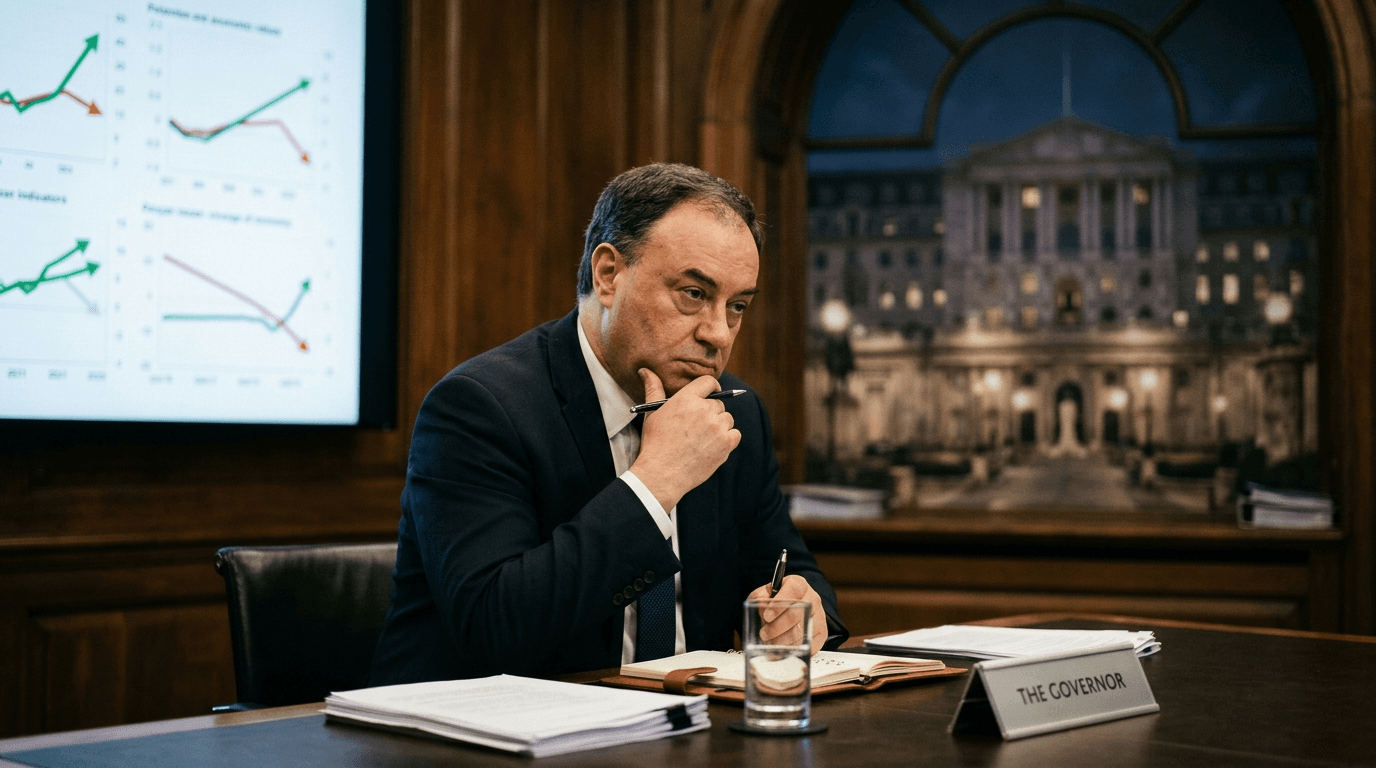
Bank of England Holds Steady: Navigating Inflation Amid Geopolitical Uncertainty
On March 19, 2026, the Bank of England chose to maintain its benchmark interest rate at 3.75%. This decision marks a pivotal moment in the UK's monetary policy, reflecting a pause in the easing cycle that began in August 2024. Originally, the market had anticipated a rate cut due to ongoing disinflation; however, unforeseen geopolitical events and surging energy prices have reshaped the central bank's strategy. This decision underscores the intricate balance policymakers must strike between curbing persistent inflation and managing economic fragility amidst global uncertainty.
Unpacking the Bank of England's Decision
The Bank of England's Monetary Policy Committee faced a formidable challenge as geopolitical tensions upended inflation forecasts. The Middle East conflict caused a spike in global energy and commodity prices, escalating costs for households and businesses alike. Prior to this energy shock, declining domestic prices and wages suggested a favorable environment for further rate cuts. Yet, the sudden shift in energy dynamics forced a strategic reassessment.
The decision to hold rates was not without contention. The February vote revealed a narrow 5-4 split, with four members advocating for an immediate cut to 3.50%. This close vote highlights the internal debate and conflicting economic indicators facing the MPC.
Persistent Inflation Despite Progress
The inflation landscape remains complex. UK inflation decreased to 3.0% in January from 3.4% in December, nearing the Bank's 2% target. The government's upcoming energy price subsidy, set to launch in April, is expected to further ease inflationary pressures. However, the recent energy shock poses a threat to this positive trend. While the MPC anticipates CPI inflation to align with the target from April, the Middle East conflict introduces significant uncertainty that could disrupt these projections.
Services and food prices have been more resistant to change than expected, complicating the case for aggressive rate cuts. The Bank highlighted the impact of the Middle East conflict on energy supply and costs, noting that prolonged disruptions could intensify inflationary pressures throughout 2026.
Dramatic Shift in Market Expectations
The market's response to the Middle East conflict has been swift and profound. Initially, futures markets predicted a 90% likelihood of a March rate cut. By mid-March, this expectation plummeted to 30% as energy prices soared. Forecasts now suggest the Bank's next move might occur in April, with only one or two quarter-point cuts anticipated for the year.
Remarkably, markets now consider a 25% chance of rate increases by June 2026—a stark reversal from previous expectations. While Governor Andrew Bailey indicated potential for further reductions within the year, analysts remain skeptical given the rising energy prices and inflation uncertainties.
Implications for GBP/USD and Trading Strategy
For forex traders, the Bank's rate hold offers crucial insight for sterling positioning. With the Bank halting its rate-cutting cycle amid rising energy prices and steady inflation, the pound benefits from a favorable yield differential compared to currencies in more advanced easing cycles. The GBP/USD pair, trading around 1.3270-1.3285, reflects this dynamic, supported by the Bank's measured approach and the likelihood of postponed cuts relative to other major central banks.
Traders should vigilantly track upcoming data releases, particularly UK employment and inflation figures, as these will influence the Bank's future rate decisions.
Conclusion for Market Participants
The Bank of England's decision to hold rates represents a tactical pause rather than a strategic shift in monetary policy. While rate cuts remain a possibility in 2026, geopolitical and inflation risks introduce genuine uncertainty regarding their timing and pace, leaving policymakers to navigate an unpredictable landscape.