
1. Write an 800-word blog article 2. Start DIRECTLY with the first paragraph - NO introductory text 3. Plain text format (no HTML, no markdown) 4. Use ALL CAPS for section headings on their own line 5. Separate paragraphs with blank lines 6. Include 3-5 main sections with clear takeaways 7. Make it engaging and educational 8. At the END: TITLE, EXCERPT, NEWSIMPACTSCORE
Key information from search results: - BOJ kept rates steady at 0.75% - Three board members (Hajime Takata, Naoki Tamura, Junko Nakagawa) dissented and called for hike to 1.0% - This is related to concerns about inflationary pressures from Middle East conflict (US-Israeli war with Iran) - Neutral rate is seen at around 1.5% - Nearly two-thirds of economists expect BOJ to raise rates to 1.0% by end-June - BOJ Governor Kazuo Ueda expected to brief media - This impacts USD/JPY strength in forex - Finance Minister mentioned government ready to intervene against excessive yen falls
I need to write this as a blog article for E8 Markets (SimFi platform) that educates readers about trading/finance. The tone should be authoritative but approachable, professional yet accessible.
Let me structure this: 1. Opening paragraph setting the scene 2. Section on what happened (the decision) 3. Section on the dissent and what it means 4. Section on market implications 5. Section on what traders should watch 6. Conclusion
I need to make sure I cite the search results appropriately using the citation format [1][2][3][4].
Now I'll draft the article, starting immediately with the opening paragraph and building through each section with proper formatting and citations.
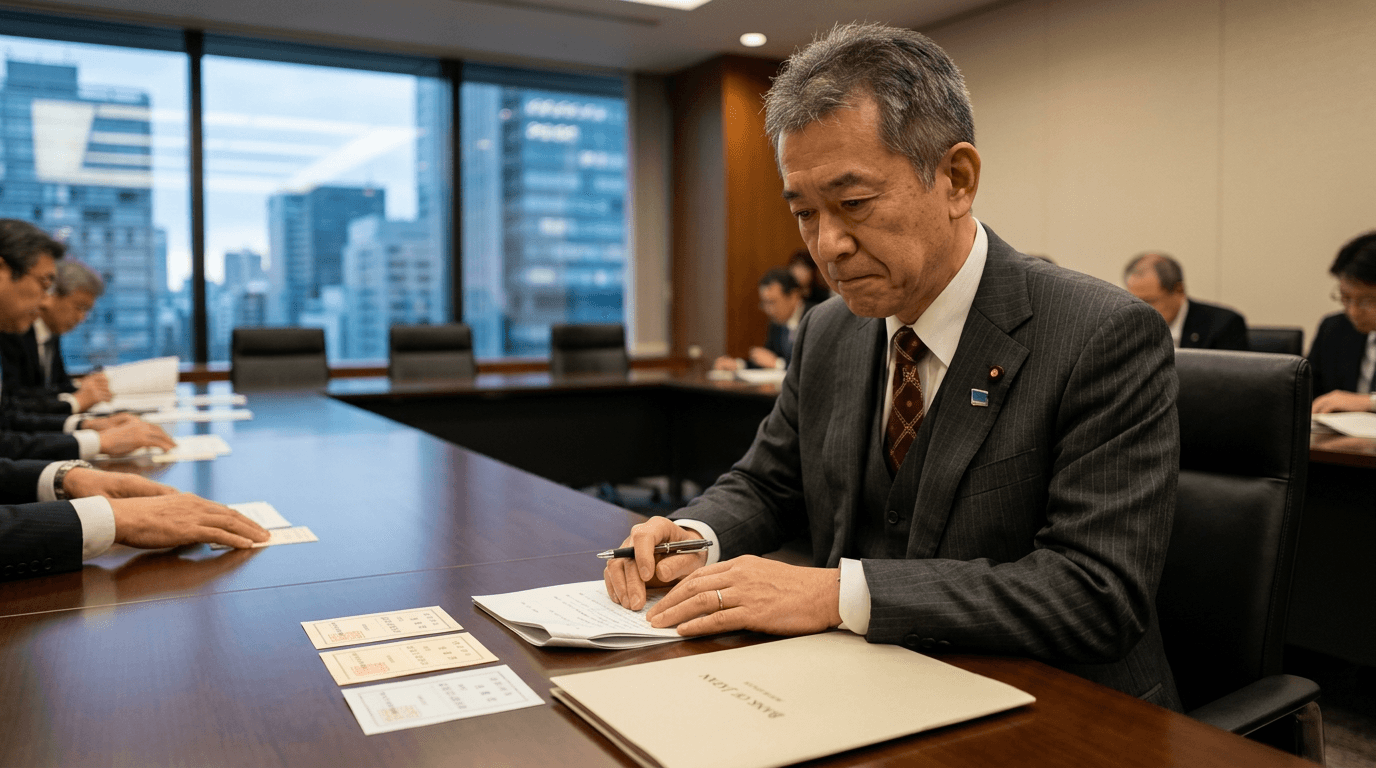
The Bank of Japan kept its short-term policy rate steady at 0.75 percent on Tuesday, marking another measured step in its gradual tightening cycle, but the decision carried an important signal of internal debate that traders need to understand. Three of the nine-member board dissented and called for an immediate hike to 1.0 percent, revealing deepening concerns about inflation pressures stemming from global geopolitical tensions.[1][2] This rare split vote underscores the complicated economic environment central banks face as they balance inflation risks against economic growth concerns.
The Boj's Steady Hand With Hidden Urgency
As widely expected, the Bank of Japan left its benchmark rate unchanged at 0.75 percent following a two-day policy meeting that concluded on Tuesday.[1] This decision aligns with the central bank's previously communicated strategy of gradual rate increases toward what markets view as a neutral rate of approximately 1.5 percent.[1] However, the continued focus on gradual increases now faces pressure from an internal faction advocating for faster movement.
The dissenting votes represent a significant development in BOJ policy discussions. Board members Hajime Takata, Naoki Tamura, and Junko Nakagawa all proposed an immediate rate hike to 1.0 percent.[1][2] This marks the second consecutive month that this group has pushed for faster tightening, with Takata's unsuccessful solo proposal in March now joined by two colleagues making a stronger case for accelerated action.[1]
Understanding The Inflation Concern
The timing of this dissent reflects genuine anxiety among policymakers about inflation dynamics. The U.S.-Israeli military conflict with Iran has created substantial complications for the BOJ's measured approach to raising still-low interest rates.[1] This geopolitical tension threatens to disrupt energy markets and global supply chains, potentially amplifying inflationary pressures that have proven sticky despite the BOJ's previous efforts.
The BOJ's policy brief emphasized this concern directly: "The BOJ must pay particularly strong attention to the risk of inflation deviating sharply upward and thereby exerting an adverse impact on the economy."[3] This language indicates that at least some board members worry the central bank's current pace of tightening may leave it behind the inflation curve if global conditions deteriorate further. The dissenting members appear motivated by the conviction that waiting until June or later to raise rates could be an expensive mistake.
Market Implications For Traders
The steady rate decision combined with visible internal dissent creates a complex scenario for foreign exchange markets and broader portfolio positioning. Immediately, the steady rate announcement at 0.75 percent might seem dovish to some traders, but the three dissents inject a hawkish undertone that prevents the yen from weakening excessively.[1] This dynamic explains why BOJ rate decisions carry outsized importance for USD/JPY traders.
Finance Minister Satsuki Katayama added another layer of complexity by reiterating that the government stands ready to intervene in foreign exchange markets to counter excessive yen weakness.[3] This statement signals that while the BOJ maintains its gradual approach, the broader policy apparatus is monitoring currency volatility closely. For traders working with forex futures and currency pairs, this represents a meaningful floor under yen strength despite the relatively dovish hold decision.
The market consensus is already pricing in expectations for further movement. Nearly two-thirds of economists surveyed by Reuters expect the BOJ to raise its benchmark rate to 1.0 percent by the end of June.[1][3] This suggests that even with Tuesday's hold decision, the trajectory points upward within the next two months. Traders positioning for this eventual move face an opportunity window before the consensus crystallizes into prices.
What To Watch Going Forward
The April 28 decision represents an inflection point in BOJ communication strategy. The dissent amplifies uncertainty about whether June brings a hike, a deeper policy discussion, or continued holds. Monitor upcoming economic data releases from Japan, particularly inflation readings and wage growth figures, as these will likely drive the next phase of board member calculus. If inflation data accelerates or energy prices spike due to Middle East tensions, expect the three dissenting members to gain additional support for their position.
Governor Kazuo Ueda's media briefing and subsequent commentary will provide crucial color on how the broader board views the dissent. Is this a serious policy disagreement suggesting imminent change, or a manageable minority view? The answer matters enormously for traders positioning across yen pairs and Japanese equities. Additionally, watch how other central banks respond to similar pressures this week, as the Federal Reserve and others navigate identical inflation versus growth tradeoffs.
The BOJ's decision to hold while tolerating visible dissent suggests a central bank at an inflection point, ready to move but still gathering conviction. For traders, this means positioning carefully but actively, with heightened attention to inflation data, geopolitical developments, and Fed communications in coming weeks.