
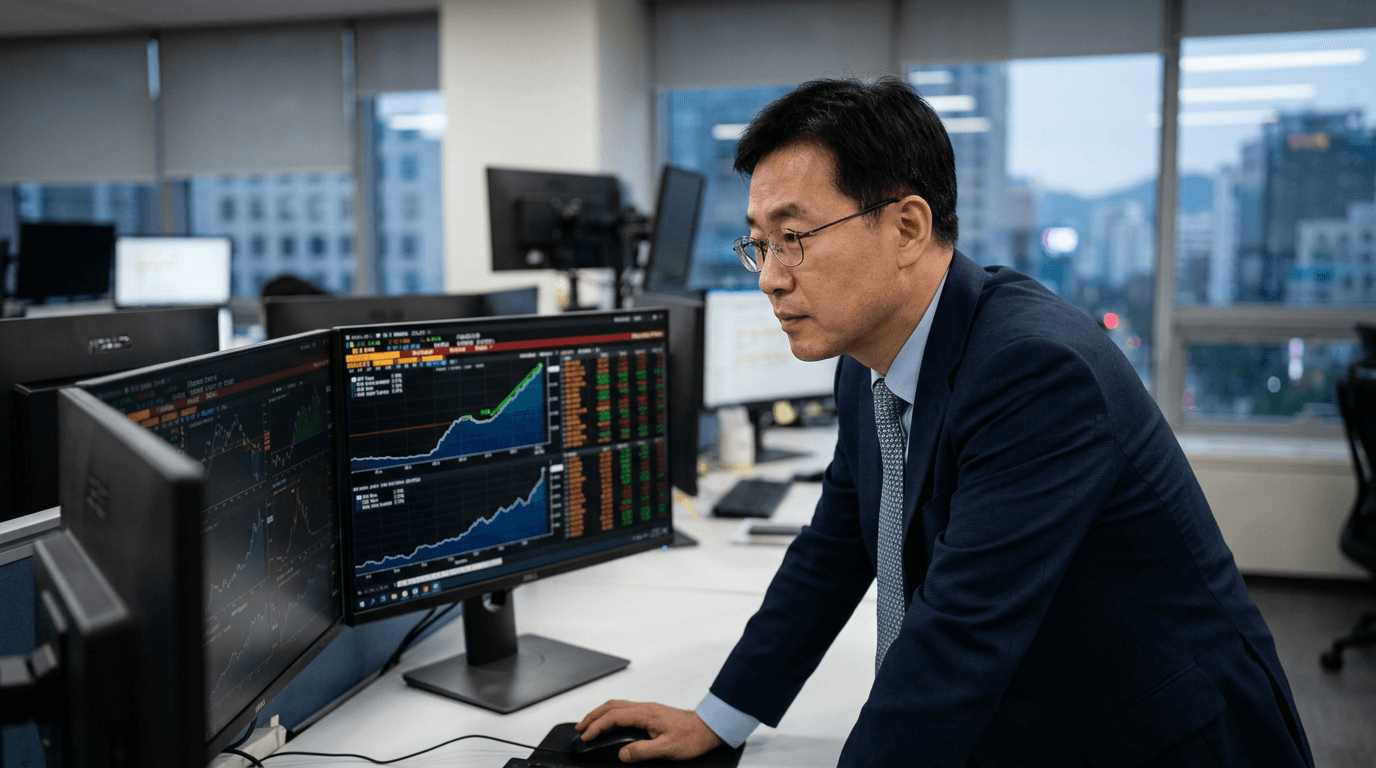
South Korea’s central bank has just kicked off a new tightening cycle, raising its benchmark rate to 2.75% for the first time in three and a half years—a clear signal that defending the won and containing inflation now trump growth concerns.[1][3] The move marks a notable shift in Asia’s monetary policy landscape and offers a real-time case study in how interest rates, currencies, and risk assets interact.
Global Backdrop And Why The Won Matters
South Korea sits at the crossroads of global trade, technology, and geopolitics, so its currency—the won—is more than a local barometer; it’s a proxy for global risk appetite and Asian growth expectations.[1] In recent months, the won has faced downward pressure as investors weighed higher U.S. rates, geopolitical uncertainties, and rising energy costs linked in part to conflict in the Middle East.[4][6]
A weaker currency can help exporters in the short term, but it raises the local cost of imported commodities and dollar-denominated debt, feeding domestic inflation and financial stability risks.[2][3] With consumer prices already running above the Bank of Korea’s 2% target and staying elevated for longer than policymakers anticipated, the central bank has decided it can no longer tolerate additional currency-driven inflation.[2][3][6]
For traders, the won’s trajectory matters because it influences regional capital flows, cross-currency carry trades, and sentiment toward other export-driven economies. A decisive policy move to stabilize the won can reshape relative value opportunities across Asian FX pairs, rates, and equity indices.
Details Of The Bank Of Korea Decision
The Bank of Korea (BOK) raised its base rate by 25 basis points, from 2.50% to 2.75%, after a Monetary Policy Board meeting, in line with economist expectations.[1][2][3][5][7] This is the first hike since January 2023, breaking a long pause that saw the bank holding steady despite lingering inflation risks and high household debt.[2][4][9][10]
In its policy statement, the BOK highlighted three key challenges: inflation remaining above target for a “considerable time,” persistent financial stability risks, and stronger growth led by exports and investment.[2][3][6] Put simply, growth has recovered enough that policymakers feel they now have room to tighten without choking off activity, especially in sectors tied to global demand.
The bank also pointed to external pressures, including higher energy prices linked to the Middle East conflict and the impact of global monetary tightening, as reasons to lean more hawkish.[4][6] By raising rates, the BOK is trying to cool domestic price pressures while making won-denominated assets more attractive to international investors.
Perhaps most importantly, the central bank signaled that this is not necessarily a one-and-done move. In its forward guidance, it said it is “necessary to continue the rate-hiking stance going forward,” effectively leaving the door open for further increases if inflation and currency dynamics do not improve.[6][7] That guidance is what gives this decision real market-moving power.
Immediate Market Reaction
Markets reacted quickly. The won strengthened after the announcement, reflecting confidence that the BOK is serious about stabilizing the currency and offsetting global rate differentials.[1][3] Korean government bond yields moved higher as traders priced in not only the current hike but the possibility of additional tightening later in the year.[1][6][7]
Equity futures also responded, with investors reassessing sector exposures.[1] Rate-sensitive areas such as real estate and consumer finance face increased funding costs, while export-heavy technology and industrial names may benefit from a more stable currency and improved foreign investor sentiment over time.
For short-term traders, the initial reaction offered opportunities in:
- FX: Long-won positions versus currencies where central banks are still more dovish, or tactical trades around volatility in USD/KRW.
- Rates: Strategies that position for a steeper yield curve if the front end reprices faster than the long end.
- Equity index futures: Rotations between sectors that are more or less sensitive to domestic rates versus global demand.
Impact On Households, Credit, And Risk Perception
The flip side of tighter policy is higher borrowing costs for households and businesses. According to analysis submitted to lawmakers, a 0.25 percentage point rise in mortgage lending rates is estimated to increase total borrowers’ annual interest burden by about 1.8 trillion won.[3] On a per-person basis, average annual interest payments could rise by roughly 296,000 won.[3]
This matters for risk assets because consumer spending and housing activity are critical to domestic growth. As interest burdens rise, some households may cut discretionary spending, potentially slowing sectors that rely on domestic demand even as exports improve.[2][3]
At the same time, the BOK is explicitly targeting financial stability. South Korea has one of the highest household debt levels among advanced economies, and higher rates can help discourage excessive leverage, cool speculative real estate activity, and reinforce discipline in credit markets.[4] For longer-term investors, this may reduce tail risks associated with a debt-fueled boom-and-bust cycle.
For SimFi participants and real-money traders alike, this environment argues for a more nuanced approach:
- Stress-test strategies for higher local rates and slower domestic consumption.
- Consider how sector allocations might shift: exporters and globally diversified firms versus purely domestic, highly leveraged businesses.
- Watch credit spreads and bank stocks as barometers of market confidence in household and corporate balance sheets.
What To Watch Next
The most important question now is whether this hike marks the start of a sustained tightening cycle or a tactical, limited move. Economists surveyed ahead of the meeting expected another rate increase by year-end, consistent with the BOK’s signal that additional hikes remain on the table if inflation stays above target.[6][7]
Key data points to monitor include
- Inflation prints: Any sign that headline and core inflation are decelerating will shape expectations for the pace and extent of further hikes.[2][5][6]
- Won performance: If the currency stabilizes or strengthens sustainably, the BOK may gain more flexibility to slow the pace of tightening.[1][3][6]
- Global rates: Moves by the U.S. Federal Reserve and other major central banks will influence Korea’s relative yield advantage and capital flows.[1][7]
- Household debt and housing: Indicators of stress—or resilience—in credit and real estate will affect how aggressively the bank can tighten without destabilizing the economy.[3][4]
For traders, this episode is a textbook example of how macro policy shifts can ripple across FX, rates, and equities. SimFi platforms offer a risk-free environment to practice constructing trades that reflect a central bank’s reaction function—pairing currency positions with rate strategies, testing scenarios where inflation falls faster or slower than expected, and exploring sector rotations as policy filters through the real economy.
In short, South Korea’s first rate hike in three and a half years underscores a global theme: the fight against inflation and currency weakness is far from over, and central banks remain willing to adjust policy even at the cost of higher borrowing burdens. Understanding that trade-off—and how it feeds into cross-asset pricing—is essential for anyone navigating today’s markets.