
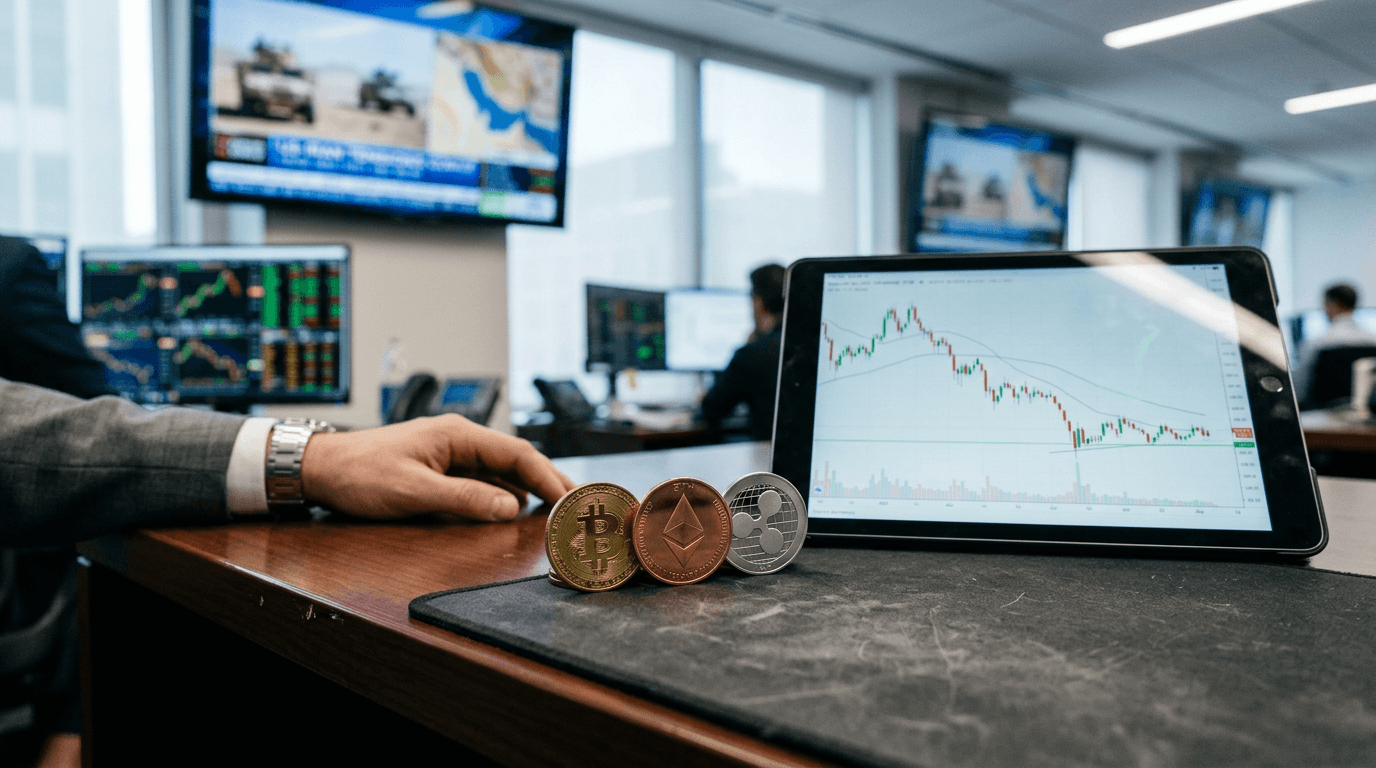
The cryptocurrency market is facing turbulent times as Bitcoin, Ethereum, and Ripple find themselves near critical support levels amidst the ongoing US-Iran conflict. With Bitcoin trading above $71,000, Ethereum around $2,000, and XRP close to $1.42, these cryptocurrencies demonstrate resilience despite geopolitical tensions impacting both traditional and digital asset markets. The fragile ceasefire announced on April 7 adds further uncertainty to the future trajectory of these digital assets, necessitating robust risk management strategies for traders and investors.
The Geopolitical Backdrop
The US-Iran conflict introduces significant macroeconomic challenges for cryptocurrencies, though not in the anticipated manner. Initially, escalating tensions led to a sharp sell-off in Bitcoin and other digital assets as investors sought safety by de-risking their portfolios. The situation intensified when the White House signaled plans to cut off Iran's oil revenues, heightening fears of further escalation. Despite Bitcoin's reputation as "digital gold," it reacted more like a high-beta macro asset, sensitive to oil price fluctuations and broader market sentiment rather than its traditional safe-haven narrative.
The conflict's uncertainty compounds challenges for crypto traders. Five weeks in, neither side shows signs of fully backing down, even with a ceasefire in place. The Strait of Hormuz, a vital global energy chokepoint, has not fully reopened, with oil tankers largely absent from normal routes. This supply disruption continues to impact energy markets and, consequently, the broader macroeconomic outlook influencing cryptocurrency valuations.
Support Levels And Market Positioning
Technical analysts are scrutinizing key support zones as geopolitical dynamics unfold. Bitcoin's recent performance is characterized by consolidation near significant levels, with traders eyeing potential breaks below $66,601. Intensified selling pressure could see Bitcoin fall to around $60,000, posing a significant downside risk if the ceasefire collapses or tensions escalate further.
Ethereum also grapples with technical hurdles, having been rejected near its upper consolidation band around $2,149. Broader recovery efforts have stalled, with ETH retreating to approximately $1,967 during peak tension phases. Short-term traders should monitor the $1,747 support level, a critical reference point during volatile trading sessions. Buyers' reluctance to accumulate at higher levels indicates caution in the market, with participants wary of committing fresh capital until geopolitical clarity emerges.
The Paradox Of Risk-on Sentiment
Interestingly, market movements have not been linear. Early conflict stages triggered risk-off sentiment and crypto sell-offs, but subsequent sessions saw recovery rallies, indicating a gradual return of risk appetite. By mid-April, Bitcoin had rebounded above $72,000, with institutional flows into spot Bitcoin ETFs reaching approximately $587 million mid-week, signaling steady accumulation despite ongoing tensions. This paradoxical behavior suggests market participants are gradually discounting current geopolitical risks, possibly betting that the conflict will remain contained or that policy responses will eventually support risk assets.
Arthur Hayes, a notable market observer, highlights that geopolitical conflicts often coincide with relaxed monetary policies from central banks aiming to mitigate economic impact. This perspective has encouraged some investors to position for potential future liquidity expansions, even as they exercise caution in the near term. However, Hayes advises restraint until clear signals of rate cuts or liquidity injections emerge.
What Traders Should Monitor
The outlook for Bitcoin, Ethereum, and XRP hinges on several interconnected factors. Firstly, monitor any escalation or de-escalation in US-Iran hostilities. Trump's April 9 statement that US military forces will remain deployed until full compliance with agreements suggests the conflict may not resolve quickly. Secondly, keep an eye on oil prices and their effects on inflation and growth expectations, as these macro variables drive crypto trading patterns during geopolitical stress.
Thirdly, listen for central bank commentary. Signals of emergency liquidity measures or interest rate cuts could trigger a significant rally in risk assets. Fourthly, track capital flows into crypto spot ETFs and other institutional vehicles, as these often precede broader price movements. Lastly, remain vigilant to regulatory developments targeting cryptocurrency platforms in connection with sanctions enforcement, as wartime settings typically bring heightened scrutiny.
Key Takeaways For Investors
The current environment necessitates selective positioning and disciplined risk management. While long-term believers in cryptocurrency fundamentals may see current levels as attractive accumulation opportunities, short-term traders should respect technical support levels and avoid overextending exposure until geopolitical clarity improves. The recovery in Bitcoin above $72,000 and steady institutional inflows suggest that the worst of the selling pressure may have passed, but until the Strait of Hormuz fully reopens and ceasefire terms solidify, volatility should be expected.
For traders navigating this period, the key is balancing conviction with caution, accumulating selectively near support levels while maintaining defensive positions that protect against downside risk should escalation resume.