
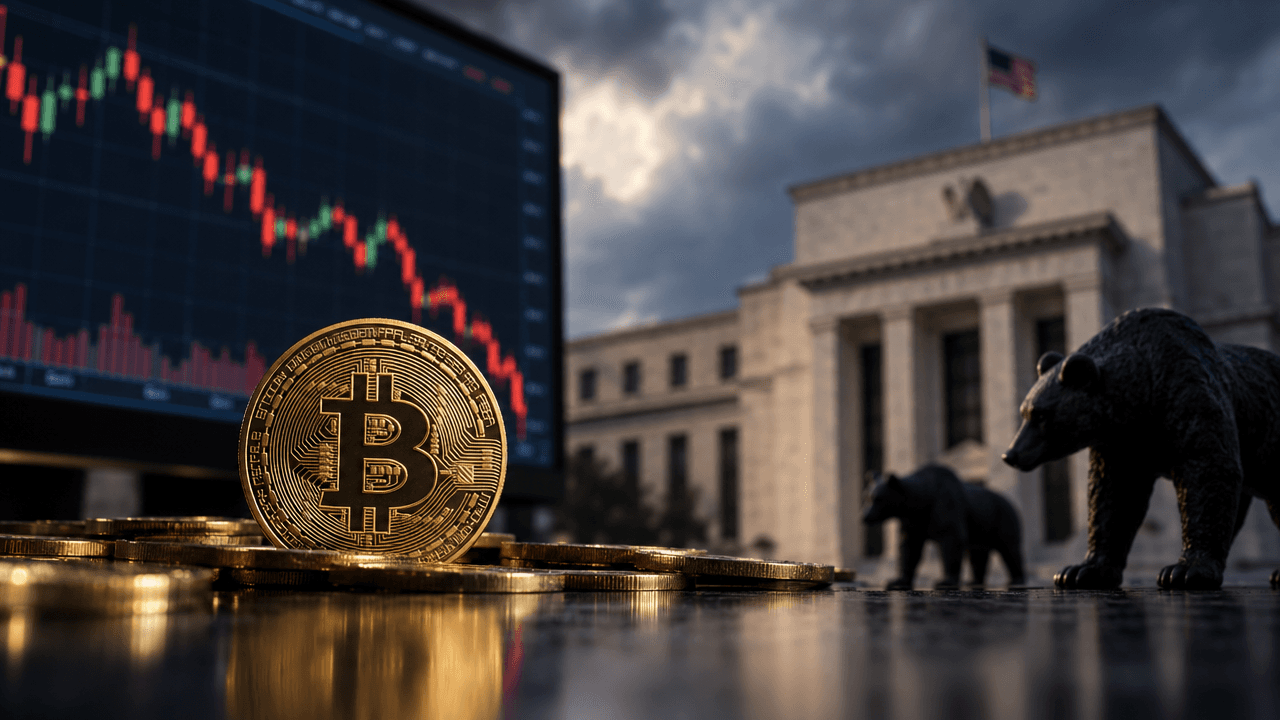
Selling pressure in Bitcoin derivatives is building as traders brace for an expected Federal Reserve rate hike, and that shift in positioning is quietly reshaping the risk landscape for both spot and leveraged participants. With pressure indices sliding deeper into negative territory and long/short ratios hovering around balance, the message from futures and perpetual contracts is less about panic and more about a calculated, defensive stance ahead of potential volatility.
Derivatives Flash A Warning Signal
In the past 24 hours, Bitcoin futures and perpetual swaps have seen a clear tilt toward aggressive selling, with taker sell volume and pressure indices moving decisively into negative territory. This suggests sellers are hitting the bid more often than buyers are lifting the offer, a classic sign that traders are offloading risk or hedging upside exposure as macro uncertainty builds.
At the same time, long/short ratios remain close to 1:1, indicating that the market is not yet lopsided in one direction. Instead of a crowded long or short, positioning looks more balanced, which often precedes larger moves because neither side is overwhelmingly dominant. In other words, aggressive sellers are active, but they are operating in a market where counterparties are still willing to take the other side—at least for now.
This pattern fits into a broader backdrop in which Bitcoin has already absorbed multiple liquidation waves tied to shifting Fed expectations. Episodes in 2026 have seen hundreds of millions to more than a billion dollars in crypto derivatives liquidated as traders were forced out of overleveraged positions when policy expectations turned more hawkish[1][11][13]. Those events provide a recent playbook: when macro surprises collide with crowded positions, derivatives tend to amplify price swings.
Why Fed Rate Hikes Matter For Bitcoin
The Federal Reserve’s policy stance is a critical driver of risk appetite across global markets, and Bitcoin is no exception. When traders price in a higher probability of rate hikes, yields on short-term Treasuries and other cash-like instruments tend to rise, increasing the opportunity cost of holding non-yielding assets such as Bitcoin[3][14]. As a result, some capital rotates into safer, income-generating assets, putting pressure on speculative trades and leveraged crypto positions.
Higher policy rates also tighten overall liquidity conditions. Borrowing costs increase, credit standards can stiffen, and marginal risk-taking capital becomes scarcer. For crypto markets, which rely heavily on leverage, derivatives, and wholesale liquidity, this environment often translates into lower tolerance for drawdowns and faster de-risking when volatility spikes[12][14]. Traders who once could easily roll leveraged positions or borrow cheaply against their crypto collateral may find those trades less attractive—or outright dangerous—when funding becomes more expensive.
Historically, expectations for Fed tightening have coincided with phases of Bitcoin weakness, particularly when the shift in rates comes faster or more forcefully than markets anticipated[5][8][14]. The current build-up in derivatives selling pressure, therefore, looks less like a standalone crypto-driven story and more like a continuation of a macro repricing process that has already affected other risk assets.
What Futures Data Is Telling Traders
Bitcoin derivatives provide a rich set of signals about how traders view near-term risk and reward. Several key indicators are especially relevant in the current environment:
1) Taker buy/sell volume and pressure indices A deeply negative pressure index means that market sell orders dominate, pointing to a willingness to hit bids and exit positions rather than wait passively for better prices. This often reflects either hedging activity by long spot holders or outright speculative shorts anticipating downside.
2) Long/short ratios A roughly balanced long/short ratio suggests that the market is not overwhelmingly skewed to either direction. This is important because it reduces the immediate risk of a one-sided liquidation cascade but increases the odds that any strong move—up or down—could quickly build momentum as one side begins to cover.
3) Funding rates and basis If funding rates in perpetual swaps drift toward neutral or slightly negative while spot prices soften, it implies that leveraged longs are less enthusiastic and that shorts may be paying less to maintain positions. Combined with a flattening or compressing futures basis (the difference between futures and spot), this can indicate a cooling of speculative fervor and a shift toward more defensive positioning.
Recent episodes where Bitcoin slipped below key psychological levels have often been accompanied by sharp spikes in forced liquidations and heavy taker sell volume on major exchanges, underscoring how derivatives can turn cautious macro sentiment into abrupt market moves[1][11][13]. The current build-up in selling pressure, even before the Fed’s decision, shows traders are trying to get ahead of that risk rather than react after the fact.
Simulated Trading Lessons: How To Navigate Fed Weeks
For traders operating on Simulated Finance (SimFi) platforms like E8 Markets, this environment presents a valuable opportunity to practice navigating macro-driven volatility without putting real capital at risk. Simulated accounts allow traders to stress-test strategies in conditions that mirror live markets, including changing funding rates, widening spreads, and sudden spikes in liquidation risk.
Several practical lessons stand out
1) Position sizing around events Rather than holding maximum leverage into the Fed meeting, traders can experiment with scaling down exposure ahead of the decision and re-entering once the initial volatility spike is absorbed. This helps internalize the trade-off between potential upside and gap risk around event-driven moves.
2) Hedging via derivatives Futures and perpetuals can be used to hedge spot or longer-term holdings. For example, a trader who is structurally bullish Bitcoin but worried about a short-term drawdown during a hawkish Fed surprise can practice deploying short futures as a hedge, then unwinding those hedges when volatility subsides.
3) Scenario planning SimFi environments are ideal for running “what if” scenarios: What happens to a portfolio if Bitcoin drops 10% on a surprise hike? What if there is a short squeeze instead because the Fed stays on hold and markets unwind bearish bets? Testing these paths helps build muscle memory for risk management.
4) Monitoring real-time metrics Practicing with dashboards that show long/short ratios, funding rates, open interest, and taker volumes trains traders to respond to evolving risk conditions rather than trading purely on price charts. In a macro-sensitive period, those peripheral indicators often move first.
Key Takeaways For Active Traders
For traders watching the current build-up in selling pressure, several clear actions and mindsets can help:
– Respect the macro calendar. Major Fed decisions and speeches can reshape expectations in a single session. Avoid treating them as routine events. – Focus on leverage management. Elevated derivatives activity and past liquidation waves show how quickly overleveraged positions can unravel when volatility jumps[1][11][13]. – Use derivatives as risk tools, not just return tools. Properly sized futures or perpetual positions can hedge, not only speculate. – Treat balanced positioning as a warning, not comfort. When long/short ratios are near 1:1, it often means the next big move is still ahead, not behind.
Conclusion
Growing selling pressure in Bitcoin derivatives ahead of an expected Fed rate hike is a reminder that macro policy and leveraged markets are tightly intertwined. Even with long/short ratios near balance, deepening negative pressure indices signal that traders are already adjusting exposure and bracing for volatility, not waiting for the Fed to deliver its verdict.
For active traders—and especially for those honing their skills on SimFi platforms—this is a prime environment to refine risk management, stress-test strategies, and learn how derivatives positioning can foreshadow major moves. The traders who treat this period as a live-fire drill for disciplined execution, rather than a time for reckless bets, will be better prepared for whatever the Fed and the market deliver next.