
1. PLAIN TEXT format, no markdown or HTML 2. Start directly with the article content, NO introductory preamble 3. ALL CAPS for section headings on their own line 4. Blank lines between paragraphs 5. 3-5 main sections with clear takeaways 6. Engaging and educational content 7. At the END: TITLE, EXCERPT, and NEWSIMPACTSCORE on separate lines
The search results provide detailed information about how the US-Iran conflict is affecting Bitcoin, Ethereum, and Ripple. I need to synthesize this into an engaging blog post.
Key points to cover: - How geopolitical tensions affect crypto markets - Specific price levels and technical analysis for BTC, ETH, and XRP - The oil price/inflation connection - Monetary policy implications - Recovery prospects and key levels to watch
I should write this in plain text with no markdown, starting directly with the article content.
As the US-Iran conflict extends into spring 2026, the cryptocurrency market faces mounting pressure from an increasingly risk-averse investment climate. Bitcoin struggles to maintain its footing above $71,000, Ethereum fights to hold its $2,000 level, and Ripple consolidates after sharp declines. Each of these major cryptocurrencies remains on shaky ground, vulnerable to further drops if geopolitical tensions continue to escalate. Understanding how warfare, geopolitical uncertainty, and monetary policy interconnect is essential for traders seeking to navigate this volatile environment and protect their capital.
The sudden onset of military conflict in February 2026 delivered an immediate and severe shock to crypto markets. On February 28, following joint US-Israeli military actions against Iran, Bitcoin plunged 6.4%, Ethereum slumped 8%, and Ripple tumbled 9%. These sharp declines underscored a critical lesson: geopolitical shocks can swiftly outweigh technical analysis and sentiment indicators that typically steer trading decisions. The unpredictability of the conflict adds to its destabilizing impact, as President Trump's unwavering commitment to military operations until strategic goals are achieved has created an atmosphere where investors struggle to establish firm positions.
Geopolitical Uncertainty And Market Sentiment
The pattern of fleeting optimism followed by renewed conflict concerns now dominates market sentiment. When ceasefire talks arise, optimism briefly returns, and Bitcoin and Ethereum have surged on ceasefire announcements. However, this relief is typically short-lived. Traders remain wary of committing significant capital to risk assets, knowing that the next military development could spark another sell-off within hours. The oscillation between hope and renewed concern has left market participants hesitant to establish confident long positions in digital assets.
Although negotiations have been extended with deadlines set for potential ceasefire talks, Pentagon reports hinting at the deployment of additional ground troops to the Middle East have negated temporary relief from de-escalation headlines. This constant cycle creates a challenging trading environment where traditional technical analysis becomes secondary to headline risk and geopolitical developments. Investors face the difficult choice of either sitting on the sidelines or risking capital in an environment where military announcements can reverse market moves within minutes.
The Oil Price And Inflation Connection
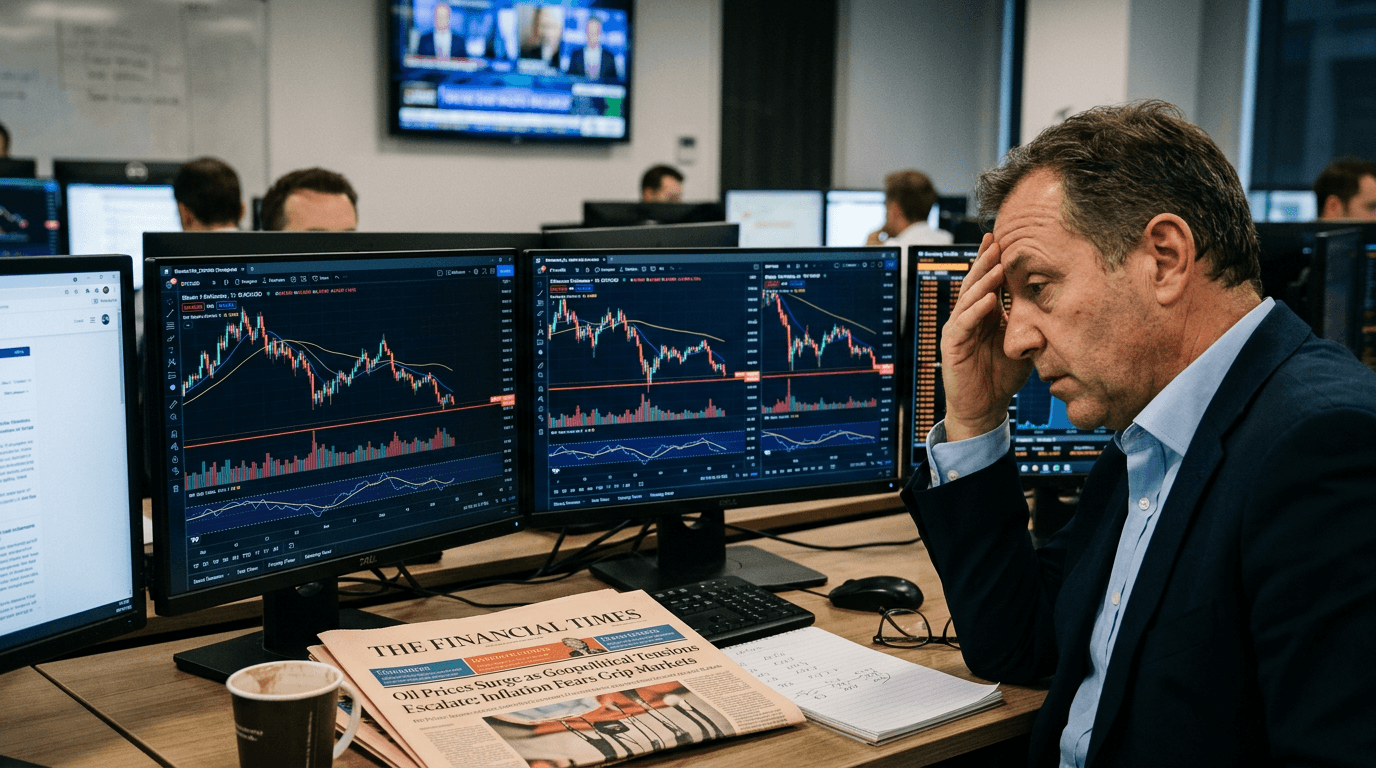
Beyond direct geopolitical uncertainty, this conflict impacts cryptocurrency through a less obvious but equally important channel: crude oil pricing and its inflationary effects. As Middle East tensions escalated, West Texas Intermediate crude surpassed $92 per barrel, with Brent crude hovering around $106. These heightened energy costs create inflationary pressures that central banks approach with increasing caution.
Higher inflation has prompted central banks to delay rate cuts and limit liquidity injections that historically support risk assets like Bitcoin and Ethereum. Digital assets have historically thrived under accommodative monetary policy, but when central banks respond to inflation by upholding higher rates and constraining capital flows, cryptocurrencies face significant headwinds. This indirect effect of the war creates a longer-lasting challenge than the initial shock of military action itself. Lower oil prices would alleviate inflation pressures and potentially increase the likelihood of more accommodative monetary policy, providing tailwinds for risk assets.
Critical Technical Levels To Watch
Technically, the three major cryptocurrencies are trading at critical levels that traders must scrutinize closely. Bitcoin's immediate support is around $67,800, with a breach potentially leading to further declines toward the $65,800 to $65,000 range. Should losses deepen, the mid-March base around $63,000 serves as the last major support before descending to levels from early 2025. For Bitcoin to counter the current bearish sentiment, it must reclaim and close above the 50-day exponential moving average at $72,081 and ultimately refocus on the March high of $76,000.
Ethereum has retreated toward the $2,000 to $2,100 support zone after declining from its March peak. The concerning factor for Ethereum bulls is that the 50-day, 100-day, and 200-day exponential moving averages remain above $2,193, maintaining a persistent downtrend. A sustained break below $2,000 would pave the way toward the $1,930 to $1,980 range, where prior congestion and dip-buying activity were previously observed.
Ripple has descended to $1.33, with the cryptocurrency experiencing limited volatility but tending toward bearish pressure for the past six weeks. Despite the headwinds, XRP's repeated bounce-backs show resilience, but ongoing geopolitical risk remains a negative factor for price and market sentiment.
Pathways To Recovery
The path forward largely depends on developments that may occur within days. If tensions ease and ceasefire agreements hold, market analysts suggest that safe-haven flows could rotate back into traditional risk assets, ultimately benefiting cryptocurrencies. Lower oil prices would ease inflation pressures, potentially increasing the likelihood of more accommodative monetary policy that supports digital assets.
Conversely, any escalation would likely prolong the risk-off environment and test lower support levels. The near-term catalyst for market direction remains tied to diplomatic developments and military announcements. Traders must remain vigilant to these headline risks while also watching technical support levels. These technical battlegrounds represent critical decision points where investors must decide whether to accumulate at lower levels or continue reducing exposure to risk assets.
Takeaway For Traders
The intersection of geopolitical conflict, oil prices, inflation concerns, and monetary policy has created a uniquely challenging environment for cryptocurrency investors. Rather than viewing this period solely as a negative, experienced traders recognize that sustained volatility and capitulation can create asymmetric risk-reward opportunities. However, positioning for these opportunities requires understanding both the macro forces at play and the technical levels that will determine market psychology. As the situation develops, monitoring both geopolitical headlines and technical support levels will be essential for navigating this volatile period successfully.