
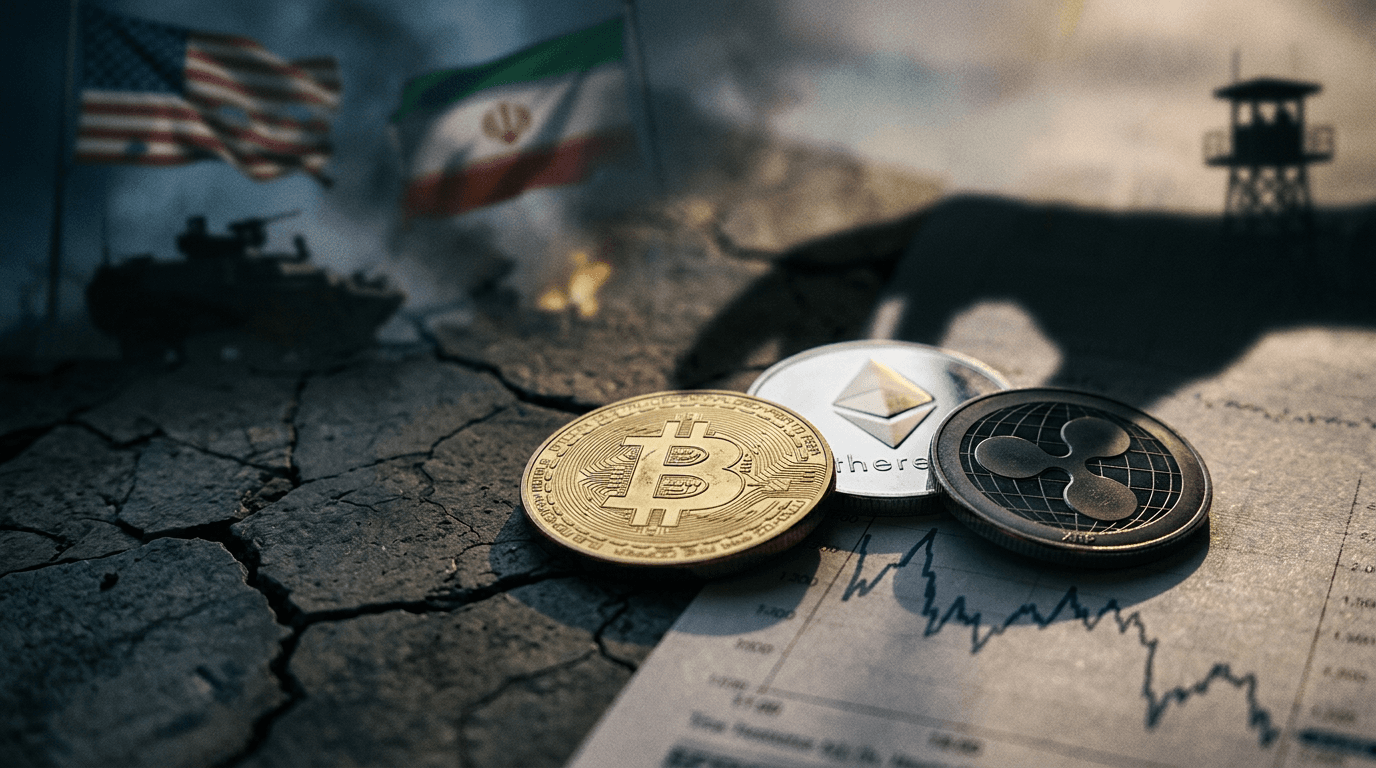
Bitcoin, Ethereum, and XRP Face Challenges Amid US-Iran Tensions
In the volatile world of cryptocurrencies, we're witnessing a significant downturn as geopolitical tensions between the United States and Iran cast a shadow over investor sentiment. Bitcoin, Ethereum, and XRP have all retreated from their recent peaks, testing crucial support levels as global financial markets adopt a risk-averse approach. The combination of geopolitical instability and macroeconomic factors is creating a particularly tough environment for digital assets, prompting traders and investors to rethink their strategies and adjust their risk management practices.
Current Landscape of Major Cryptocurrencies
Bitcoin currently hovers around $66,601, slightly above the critical $65,729 support level, yet showing limited upside momentum. A breach of this key zone could trigger further selling, potentially driving prices down to the $62,510 mark and testing the psychological $60,000 barrier. Ethereum is struggling to breach the $2,149 resistance, pulling back towards $1,967 as buying interest wanes. This hesitancy to buy at higher prices indicates a lack of conviction in the market. XRP, meanwhile, is testing the lower boundary of a falling wedge pattern at weekly support near $1.35. A decisive break below this could lead to accelerated losses, putting the $1.30 support zone under immediate pressure.
What's particularly troubling about this pullback is not just the price levels themselves, but the lack of strong recovery attempts. Across Bitcoin, Ethereum, and XRP, buying interest has remained muted, suggesting that market participants are exercising caution until there's more clarity on geopolitical tensions.
Geopolitical Uncertainty as a Market Obstacle
The escalating US-Iran conflict has reshaped market dynamics across all asset classes, extending beyond cryptocurrencies. When tensions heightened on February 28 following joint US-Israeli military actions against Iran, Bitcoin dropped 6.4%, Ethereum lost 8%, and XRP fell by 9%. These sharp declines illustrate how quickly geopolitical events can overshadow technical factors and sentiment indicators.
The ripple effect was felt beyond crypto markets, as US stock index futures also fell by over 1% following reports of military strikes. This sell-off highlights how geopolitical risks can create a unified risk-off environment, prompting investors to de-risk across various asset classes simultaneously.
President Trump's subsequent remarks about continuing military operations until strategic goals are met only added to the pessimistic outlook. Such rhetoric amplifies the fundamental uncertainty surrounding the conflict's duration and scope, complicating traders' efforts to establish confident positions in risk assets.
The Oil Price Link and Monetary Policy Implications
A critical connection between the Iran conflict and cryptocurrency markets lies in oil price dynamics. Analysts note that rising oil prices directly impact central bank monetary policy decisions. As energy costs rise, inflation pressures mount, prompting central banks to delay rate cuts and limit liquidity injections that typically support risk assets like cryptocurrencies.
Oil prices surged significantly after the conflict began, although they've somewhat retreated as crypto and stock markets rallied on hopes of de-escalation. This correlation is crucial for Bitcoin and Ethereum, which have historically thrived under lenient monetary policy and increased liquidity.
Arthur Hayes, co-founder of BitMex, suggests that historically, Middle Eastern conflicts often coincide with relaxed monetary policy from the Federal Reserve. However, Hayes advises caution until clear indications of rate cuts or liquidity injections materialize. This prudent stance acknowledges the potential for long-term support from monetary easing, yet recognizes the immediate challenges of the current uncertain environment.
Key Levels for Traders to Monitor
Short-term traders should keep a close eye on critical technical levels across these cryptocurrencies. For Bitcoin, the $65,729 level is pivotal, marking the boundary between consolidation and potential breakdown scenarios. Falling below $65,000 could accelerate selling momentum. For Ethereum, the $1,747 support zone serves as a key reference point; a sustained correction toward this level signals heightened downside risk.
XRP's falling wedge pattern is particularly noteworthy, as it could either hold and prompt a bounce or break entirely. This level merits close attention for clues about near-term direction.
Anticipating Resolution and Potential Relief Rallies
Should tensions ease and if President Trump's suggestion of a US exit from Iran holds true, cryptocurrency markets could see substantial relief rallies. Analysts suggest that de-escalation would alleviate oil price pressures, lower inflation expectations, and enhance the likelihood of easier monetary policy. As safe-haven flows shift back to traditional risk assets, cryptocurrencies could benefit from renewed capital inflows.
Nevertheless, the conflict's duration and ultimate resolution remain uncertain variables. Traders must weigh the potential for relief rallies against the immediate geopolitical risks. Until clear signs of easing tensions emerge, maintaining a defensive position near critical support levels is a prudent strategy for most market participants.
Impact Score: 7
Major cryptocurrencies face headwinds as geopolitical conflict weighs on sentiment. Discover how oil prices and monetary policy could influence the next market move.