
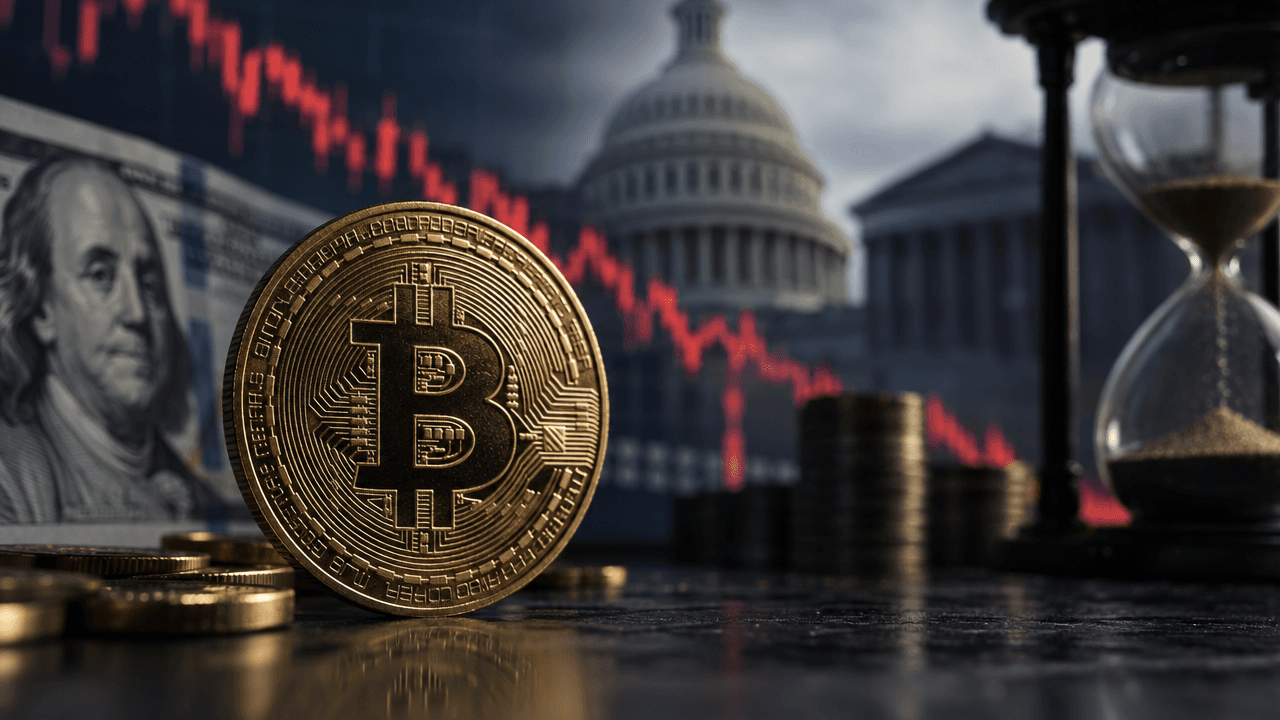
Bitcoin is sliding toward the $73,000 area as investors reduce exposure to riskier assets and reassess the outlook for U.S. interest rates. Bitcoin traded near $73,637 on November 11, down approximately 2.1% over 24 hours and 5.4% over the previous week. The decline has extended a broader crypto pullback, with Ethereum falling about 4.1% while Solana and XRP also suffered sharp losses. [3]
The move is important because it reflects more than ordinary crypto volatility. Inflation concerns, rising Treasury yields, weakness in technology shares, and declining market confidence are combining to pressure digital assets. For traders, the immediate question is whether Bitcoin can defend the $73,000 region or whether a decisive break would encourage another wave of selling.
Risk Sentiment Turns Defensive
Bitcoin is often treated as a long-term alternative asset, but in the short term it can behave like a high-beta risk asset. When investors become less willing to hold volatile positions, cryptocurrencies frequently decline alongside growth stocks and other speculative investments.
That relationship has become visible during the latest sell-off. Weakness in U.S. technology shares has damaged appetite for risk, while higher bond yields have made relatively safer assets more attractive. Bitcoin’s recent reaction shows that crypto liquidity remains closely connected to the broader financial system.
Market sentiment indicators underline the shift. The CoinMarketCap Crypto Fear & Greed Index fell to 26, a reading associated with fear, compared with 57 one month earlier and 35 one week earlier. [3] Sentiment is not a timing tool by itself, but a rapid decline often signals that traders are becoming more defensive and that leveraged positions may be vulnerable.
Inflation And Interest-rate Expectations
The latest pressure has also come from renewed concern about U.S. inflation. Stronger-than-expected price data has caused markets to reconsider the possibility of easier monetary policy. Instead of anticipating rapid rate cuts, investors are now weighing the risk that interest rates could remain elevated for longer or even rise further.
That change matters for Bitcoin because tighter monetary conditions can reduce the amount of capital flowing into speculative assets. Higher interest rates increase the appeal of cash and government bonds, while also raising the financing cost for leveraged traders. The U.S. 10-year Treasury yield moved close to 5%, a level that could add further pressure if yields continue climbing. [7]
The dollar and Treasury yields are therefore important signals to monitor. A stronger dollar can make Bitcoin less attractive to international buyers, while rising real yields increase the opportunity cost of holding an asset that does not generate traditional income.
THE $73,000 LEVEL IN FOCUS
Bitcoin’s approach to $73,000 places technical support at the center of the market debate. Support is a price zone where buyers have previously shown interest. If demand returns near that area, Bitcoin could stabilize and attempt a relief rally. If the level fails on strong volume, however, traders may interpret the breakdown as evidence that the medium-term trend is weakening.
Some market analysts have identified Bitcoin’s 200-day moving average near $73,000 as a particularly important reference point. A sustained close below that average could increase the risk of a deeper decline, with one analysis pointing toward the $67,000 region near the 200-week moving average. [14]
Technical levels should not be treated as guarantees. Markets can briefly move below support before recovering, especially when liquidity is thin. Traders should focus on confirmation, including daily closes, trading volume, futures positioning, and whether Bitcoin can reclaim the broken level after a decline.
Altcoins Show Broader Stress
The sell-off is not isolated to Bitcoin. Ethereum’s decline of roughly 4.1% indicates that investors are reducing exposure across major digital assets, while sharper drops in Solana and XRP suggest greater pressure on higher-volatility tokens. [3]
Altcoins generally have smaller liquidity pools and more aggressive speculative positioning than Bitcoin. As a result, they can fall faster when traders unwind leverage or rotate toward cash. A broad decline across Bitcoin, Ethereum, and major altcoins also tends to weaken confidence in quick recovery trades.
For SimFi traders, this environment is a useful reminder to distinguish market direction from individual asset narratives. A strong project can still decline when overall liquidity contracts. Trading decisions should therefore incorporate market-wide exposure, not just a token’s news or technical setup.
Practical Takeaways For Traders
First, avoid treating a sharp drop as an automatic buying opportunity. Wait for evidence that selling pressure is slowing, such as a higher low, improving volume behavior, or a successful retest of support.
Second, reduce unnecessary leverage. Volatility can expand quickly when inflation data, central-bank commentary, or Treasury yields surprise markets. Smaller position sizes can help prevent a temporary move from becoming a forced liquidation.
Third, monitor correlations. Bitcoin’s direction may continue to respond to technology stocks, the U.S. dollar, Treasury yields, and expectations for Federal Reserve policy. Crypto-specific developments remain relevant, but macroeconomic forces are currently driving much of the price action.
Finally, define risk before entering a trade. A clear invalidation level, planned position size, and predetermined exit can be more valuable than trying to predict the exact bottom.
Conclusion
Bitcoin’s slide toward $73,000 reflects a broader deterioration in risk appetite rather than a single isolated crypto event. Fear has increased, interest-rate expectations have become less supportive, and rising yields are challenging demand for speculative assets. The $73,000 region is now a critical area for market structure, but traders should look for confirmation instead of relying on one price level.
For both beginners and experienced participants, the central lesson is discipline. In a defensive market, preserving capital, controlling leverage, and waiting for higher-quality setups can matter more than accurately calling the bottom.