
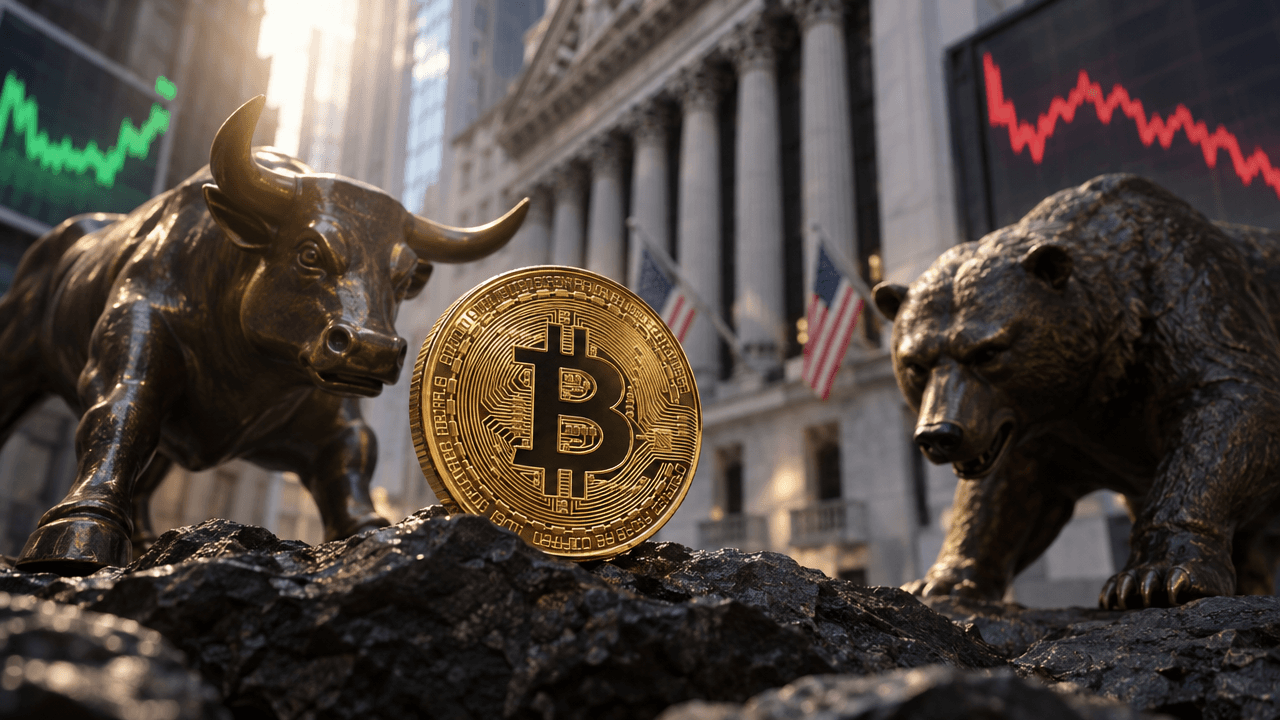
Bitcoin’s rebound above $82,000 is giving crypto traders a welcome pause after a sharp bout of inflation-driven deleveraging. The largest digital asset gained roughly 2.1% to around $82,579, while total cryptocurrency market capitalization approached $2.8 trillion. Ether climbed back above $2,400, and XRP recovered beyond $1.30 as investors returned cautiously to risk assets. [7]
What Drove The Recovery
The latest move appears to be a relief rally rather than proof that the market has entered a new sustained uptrend. Bitcoin had recently slipped below $80,000 after hotter-than-expected inflation data increased expectations that interest rates could remain elevated for longer.
That sell-off triggered a wave of forced deleveraging. Nearly $950 million in leveraged crypto positions were liquidated, while spot Bitcoin exchange-traded funds recorded approximately $261 million in outflows. [14] When highly leveraged traders are forced to close positions, selling pressure can accelerate well beyond what would occur in an unleveraged market.
Several macroeconomic developments then helped stabilize sentiment. Falling Treasury yields and retreating oil prices reduced some pressure on risk-sensitive assets, including cryptocurrencies. Bitcoin rose as much as 2.4% during early trading and hovered near $82,600, alongside a broader recovery in stocks and other risk assets. [1]
For traders, the key lesson is that Bitcoin remains closely connected to global liquidity and macroeconomic expectations. A favorable shift in yields, energy prices, or interest-rate forecasts can quickly improve sentiment. The reverse is also true.
BITCOIN’S $82,000 TEST
The $82,000 area has become an important short-term reference point. Bitcoin’s move back above it suggests buyers were willing to defend the level after the recent breakdown, but reclaiming a price is not the same as establishing durable support.
Recent trading has kept Bitcoin in a broad range of roughly $80,000 to $85,000. That pattern points to a market still searching for direction rather than one displaying a confirmed breakout. [4] A sustained move above the upper end of that range, supported by stronger volume and improving institutional flows, would provide more convincing evidence that momentum is changing.
Conversely, a failure to hold $82,000 could send traders’ attention back toward the recent lows near $80,000. A break below that region would risk renewing liquidation pressure, especially if inflation data or central-bank commentary pushes bond yields higher.
Traders should therefore avoid treating one positive session as a guaranteed floor. Price structure, volume, derivatives positioning, and ETF flows can provide more useful confirmation than a headline gain alone.
Altcoins Join The Bounce
The recovery was not limited to Bitcoin. Ether moved above $2,400, while XRP returned above $1.30 as the wider market recovered from its recent decline. [7] Broad participation is generally healthier than a rally led by Bitcoin alone because it indicates that investors are beginning to accept risk across several segments of the digital-asset market.
However, altcoins typically carry greater volatility. They often outperform Bitcoin during strong risk-on phases, but they can also fall more sharply when liquidity deteriorates. Ether’s performance may also reflect expectations around staking activity and demand for Layer 2 networks, while XRP remains sensitive to market-wide momentum and developments affecting its ecosystem.
The total market capitalization approaching $2.8 trillion is a useful measure of this broader participation, but it should be interpreted carefully. Market capitalization can rise because prices increase across many tokens, even when trading volume and actual capital inflows remain modest. A durable recovery would ideally be accompanied by stronger spot demand and reduced forced selling.
What Traders Should Watch Next
The immediate focus should remain on inflation, interest rates, and institutional flows. Recent reports indicate that persistent inflation and ETF outflows are still weighing on confidence, making the rebound vulnerable to renewed macroeconomic pressure. [6]
Traders can organize their analysis around four practical questions:
First, can Bitcoin hold above $82,000 on daily closing prices rather than briefly trade above it?
Second, does volume expand as price rises, confirming that buyers are participating instead of short sellers simply covering positions?
Third, do spot Bitcoin ETFs begin recording consistent inflows after recent withdrawals?
Fourth, do Ether and major altcoins continue to strengthen without excessive leverage building in derivatives markets?
Risk management is especially important following a liquidation event. Using smaller position sizes, defining invalidation levels before entering a trade, and avoiding excessive leverage can help traders withstand short-term volatility. A stop-loss should reflect the market’s normal price swings rather than being placed so tightly that ordinary noise triggers an exit.
A Recovery, Not Yet A Confirmation
Bitcoin’s return above $82,000 is an encouraging development for digital-asset markets, and the simultaneous recovery in Ether, XRP, and total market capitalization shows that relief has spread beyond the leading cryptocurrency. Yet the move remains a tentative rebound after a difficult period, not conclusive evidence of a new bull phase.
The market’s next direction will depend on whether improving risk appetite can overcome inflation concerns, elevated interest-rate expectations, ETF outflows, and the technical resistance near the top of Bitcoin’s recent range. For now, disciplined traders should treat $82,000 as a level to monitor, not a promise of further gains.
The most constructive scenario would be a sustained hold above that level, improving institutional demand, and a gradual expansion into major altcoins. The more cautious scenario is a failed breakout followed by another test of $80,000. Between those possibilities, patience and clearly defined risk remain more valuable than reacting to a single green session.