
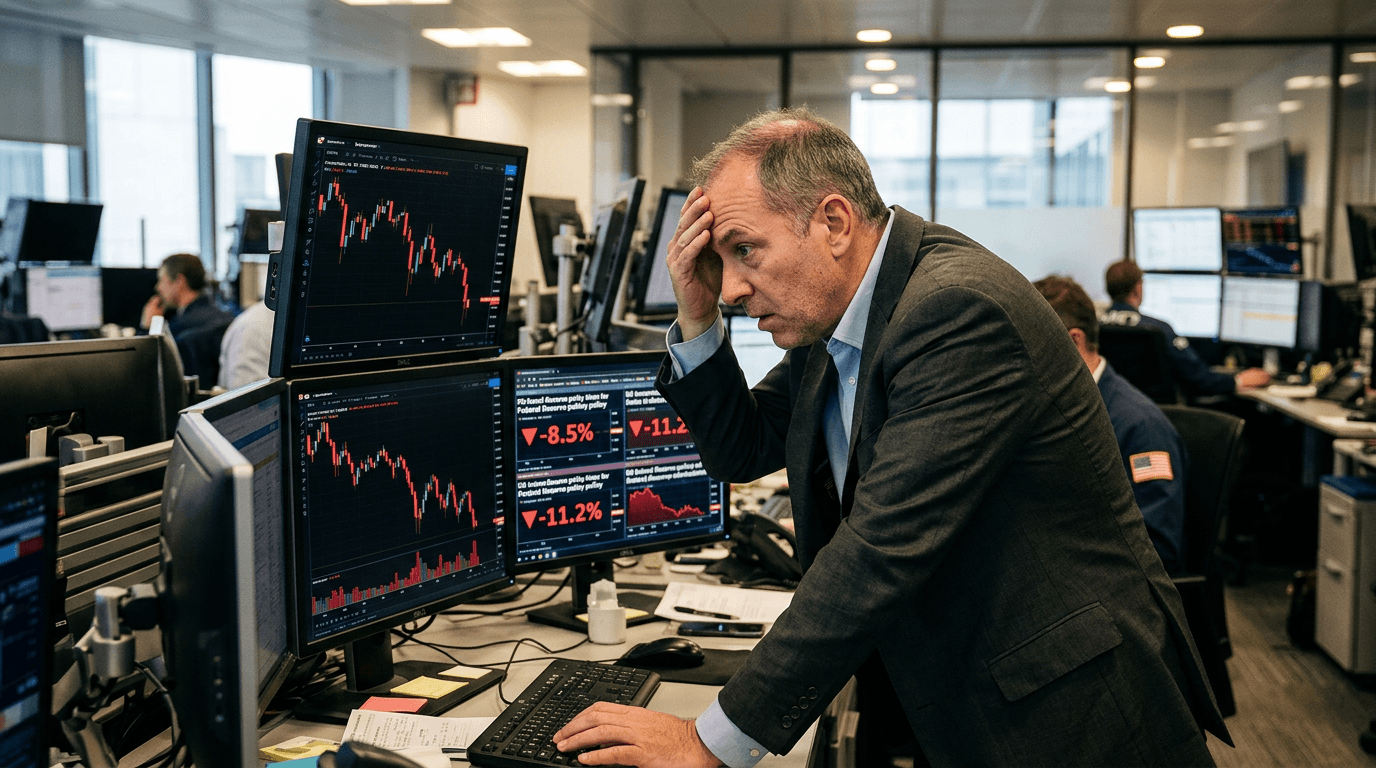
Bitcoin’s latest pullback is reminding traders how quickly sentiment can shift when monetary policy turns more hawkish. After briefly trading above $80,000, Bitcoin has slipped below the $78,000 threshold and is now consolidating in the mid‑$76K–$77K area, while Ethereum has dropped roughly 2% alongside a broader market decline of around 2.7%.[7][14][15] The move reflects investors repricing risk after US policy signals suggested inflation remains too high for comfort.[12][15]
Current Market Snapshot
The current correction is not an isolated crypto event; it is part of a broader risk-off wave driven by expectations of tighter US monetary policy and heightened geopolitical tensions.[14][15] In the days leading up to and following Federal Reserve Chair Kevin Warsh’s Jackson Hole remarks, Bitcoin reversed from recent highs near $81K to roughly $77K, a drop of about 3%, while the total crypto market value fell close to 2.8%.[7][15] Major altcoins such as Ethereum, Solana and XRP have also registered single‑digit percentage declines as traders trim leverage and reduce exposure to higher‑beta assets.[9][14][15]
What stands out in this environment is how quickly positioning has changed. Just before Warsh’s speech, Bitcoin was holding near the psychological $80,000 resistance, with traders eyeing a potential breakout if policy guidance appeared more dovish.[1][9] Instead, the ensuing hawkish tone pushed prices back into the prior consolidation zone, leaving Bitcoin in a relatively tight mid‑$70K range and Ethereum struggling to hold recent support levels after its roughly 2% daily drop.[11][14][15]
Why Hawkish Policy Signals Hit Crypto
The key driver of this move is the shift in expectations around US interest rates and inflation. At Jackson Hole, Warsh emphasized that inflation remains materially above the Federal Reserve’s 2% objective, citing 12‑month PCE inflation near 3.7% and a six‑month measure around 4.1%.[15] He framed the Fed’s mandate firmly around price stability, making clear that the central bank cannot be seen as tolerant of an inflation rate meaningfully above target.[12][15] Those comments implied a higher likelihood that rates would either stay elevated for longer or rise further if inflation fails to cool.
Market pricing adjusted quickly. Futures data now suggest roughly a 57.5% probability of a 25‑basis‑point hike at the September 16 meeting, up from about 35% just a day earlier, with the chance of rates staying at 3.50%–3.75% dropping to roughly 42.5%.[15] For crypto, this matters because higher real yields and tighter policy typically reduce liquidity, increase the opportunity cost of holding non‑yielding assets, and raise discount rates applied to future cash flows and risk assets. Bitcoin and major tokens, which behave more like high‑beta macro assets than isolated “digital worlds” in these regimes, tend to underperform when policy turns more restrictive.[10][13][15]
Geopolitical tensions add another layer. When uncertainty rises around global security or trade, investors often rotate toward perceived safe havens and shorter‑duration assets, amplifying existing macro flows. In the current episode, that means hawkish inflation rhetoric plus geopolitical risk is pushing more capital toward cash, Treasuries and defensive equities, at the expense of crypto and other speculative markets.[14][15]
Bitcoin And Ethereum: Levels And Signals To Watch
From a price‑action perspective, Bitcoin’s correction has so far been measured rather than chaotic. Following Warsh’s speech, BTC pulled back from just above $81K to the high‑$77K area, with intraday lows slipping under $78K.[7][15] This zone sits below a resistance band near $79,887 that traders have been watching as the “Warsh‑speech” pivot level; a decisive break above that area would signal renewed bullish momentum, while a sustained move below recent lows opens the door to a deeper macro‑driven retracement.[1][7]
Ethereum’s picture is more technically fragile. In addition to the current 2% price decline, ETH recently printed its first weekly “death cross” in years, where a shorter‑term moving average crosses below a longer‑term one, signaling deteriorating medium‑term momentum.[11] That pattern often leads market participants to reduce risk, especially if it coincides with hawkish macro signals and weaker liquidity conditions. Combined with a modest rise in Ethereum’s net supply since last year’s upgrade and cooling burn dynamics, the token faces a tougher uphill battle in defending key support zones during a policy‑tightening scare.[2][11]
For traders, the important takeaway is that today’s moves are happening near cycle highs rather than after an extended bear market. Bitcoin, for example, is correcting from levels just below $80K, not from capitulation lows.[1][9][15] That changes the psychology: participants who bought strength on the assumption of a benign Fed now need to reassess whether the risk‑reward is still attractive if yields rise and volatility picks up.
Risk Management And Trading Implications
A hawkish macro backdrop does not automatically translate into a long‑term bearish outlook for crypto, but it does demand sharper risk management. Short‑term traders may want to:
1) Re‑evaluate leverage and position sizing, especially in high‑beta altcoins that can move multiple times more than Bitcoin during policy‑driven swings.
2) Use clearly defined levels for entries and exits, such as the recent BTC range between roughly mid‑$76K and the $79K–$80K resistance band, rather than trading on headlines alone.[1][7][9][15]
3) Consider diversifying time horizons, combining shorter‑term tactical trades with longer‑term conviction positions that are sized to withstand macro volatility.
For those using simulated trading environments, episodes like this are ideal case studies. A SimFi platform allows traders to practice adjusting portfolios to changing rate expectations, test hedging strategies around major central bank events, and evaluate how different position structures perform when correlations between crypto and traditional assets tighten. That kind of rehearsal can be invaluable when real capital is at risk.
Looking Ahead: Scenarios To Watch
The path from here depends heavily on incoming data and Fed communication. If inflation indicators begin to trend convincingly toward 2% and Warsh’s future remarks hint at a pause rather than a hike, markets could re‑price toward a softer policy path, supporting a rebound in Bitcoin and majors back toward the $80K area and beyond.[6][9][12] Conversely, if inflation surprises on the upside and Fed officials reinforce a “higher for longer” narrative, the probability of a September hike or additional tightening later in the year will remain elevated, keeping pressure on risk assets.[10][13][15]
For crypto traders, the most constructive stance is to treat this correction as an information‑rich signal rather than a simple setback. The reaction to Warsh’s comments shows that central bank communication remains a primary driver of crypto volatility at cycle highs.[12][15] By tracking rate expectations, inflation data, and key technical levels in tandem, traders can move from reacting to headlines to proactively managing scenarios.
In the meantime, the extended correction is a reminder that macro and micro narratives are deeply intertwined in digital asset markets. Policy signals around inflation and interest rates can reshape risk appetite in a matter of hours, and crypto prices will continue to react accordingly. Understanding that relationship—and practicing responses in both live and simulated environments—can turn short‑term volatility into long‑term edge.