
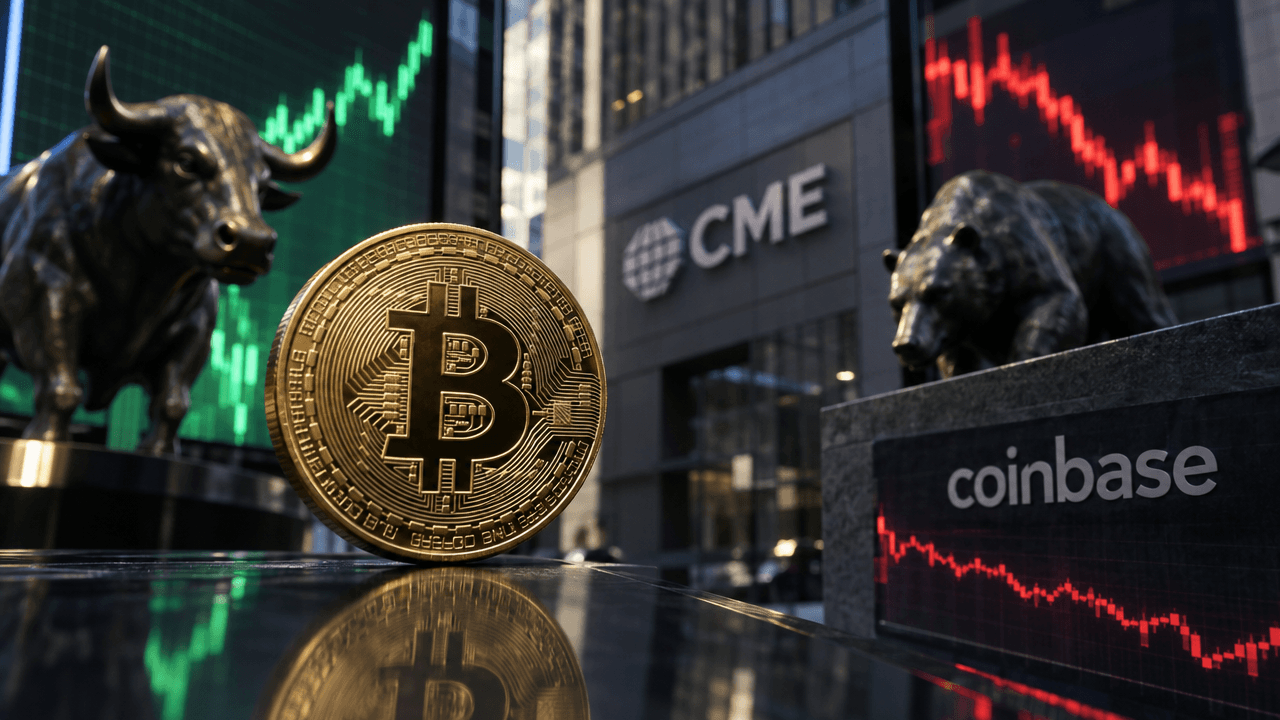
Bitcoin futures positioning is sending a mixed message. The share of dollar-margined traders holding long Bitcoin positions rose to 63.03% on October 24, increasing 2.34 percentage points from the previous day. On the surface, that shift suggests improving bullish sentiment. Yet deeper market indicators tell a more cautious story: CME futures remain heavily tilted toward shorts, while the Coinbase premium is negative. Together, these signals suggest that traders may be willing to maintain tactical long exposure without showing strong conviction that a sustained rally is underway.
The Long Share Tells Only Part Of The Story
A long-position percentage measures the balance between traders positioned for higher prices and those positioned for declines. Bitcoin’s 63.03% dollar-margin long share indicates that longs currently outnumber shorts on the relevant trading venue. The daily increase also shows that short-term sentiment has improved.
However, the metric does not reveal the size of every position, the leverage being used, or whether traders are hedging elsewhere. A market can have more long accounts while still carrying substantial short exposure through larger professional positions. It is therefore risky to interpret a rising long share as proof of broad-based bullish conviction.
The increase may reflect traders attempting to capture a short-term rebound, responding to support near current prices, or reducing bearish exposure after a period of weakness. None of those behaviors necessarily signals that large investors are aggressively accumulating Bitcoin for a longer-term move higher.
The Cme Market Remains Defensive
CME futures provide an important institutional reference point because they are widely used by hedge funds, asset managers, and other professional market participants. Recent data showed leveraged funds holding 5,466 long contracts and 10,408 short contracts as of October 20. Shorts were therefore nearly twice the number of longs, reflecting a defensive institutional posture. [1]
This positioning should be interpreted carefully. A CME short position does not always represent a direct bet that Bitcoin will fall. Some funds use futures to hedge spot holdings, manage risk associated with exchange-traded products, or conduct basis trades involving futures and the underlying asset.
Even with those qualifications, consistently short-heavy positioning indicates that professional traders are not aggressively chasing upside. They may be protecting capital, expecting volatility, or waiting for stronger confirmation before increasing directional exposure. For Bitcoin to establish a more convincing rally, traders would generally want to see CME shorts decline, long exposure increase, or both.
THE COINBASE PREMIUM SIGNALS WEAK U.S. DEMAND
The Coinbase premium compares Bitcoin’s price on Coinbase with prices on other major exchanges. Because Coinbase is widely used by U.S. investors and institutions, a positive premium is often viewed as evidence of stronger American spot demand. A negative reading suggests that Bitcoin is trading at a discount on Coinbase relative to offshore venues.
On October 24, the Coinbase premium stood at approximately negative 0.13%, indicating that U.S. spot buying remained subdued. [1] Earlier readings were also negative, including a level of negative 0.076% on October 19, while CME leveraged funds continued to hold more short contracts than long contracts. [2]
A negative premium is not automatically bearish. It can be affected by regional trading hours, market liquidity, exchange-specific flows, and short-term arbitrage. Nevertheless, when it appears alongside short-heavy CME positioning, the combination suggests that U.S.-based demand is not yet providing a strong foundation for a sustained advance.
What The Divergence Means For Traders
The divergence between a higher retail-oriented long share and more defensive institutional indicators creates an environment where volatility can rise quickly. If Bitcoin moves higher, crowded short positions could be forced to cover, accelerating the rally through a short squeeze. But if prices turn lower, leveraged longs may unwind, creating additional selling pressure.
This is why traders should avoid relying on a single sentiment statistic. A more complete assessment should include open interest, funding rates, liquidations, spot exchange flows, futures basis, and volume. Rising prices supported by increasing spot volume would be more constructive than a move driven primarily by leveraged futures activity.
Traders should also distinguish between a change in positioning and a change in trend. One day of higher long exposure does not establish a durable market reversal. Confirmation requires persistence: several sessions of improving demand, healthier institutional positioning, and a Coinbase premium that returns to positive territory.
Practical Takeaways
First, treat the 63.03% long share as a sign of improving short-term sentiment, not definitive evidence of a bull market. The data shows that more traders are leaning long, but it does not prove that capital is entering the market with strong conviction. [9]
Second, watch the CME contract balance for confirmation. A reduction in the gap between 5,466 long contracts and 10,408 short contracts would suggest that professional positioning is becoming less defensive. [1]
Third, monitor the Coinbase premium alongside price. A sustained positive premium would indicate stronger U.S. spot demand and would make a rally more credible. A persistently negative premium would suggest that upside remains dependent on offshore activity or leverage.
Finally, manage leverage carefully. Conflicting signals often produce rapid moves in both directions. Smaller position sizes, predefined invalidation levels, and a willingness to wait for confirmation can be more valuable than attempting to predict every short-term swing.
Conclusion
Bitcoin futures positioning has improved in one visible area, with dollar-margin long exposure rising to 63.03%. Yet the broader picture remains cautious. Short-heavy CME positioning and a negative Coinbase premium show that professional and U.S.-based demand have not fully embraced a sustained rally.
The key question is not whether Bitcoin has more long accounts today. It is whether those longs are supported by rising spot demand, improving institutional positioning, and durable trading volume. Until those signals align, the market is best viewed as tactically optimistic but structurally unconvinced.