
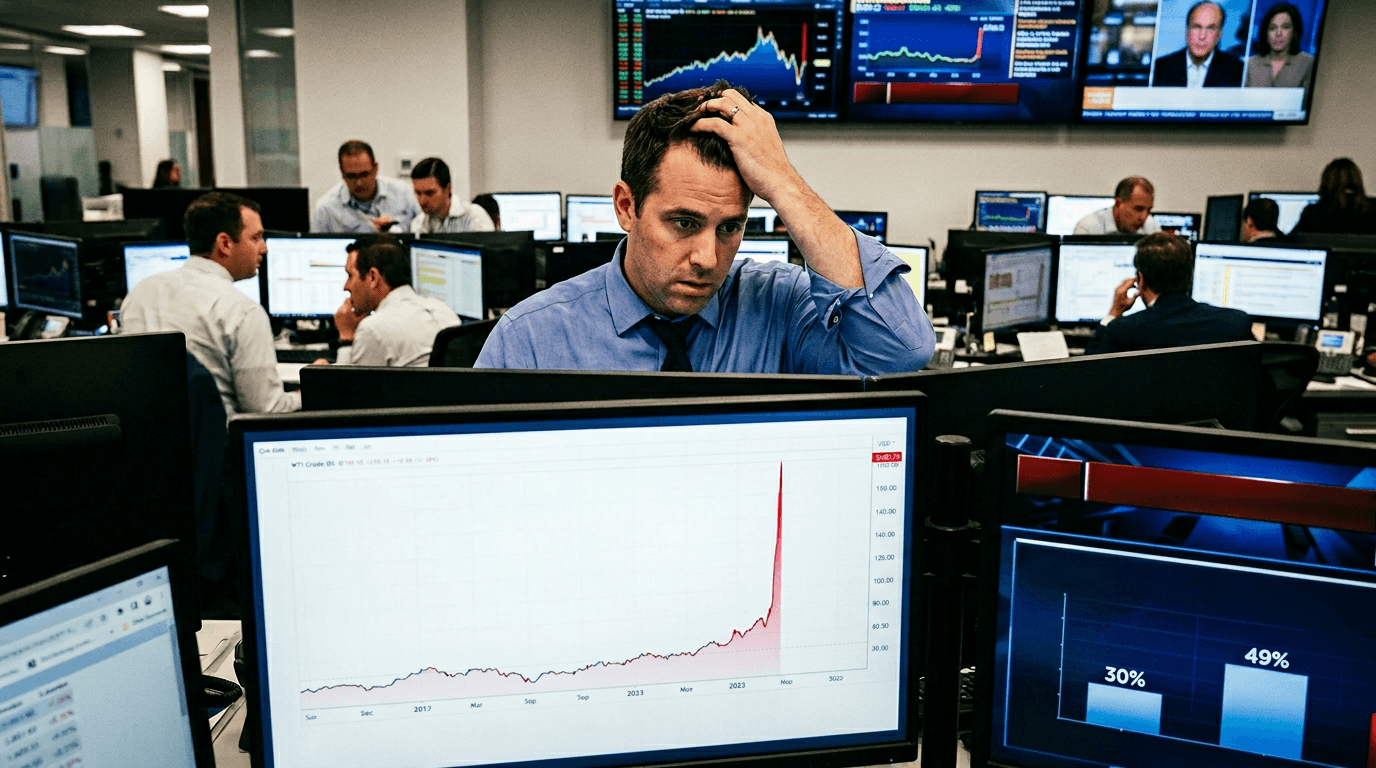
Larry Fink, CEO of BlackRock, the world's largest asset manager, has issued a stark warning about the rising threat of a global recession, driven largely by escalating geopolitical tensions in the Middle East. In recent interviews, Fink highlighted that if these conflicts persist and further disrupt energy markets, oil prices could soar to $150 per barrel, setting off a severe worldwide economic downturn with significant repercussions for growth, inflation, and market stability.
The Oil Price Trigger
Fink's caution focuses on a crucial vulnerability: global energy markets. The ongoing unrest in the Middle East has already impacted shipping through the Strait of Hormuz, a key international waterway where much of the world's oil supply transits. As shipping insurers grow wary of the risks posed by transporting containers through these contested waters, vessel backlogs are increasing, keeping energy prices high.
According to Fink, this scenario presents two extreme outcomes. On one hand, if Iran is welcomed back into the international fold and regional tensions diminish, oil prices could plummet to as low as $40 per barrel, fostering conditions for economic growth and plenty. Conversely, if Iran remains a destabilizing force and geopolitical threats do not abate, oil prices could edge toward $150 per barrel—a scenario Fink describes as having "profound implications" for the global economy.
A critical insight from Fink's analysis is that even if the conflict itself settles, the long-term threat to regional stability and the Strait of Hormuz could maintain oil prices well above $100 for a sustained period. This prolonged elevation in energy prices, as opposed to a short-lived shock, poses the real economic threat.
Recession Odds Are Climbing
Fink is not the only one sounding the alarm about a potential recession. Major financial institutions have rapidly adjusted their recession risk assessments. Goldman Sachs has increased its recession forecast to 30% from 25%, reflecting the swift repricing of risks across markets. More starkly, Moody's Analytics chief economist Mark Zandi has placed recession odds at 49%, suggesting the probability could exceed 50% if high oil prices persist.
Zandi's analysis suggests that even a prolonged rise to $125 oil might be enough to push the U.S. economy into recession. This underscores how vulnerable the global economy remains to energy price shocks, particularly given the persistent inflation concerns despite recent central bank efforts.
The Inflation-recession Nexus
The recession mechanism Fink describes operates through inflation transmission. Higher oil prices ripple through global supply chains, increasing fuel costs and shipping expenses. These increased costs pass through to consumers and businesses, intensifying inflationary pressures that have already constrained economic activity.
The Fed and other central banks face a challenging policy dilemma. If they maintain high interest rates to combat inflation, they risk exacerbating recession conditions. If they shift to rate cuts to support growth, they risk reigniting inflation expectations. Energy-driven inflation, in particular, is difficult to address through monetary policy alone because it reflects real supply constraints rather than excess demand.
Fink emphasized that the economic consequences of sustained high energy prices will eventually become severe and spread quickly through interconnected global markets. What begins as an energy problem morphs into a broader economic growth issue as consumers and businesses cut spending, investment declines, and unemployment pressures mount.
Market Implications And Investor Considerations
The uncertainty surrounding the Middle East conflict and oil prices is already impacting asset valuations across multiple classes. Gold, traditionally a hedge against inflation and economic uncertainty, has seen increased demand. The euro faces challenges from both recession risks and geopolitical instability affecting Europe's energy security. Bitcoin and other risk assets reflect heightened market volatility driven by conflicting economic scenarios.
For investors, the key takeaway is that traditional portfolio allocations may require adjustment. Long-duration bonds become more attractive in recession scenarios, while equity valuations currently reflect what many see as insufficient compensation for recession risk. Energy sector investments present a paradox—higher prices support profits but signal economic stress.
Strategic Takeaways For Market Participants
First, closely monitor the Strait of Hormuz and Middle East developments; geopolitical events now carry direct economic consequences. Second, reassess portfolio positioning with current recession probabilities now ranging from 30% to 49% depending on the institution—this is a meaningful shift from earlier in 2026. Third, consider that energy prices may remain elevated for an extended period rather than resolving quickly, creating a structural inflation challenge. Fourth, prepare for increased market volatility as economic data and geopolitical developments will increasingly diverge from current asset valuations.
The broader message from Fink and other market leaders is clear: the global economy faces a genuine inflection point. The next twelve months will likely determine whether we experience the abundance scenario with lower oil and stronger growth, or the severe recession outcome that elevated energy prices and persistent geopolitical tensions could trigger.
---
NEWSIMPACTSCORE: 8