
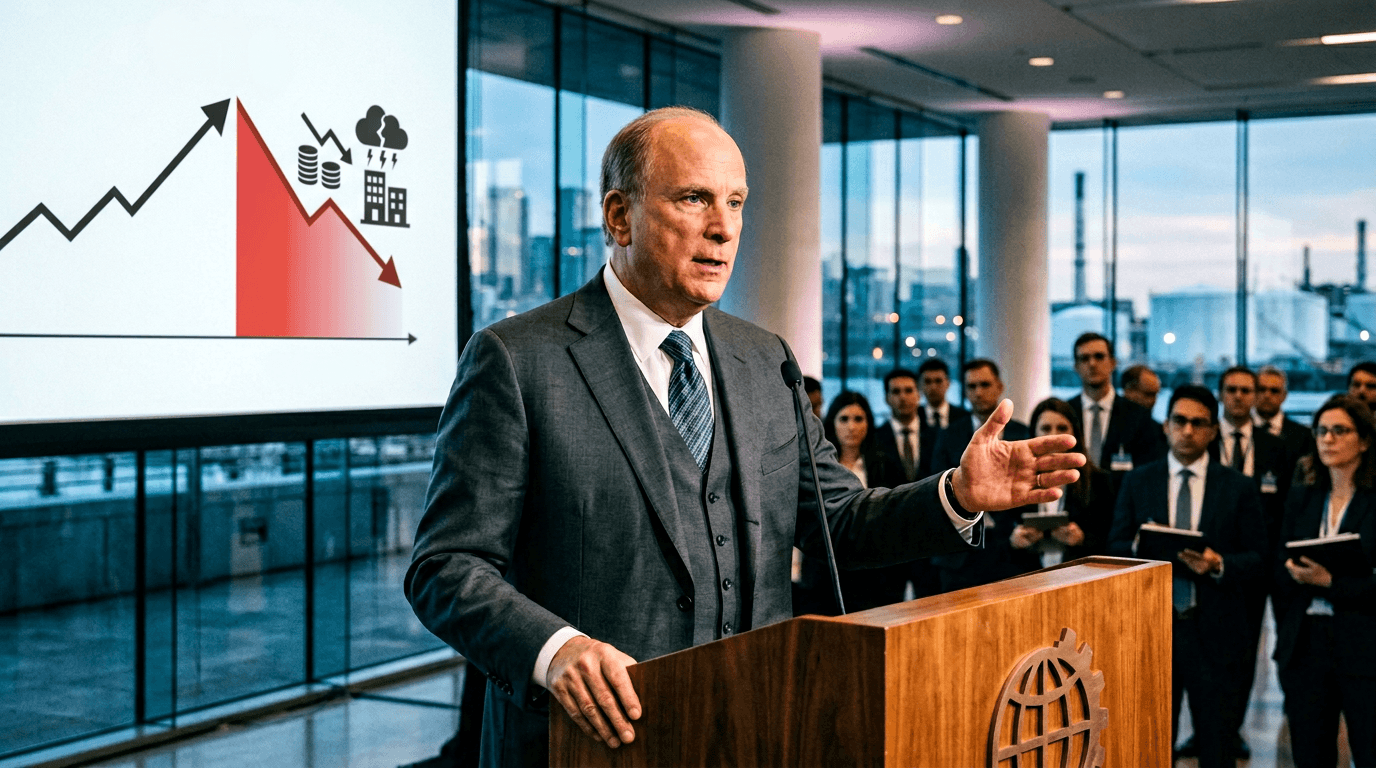
BlackRock CEO Larry Fink Issues a Grave Warning: The Looming Threat of a Global Recession
In a recent high-stakes interview, BlackRock's CEO, Larry Fink, has raised the alarm about a potential severe recession driven by soaring oil prices and geopolitical instability. If tensions in the Middle East continue, Fink predicts oil prices could skyrocket to $150 per barrel, potentially tipping the global economy into recession within the next year. This cautionary note is particularly weighty, given that BlackRock is the world's largest asset manager, managing trillions in investments worldwide. As recession fears intensify across Wall Street, investors and policymakers are scrambling to decode Fink's warning and its implications for markets, employment, and economic growth in the coming months.
The Oil Price Quandary
Central to Fink's alert is a vital concern: energy prices have become perilously volatile, with the current trajectory unsustainable for the global economy. Fink outlined two extreme scenarios for the Middle East conflict. On one side, if Iran re-integrates into the global community, oil could drop to $40 per barrel, fostering growth and abundance. Conversely, if tensions persist, oil could surge past $150, leading to what Fink describes as a "stark, steep recession." He underscored that a middle ground is unlikely. During his BBC interview, Fink stated, "Everybody has to recognize that there's not going to come somewhere in the middle. It's going to be one of two extremes." This binary outcome introduces unprecedented uncertainty for markets and economies globally.
The repercussions of sustained $150 oil are dire. Fuel costs would spike for consumers, and transportation expenses would ripple through the economy. Businesses would pass higher costs to consumers, inflation would rise, discretionary spending would fall, and growth would slow. Even moderate oil prices pose risks. Moody's Analytics Chief Economist Mark Zandi contends that sustained prices around $125 per barrel could independently push the U.S. economy into recession.
Wall Street's Recession Reality Check
Fink's warning hasn't gone unnoticed among financial institutions. Major Wall Street firms are swiftly revising their recession probability forecasts upward, reflecting real concern about economic challenges. Goldman Sachs raised its U.S. recession odds to 30 percent from 25 percent, a notable shift in just weeks as conditions worsen. JPMorgan has been more aggressive, placing recession probability at 35 percent, arguing that markets are underestimating the impact of a prolonged oil shock on demand and employment. Bank of America warns that recession risks are significantly underpriced, cautioning that extended conflict could severely slow global growth. Perhaps most concerning is Moody's Analytics assessment, with Chief Economist Mark Zandi putting recession odds at 49 percent, suggesting they could exceed 50 percent if oil prices remain high.
These revised forecasts signify a dramatic repricing of recession risk in real-time. Just weeks ago, recession probability estimates hovered around 20 percent. The escalating recession fears underscore genuine uncertainty about geopolitical outcomes and energy market dynamics that exceed the control of traditional economic policymakers.
The Geopolitical Wildcard
The root of this economic anxiety lies in the Strait of Hormuz, one of the world's most critical chokepoints for energy supply. Most of the world's oil passes through this waterway separating Iran from Oman. Since the conflict began on February 28, 2026, shipping activity has nearly halted as insurance companies hesitate to back vessels navigating these waters. Fink emphasized that Iran remains a fundamental threat to regional stability, trade, and peaceful coexistence in the Gulf Cooperation Council region. Until this geopolitical situation stabilizes, energy markets will remain fragile and vulnerable to supply shocks.
The duration of this conflict is the critical variable. A quick resolution could normalize energy markets. But if tensions persist for months or years, the economic consequences could be profound and long-lasting. Fink suggested that markets could face years of oil prices hovering near $100 to $150 per barrel if the situation remains unresolved.
What This Means for Investors
For investors, Fink's warning marks a critical inflection point necessitating portfolio reassessment. Traditional defensive strategies focused on bonds may not shield against the stagflation scenario that high oil prices typically create. Diversifying into energy-independent sectors and geographic regions becomes increasingly crucial. Additionally, investors should prepare for potential sharp stock market declines if recession probabilities continue to rise. The uncertainty itself breeds volatility, and positioning for multiple scenarios has become essential.
Fink's message is unmistakable: complacency about recession risk is no longer justified. Economic conditions are deteriorating, and external geopolitical factors are driving risks that cannot be easily predicted or controlled. Vigilance, diversification, and scenario planning are now prerequisites for navigating markets in 2026.