
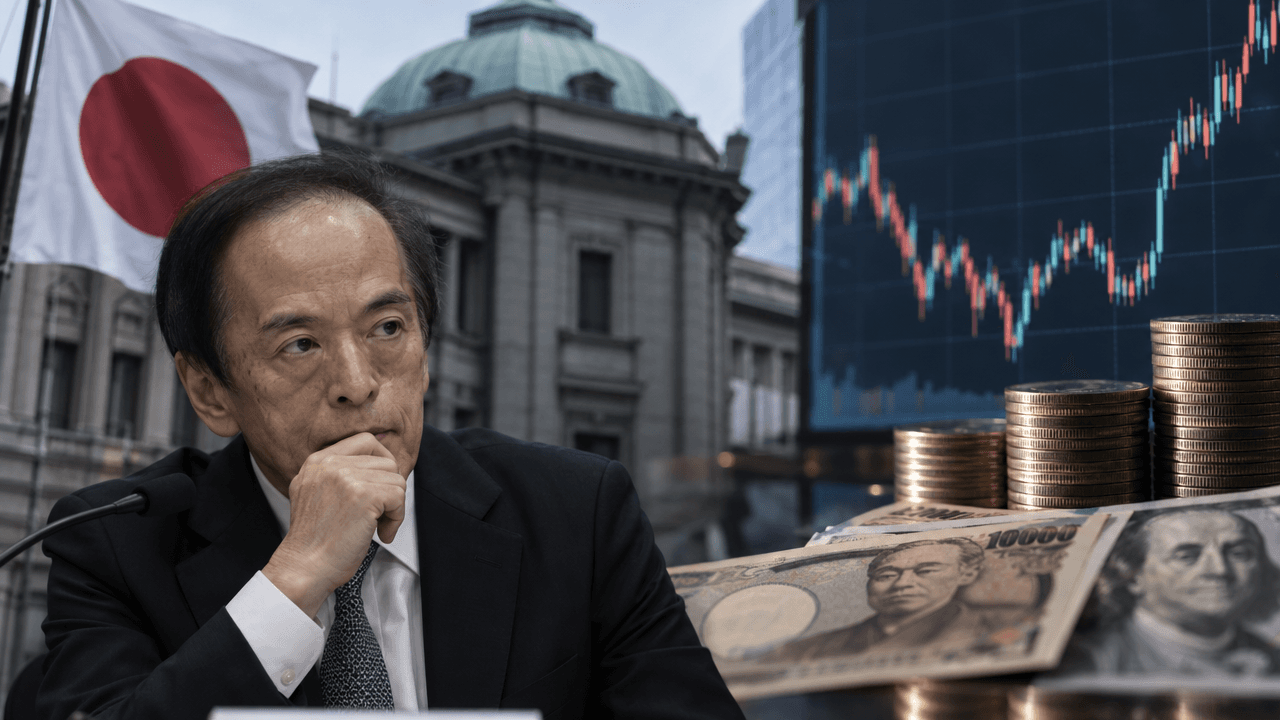
The Bank of Japan’s decision to leave its policy rate unchanged has delivered no immediate shock to currency markets, but it has not removed the possibility of tighter policy ahead. The BOJ maintained its short-term interest-rate target at 1.25% on October 30, while USD/JPY remained near 157.7 as traders assessed the central bank’s inflation outlook and signals about a potential December increase. [3][4]
For traders, the key message is that this was a pause rather than a clear shift away from normalization. The BOJ appears willing to study the effects of previous rate increases, while keeping the door open to additional tightening if inflation and economic conditions continue to support it.
The Boj Chooses A Pause, Not A Policy Reversal
The BOJ kept its uncollateralized overnight call rate at around 1.25%. The decision was widely expected, with the central bank choosing not to deliver back-to-back rate increases after its previous adjustment. The policy vote was reportedly 8-1, suggesting that most policymakers supported waiting for more evidence before acting again. [3][6]
A pause can be interpreted in two ways. In a dovish reading, the BOJ may be concerned that higher borrowing costs could weaken demand or undermine economic growth. In a more hawkish reading, policymakers may simply want to evaluate how earlier tightening is filtering through lending conditions, wages, household spending and business investment.
That distinction matters because interest-rate markets are already focused on the next meeting. Analysts surveyed by Reuters largely expect the policy rate to rise to 1.50% in December, although the timing remains dependent on incoming data and comments from BOJ Governor Kazuo Ueda. [4]
Inflation Remains Central To The Outlook
The BOJ’s most important achievement is that inflation has moved closer to its long-standing 2% price-stability objective. Recent communication indicated that the target has effectively been reached, marking a major change from the years when Japan struggled with deflation and weak price growth. [4][6]
However, reaching the target does not automatically mean the BOJ will raise rates at every meeting. Officials must determine whether inflation is sustainable or being driven mainly by temporary factors such as imported energy, food prices or currency weakness.
For markets, the composition of inflation is particularly important. Price increases supported by stronger wages, improved corporate pricing power and steady consumer demand would give policymakers more confidence to tighten. Inflation caused primarily by a weaker yen and higher import costs could create a more complicated policy dilemma, especially if household purchasing power deteriorates.
The central bank’s revised inflation outlook and renewed emphasis on inflation risks therefore carry more significance than the unchanged rate itself. The BOJ appears to be acknowledging that price pressures may remain persistent enough to justify further normalization. [5]
WHY USD/JPY IS STILL NEAR 157.7
USD/JPY reflects the relative appeal of dollar-denominated assets compared with yen-denominated assets. Even with Japan’s policy rate now at 1.25%, the interest-rate gap between the United States and Japan remains substantial. That differential can encourage investors to hold dollars or borrow yen to purchase higher-yielding assets elsewhere.
This helps explain why the yen remains weak despite the BOJ’s tightening cycle. A higher Japanese policy rate may support the currency, but the effect can be limited if U.S. Treasury yields remain elevated or if markets believe the Federal Reserve will keep rates higher for longer.
USD/JPY traded around 157.7 to 157.8 during the decision period, close to levels that have kept intervention concerns alive. [2][11] A move toward 160 would likely attract greater attention from Japanese officials and traders because rapid yen depreciation can raise import costs and increase political pressure for action.
The initial reaction to a central-bank decision can also be misleading. If a rate hold has already been fully priced in, the currency may barely move. The larger move often comes later, when traders revise expectations for the next meeting or respond to changes in bond yields and official guidance.
What Traders Should Watch Next
The most important question for USD/JPY is whether the BOJ’s communication makes a December hike more or less likely. A firm signal that inflation is becoming durable could strengthen the yen and push USD/JPY lower. Conversely, cautious language focused on economic risks could leave the pair supported near current levels.
Traders should monitor several developments
Japanese wage data will help determine whether price growth is being reinforced by household income.
Core inflation readings will show whether underlying price pressures remain close to or above the BOJ’s target.
U.S. employment, inflation and Treasury-yield data will influence the dollar side of the pair.
Comments from BOJ officials may clarify whether 1.50% is becoming the next likely policy destination.
Price action around 158 and 160 may also be important. Sustained trading above those levels could signal continued dollar strength, while a decisive move below recent support may indicate that markets are bringing forward expectations for Japanese tightening.
Practical Takeaways For Simfi Traders
The BOJ decision is a useful reminder that an unchanged interest rate does not necessarily mean unchanged market risk. Traders should distinguish between the policy action and the guidance surrounding it.
Avoid treating USD/JPY as a one-factor trade. The BOJ influences the yen, but U.S. yields, global risk sentiment, equity-market volatility and intervention concerns can be equally important.
Scenario planning is especially valuable. A December hike combined with softer U.S. data could produce a sharp USD/JPY decline. A BOJ hold accompanied by cautious guidance and stronger U.S. yields could support another move higher.
Position sizing also deserves attention. Currency pairs near politically sensitive levels can experience abrupt moves when officials comment or when liquidity thins. Using defined risk and avoiding excessive leverage can help traders manage headline-driven volatility.
Conclusion
The BOJ’s decision to hold its policy rate at 1.25% leaves the market in a waiting phase rather than ending Japan’s tightening story. Inflation is closer to the central bank’s objective, the yen remains weak near 157.7 per dollar, and expectations for a December hike remain significant. [3][4]
For USD/JPY traders, the next major move will likely depend on the interaction between BOJ guidance and U.S. interest-rate expectations. The immediate decision was predictable; the path that follows may be far more consequential.