
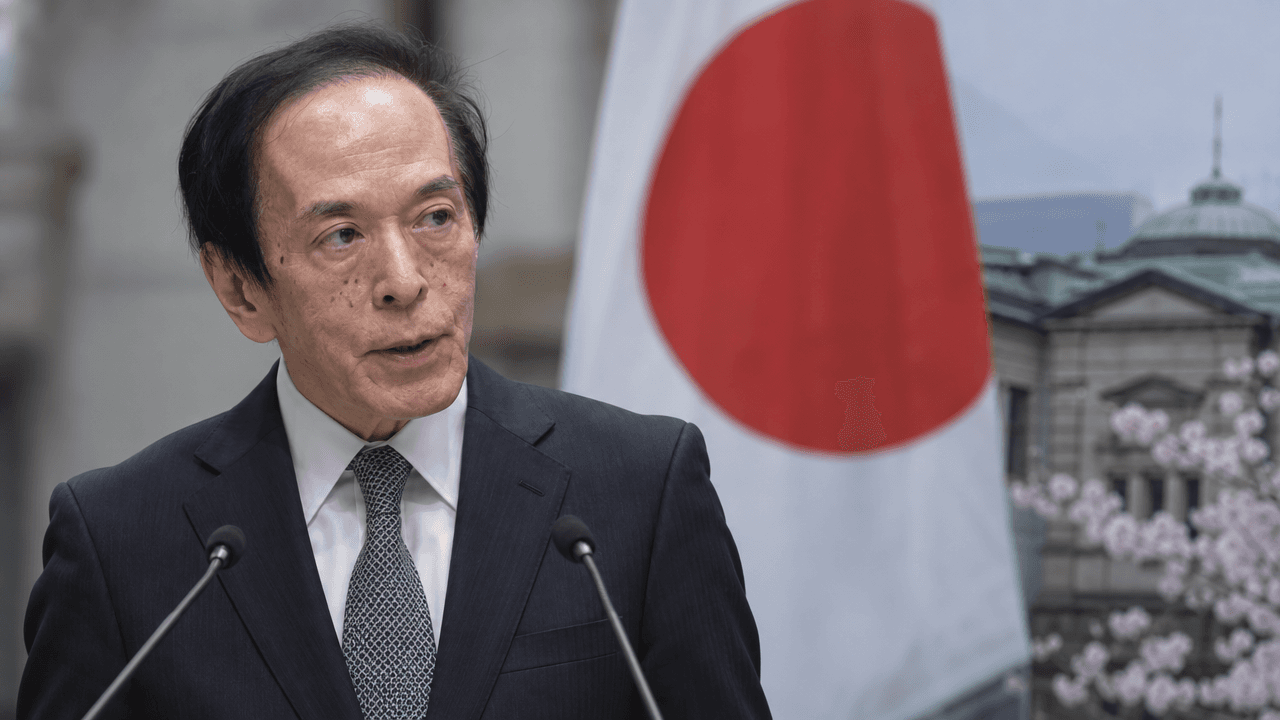
The Bank of Japan is keeping the door open to further interest-rate increases, even as markets anticipate that policymakers may leave borrowing costs unchanged at the October 30 meeting. Governor Kazuo Ueda’s latest comments show that the BOJ’s policy debate has shifted: the central bank is no longer focused only on ending deflation, but also on preventing inflation from becoming entrenched above its 2% objective.
The BOJ’s policy rate currently stands at 1.25%, following a rate increase in September. Market participants generally expect the central bank to pause this month, but expectations for a possible move in December have strengthened. Some market pricing indicates roughly a 75% probability of a December hike, depending on incoming inflation, wage, currency, and growth data. [3][6]
Inflation Is Moving To The Center Of Policy
Ueda said underlying inflation is now “quite close” to the BOJ’s 2% target. That development is significant because Japan has spent decades struggling with weak price growth, deflationary pressure, and stagnant wage expectations.
The central bank’s challenge is now becoming more familiar to policymakers in other major economies: how to keep inflation near target without unnecessarily damaging economic activity. Ueda emphasized that anchoring inflation around 2% has become increasingly important. He also warned that the BOJ cannot tolerate a renewed acceleration in prices above that level. [2][9]
Several forces are contributing to Japan’s price pressure. A tight labor market is supporting wage growth, while strong global demand connected to artificial intelligence investment is increasing pressure on goods and services. Energy costs, imported inflation, and the yen’s exchange rate are also influencing household prices.
For traders, this means that a single monthly inflation report may be less important than the broader trend. The BOJ will likely examine whether companies are passing higher costs to consumers, whether wage gains are becoming persistent, and whether demand is strong enough to sustain inflation without temporary external shocks.
Why Higher Rates Could Support The Bond Market
At first glance, additional rate increases might appear negative for Japanese government bonds. Higher policy rates can lift short-term yields and reduce the value of existing bonds. Yet Ueda presented a different argument: carefully calibrated rate increases could help stabilize the JGB market over time.
If investors believe the BOJ is allowing inflation to overshoot, they may demand higher long-term yields to compensate for the risk. That can produce sharp movements in bond prices and borrowing costs. By adjusting monetary policy at an appropriate pace, the BOJ may reduce fears that inflation will become uncontrolled.
Ueda said failing to adjust the policy rate appropriately could cause long-term interest rates to rise more abruptly because of concerns about an inflation overshoot. In that sense, gradual tightening may be viewed as a stabilizing force rather than a threat to the bond market. [1][2]
The distinction between an orderly rate increase and a sudden bond-market repricing is crucial. Investors are not simply asking whether rates will rise. They are also evaluating the timing, pace, and communication surrounding each move.
What The Yen Is Signaling
The yen edged higher as traders assessed the possibility of future BOJ tightening. A more hawkish central bank can support the currency by narrowing the interest-rate gap between Japan and countries where borrowing costs are higher.
For years, the yen was pressured by Japan’s extremely low interest rates. Investors could borrow cheaply in yen and shift funds into higher-yielding assets overseas, a strategy commonly associated with carry trades. When expectations for Japanese rate increases rise, some of those positions may become less attractive.
However, currency markets are forward-looking and highly sensitive to expectations. If traders believe a rate hike is already fully priced in, the yen may not strengthen significantly after the actual decision. Conversely, a stronger-than-expected signal from Ueda could produce a sharper move, particularly if it suggests that December tightening is likely.
The yen will also remain influenced by U.S. interest rates, global risk sentiment, energy prices, and Japan’s trade position. BOJ policy is important, but it is only one part of the currency equation.
What Traders Should Watch Next
The October 30 policy meeting is the immediate focus. A pause would not necessarily represent a dovish shift. If the BOJ maintains its 1.25% policy rate while repeating that additional hikes remain possible, markets may interpret the decision as a temporary delay rather than a change in direction.
Traders should monitor four areas. First, watch Japan’s underlying inflation data for evidence that price growth is becoming persistent. Second, follow wage negotiations and labor-market indicators, because stronger wages can support household spending. Third, track Japanese government bond yields for signs of disorderly market pressure. Finally, monitor the yen, especially against the U.S. dollar, as a real-time measure of changing policy expectations.
Risk management is especially important around central-bank decisions. Traders should account for the possibility that the BOJ could leave rates unchanged but issue a more forceful statement, creating a market reaction similar to an actual hike.
The Bigger Picture For Markets
The BOJ’s message is carefully balanced. Policymakers do not appear committed to a rapid tightening cycle, but they are also unwilling to dismiss the risk that inflation could become too persistent. The central bank wants to normalize policy gradually while preserving confidence in Japan’s economic recovery and bond market.
For investors, the key takeaway is that the direction of travel remains toward less monetary accommodation. The timing of each rate increase will depend on data, but the option is clearly still active. Ueda’s comments reinforce the idea that future hikes could be used not only to restrain inflation, but also to prevent a disorderly rise in long-term borrowing costs.
Japan’s transition away from ultra-loose monetary policy is therefore likely to remain a major market theme. Every inflation report, wage update, bond-yield movement, and yen rally may change expectations for the next BOJ decision.