
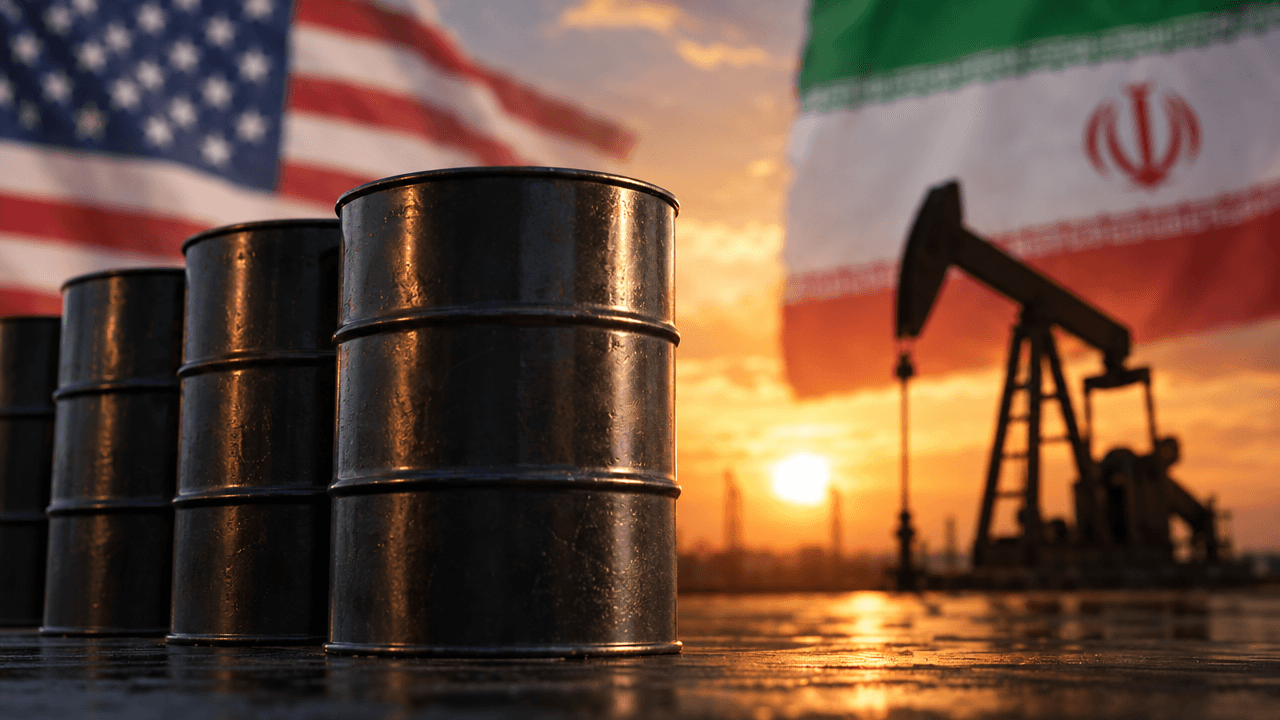
Brent crude’s move above $110 per barrel shows how quickly geopolitical headlines can reshape financial markets. On Wednesday, October 21, Brent futures rose roughly 1.1% to 1.5%, trading around $110.15 to $110.38, after reports of an imminent U.S.–Iran peace agreement were described as inaccurate. [1][4]
The reversal highlights a central reality of energy markets: oil prices respond not only to physical supply and demand, but also to expectations about what may happen next. When traders believed diplomacy could reduce conflict and reopen threatened shipping routes, crude prices pulled back. When those hopes weakened, geopolitical risk returned to the price.
WHY BRENT ROSE ABOVE $110
The latest rally followed a volatile session in which Brent briefly reached $111.99 before settling lower near $108.79 as traders considered reports of mediation involving Iran, Pakistan and Qatar. [7][12] The market then recovered as the prospect of an immediate agreement faded.
U.S. Secretary of State Marco Rubio reportedly characterized a peace deal as extremely difficult and said economic pressure would continue until Iran stopped targeting commercial shipping in the Strait of Hormuz. [1] That message reinforced concerns that disruption in one of the world’s most important energy corridors could continue.
The diplomatic reports remain fluid. Some accounts suggested that a proposal supported by Qatar and Pakistan had received positive responses from Washington and Tehran, while a diplomat involved in the discussions rejected the idea that an agreement was imminent. [5][8] This conflicting information has made headline risk especially high.
For traders, the key lesson is that a peace report is not the same as a signed, implemented agreement. Until a deal is formally announced and commercial traffic returns to normal, the market is likely to maintain a geopolitical risk premium.
The Strait Of Hormuz And Supply Risk
The Strait of Hormuz is strategically important because it is a major route for crude oil and other energy shipments. Any sustained threat to tankers, insurance arrangements or navigation through the waterway can affect prices even if global production has not yet declined substantially.
Oil markets often move before a physical shortage appears. Traders price the possibility that cargoes could be delayed, rerouted or blocked. Refiners may also compete more aggressively for available barrels, while governments and businesses may increase inventories as a precaution.
That is why a disputed peace-deal report can move Brent by more than a dollar in a short period. A confirmed agreement could reduce the risk premium and push prices lower. A breakdown in talks, further attacks or restrictions on shipping could produce the opposite effect.
Additional support for Wednesday’s move came from reports of declining U.S. crude and fuel inventories. [4] Falling inventories can suggest firm demand or tighter near-term supply, giving geopolitical developments greater influence over prices.
Inflation And Interest-rate Consequences
A sustained oil price above $110 would create a fresh challenge for inflation-sensitive economies. Higher crude prices feed directly into gasoline, diesel, jet fuel and heating costs. They can also raise transportation, manufacturing and food prices because energy is embedded throughout supply chains.
The effect is not always immediate. Fuel prices may adjust relatively quickly, while broader business costs take longer to pass through to consumers. If elevated energy prices persist, however, they can slow the decline in headline inflation or even push inflation higher again.
That creates a difficult environment for central banks. Policymakers may be reluctant to cut interest rates if energy-driven inflation becomes persistent. At the same time, higher fuel costs reduce household purchasing power and can weaken economic growth. The result is a form of stagflation risk: slower activity combined with renewed price pressure.
Markets therefore need to distinguish between a short-lived geopolitical spike and a prolonged supply shock. A brief move above $110 may have limited policy consequences. Several months of elevated prices would be far more significant for inflation expectations, bond yields and interest-rate forecasts.
Currencies, Equities And Trading Conditions
Oil-producing economies may benefit when crude rises. Commodity-linked currencies, including the Canadian dollar and Norwegian krone, can receive support as investors anticipate stronger export revenues. However, currency reactions depend on broader factors such as interest-rate differentials, domestic growth and overall risk appetite.
Oil-importing economies face a more complicated outlook. Higher energy costs can pressure trade balances, corporate margins and consumer spending. Airlines, transport companies, chemical producers and energy-intensive manufacturers may be particularly sensitive.
Equity-market reactions can also diverge. Energy producers may outperform as revenue expectations improve, while transportation and consumer sectors may face margin pressure. Broad indexes may become more volatile if investors interpret higher oil prices as a threat to global growth.
For SimFi traders, this environment rewards disciplined scenario planning rather than headline chasing. Before entering a position, define what would confirm the bullish case, such as continued shipping disruption or a breakdown in negotiations. Also identify what would invalidate it, including a verified ceasefire, restored tanker traffic or a clear diplomatic agreement.
Practical Takeaways For Traders
First, monitor confirmation rather than relying on a single headline. Diplomatic claims can move prices sharply, but official statements and evidence of changed shipping conditions are more reliable.
Second, watch both Brent and WTI. Brent is especially sensitive to international supply risk, while WTI also reflects North American inventories and infrastructure conditions. Divergence between the two benchmarks can provide useful information about where pressure is building.
Third, track the dollar, bond yields and inflation expectations alongside crude. Oil does not trade in isolation. A stronger dollar can weigh on commodities, while rising yields may signal that markets expect central banks to remain restrictive.
Finally, manage position size carefully. Geopolitical markets can reverse rapidly when negotiations appear to advance or fail. Stops, predefined risk limits and smaller exposure are often more valuable than attempting to predict the next headline.
Conclusion
Brent crude’s return above $110 is a reminder that markets price probabilities, not certainties. Reports of a possible U.S.–Iran agreement briefly reduced supply concerns, but disputed claims and warnings that negotiations remain difficult restored the risk premium.
The next major move will depend on whether diplomacy produces a verifiable reduction in shipping and supply risk. Until then, traders should expect volatility, monitor inflation-sensitive assets and treat every peace-deal headline as provisional. The most effective approach is not to forecast one outcome with confidence, but to prepare for both a diplomatic breakthrough and a renewed escalation.