
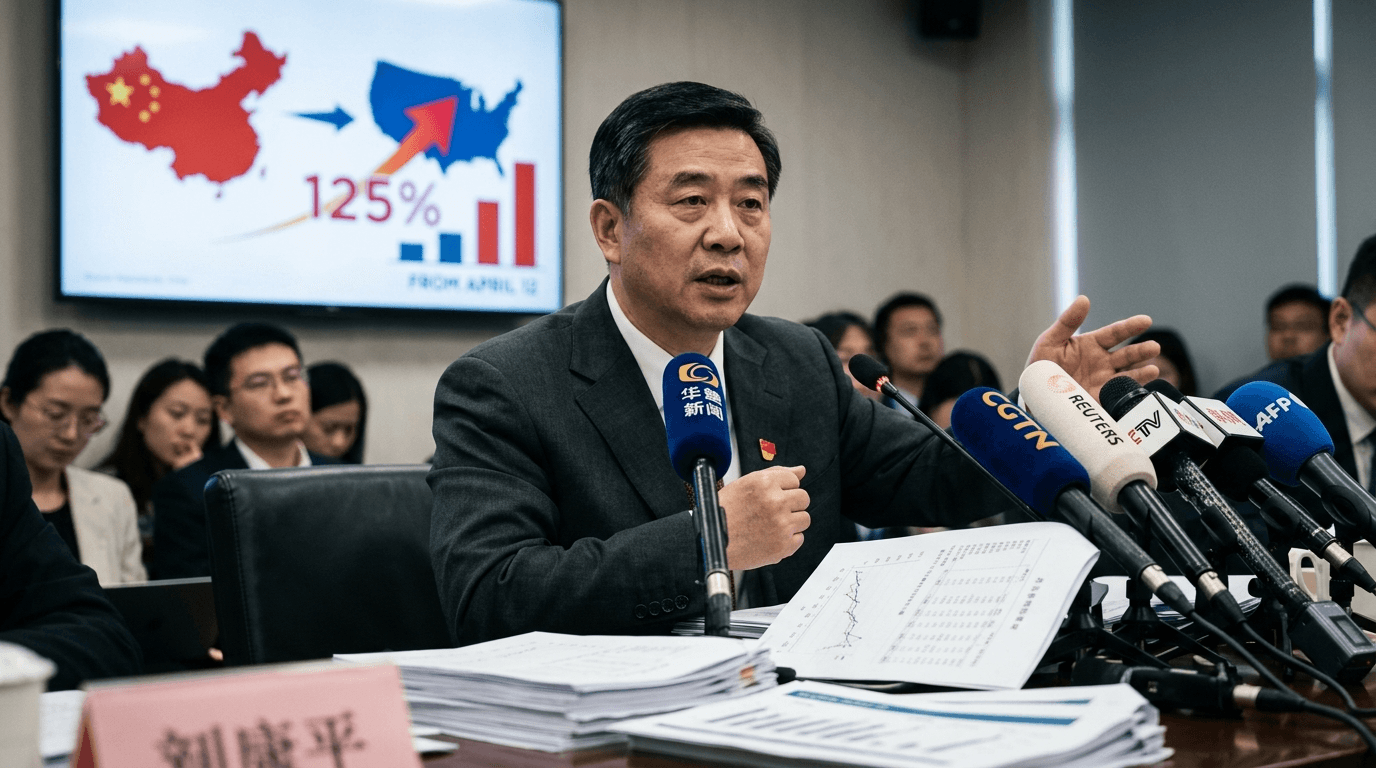
China's Tariff Escalation: A Tipping Point in US Trade Conflict
In April 2025, the trade tension between the United States and China reached a pivotal moment when China announced a dramatic increase in tariffs on US goods to 125%, effective April 12, 2025. This was a leap from the previous 84% rate, marking one of the most aggressive responses in the ongoing trade war.[1] This significant escalation reshaped international commerce and introduced substantial volatility across various asset classes. For traders and investors in simulated finance environments, understanding this escalation offers vital insights into how trade policies ripple through markets, presenting both risks and opportunities.
The Rapid Escalation Timeline
To understand the gravity of China's 125% tariff announcement, it’s crucial to consider the swift sequence of events that led to it. On April 10, 2025, the United States raised tariffs on Chinese goods to 145%, prompting an immediate counter-response from Beijing.[1] In just one day, China's Ministry of Finance announced its own tariff hike to 125%, effective April 12. This rapid escalation illustrates how quickly trade tensions can intensify when both parties are committed to aggressive tactics. The speed of these changes left businesses scrambling to adjust supply chains and pricing strategies, heightening market uncertainty and creating volatility that traders in simulation environments must keenly observe.
Unpacking the Economic Rationale
China's accompanying statement provided crucial context for its tariff decision. The Ministry of Finance indicated that under the current tariff conditions, the market could no longer absorb US goods exported to China.[1] This suggests that the tariffs had reached a level deemed economically unsustainable, effectively disrupting major trade flows. China also criticized the US approach, branding the high tariffs as "a serious violation of international economic and trade rules" and "unilateral bullying and coercion."[1] Despite this strong rhetoric, China signaled through an April 9 State Council white paper that it remained open to talks with the US, suggesting that diplomatic avenues were still theoretically possible.[1]
Implications for Market Traders
The tariff escalation's impact extended well beyond the US-China trade relationship. Multiple asset classes faced substantial headwinds as traders reevaluated risk scenarios. Currency markets experienced volatility, with fluctuations in the Chinese yuan and US dollar responding to the shifting trade outlook. Equity markets were pressured, especially for companies heavily reliant on Chinese supply chains or markets. Commodity prices mirrored the uncertainty surrounding future trade volumes, particularly raw materials central to US-China trade. For traders in simulated finance environments, this period exemplified how macroeconomic policy decisions can create trading opportunities across various markets and timeframes. The challenge lay in identifying which sectors and instruments would be most affected by the tariff changes and positioning accordingly.
Key Lessons for Simulated Traders
China's tariff escalation offers several critical lessons for traders monitoring global trade dynamics. Firstly, policy announcements can rapidly move markets, especially when they signify substantial changes from past levels. The leap from 84% to 125% represented a 50% increase in tariff rates, far from a minor adjustment. Secondly, the language used in announcements is significant for understanding policymakers' intentions. China's assertion that this was the "final hike" suggested a ceiling, potentially shaping market expectations regarding future escalations. Thirdly, trade disputes generate volatility across multiple asset classes, necessitating a systematic approach to correlation effects. Recognizing these dynamics equips traders in simulation environments with the tools to develop sophisticated risk management and position-sizing strategies.
Looking Ahead Beyond the Announcement
While China stated that the 125% tariff marked a final increase, broader trade tensions persisted.[1] The fact that both nations maintained aggressive tariff stances raised fundamental questions about the future of bilateral trade relationships and global supply chain structures. Companies would need to adjust sourcing strategies, pricing models, and market access approaches significantly. For traders, this indicated that the tariff announcement was not an isolated incident but rather a point within a larger trade policy narrative that would continue to generate trading opportunities and challenges.
China's decision to raise tariffs to 125% was a critical moment in the 2025 trade conflict, demanding close attention from market participants. The rapid escalation, explicit messaging regarding market tolerance levels, and the maintenance of diplomatic channels created a complex environment requiring traders to balance multiple scenarios and timeframes. Understanding these dynamics enhances the analytical frameworks that traders apply to macroeconomic events and policy-driven market movements.