
From the search results: - China raised tariffs from 84% to 125% effective April 12, 2025[1][2] - This was in response to US raising tariffs to 145% on April 10, 2025[3] - Trump had increased reciprocal tariffs on China to 125%, plus 20% tariffs related to fentanyl concerns, totaling 145%[3] - China indicated this would be the final hike and said the market can no longer accept US goods at current tariff levels[1] - China's Ministry of Finance added 50% additional tariff on US goods as a direct response[3] - China added 12 US companies to its export control list[3] - China indicated it would "fight to the end" while leaving door open for talks[3]
Key points to cover: - The escalation of tariffs - Timeline and effective dates - Market implications - Impact on trade - Future outlook
Important: The instructions say I must output ONLY the article content in PLAIN TEXT format, then at the very end add TITLE, EXCERPT, and NEWSIMPACTSCORE on separate lines. I should NOT include any preamble like "Here is the article" or "Below you'll find."
The article should be approximately 800 words, with 3-5 sections, plain text format with ALL CAPS section headings on their own lines.
Let me write this article focusing on: 1. Opening paragraph setting the scene 2. The escalation timeline 3. Market implications 4. Impact on businesses and traders 5. Looking ahead
I need to base all claims on the search results provided and cite appropriately.
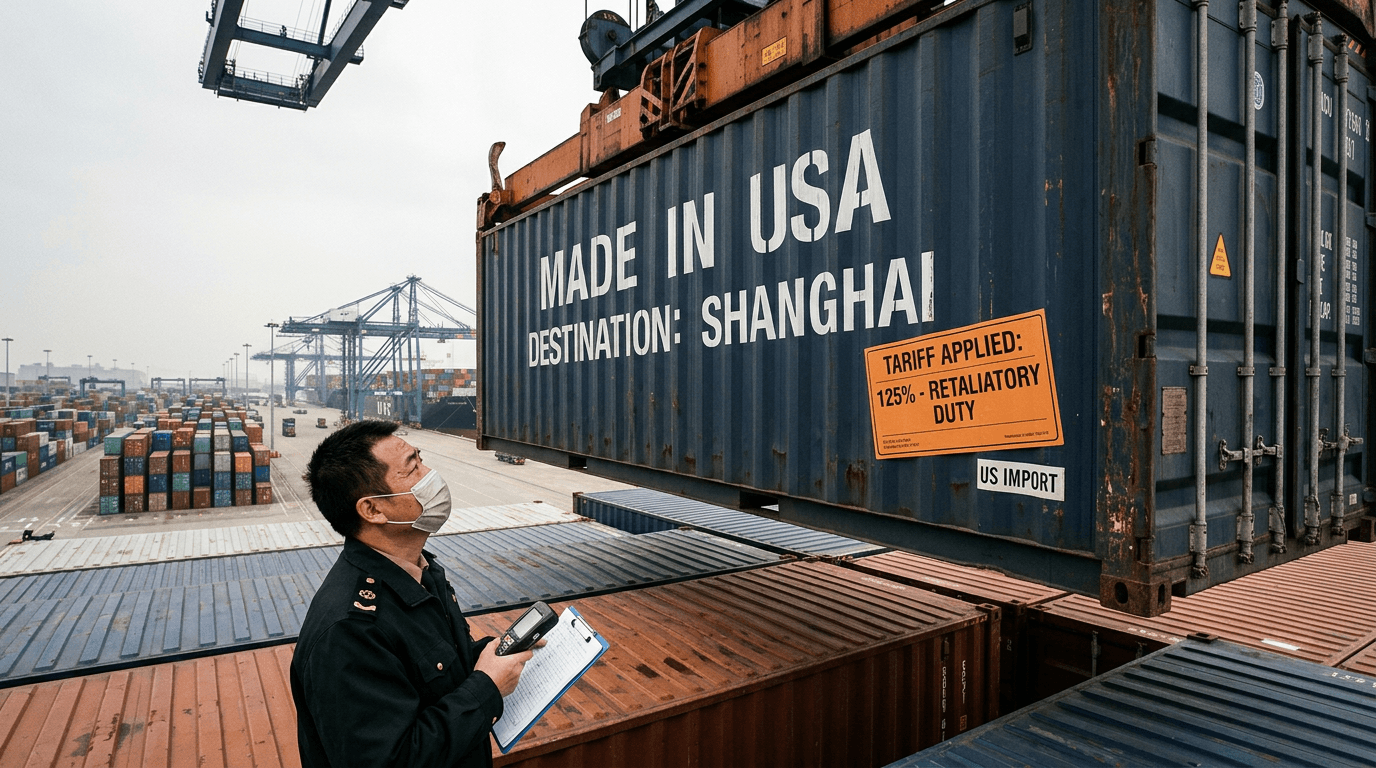
China's newest tariff announcement represents a critical escalation in the ongoing trade tensions between the world's two largest economies. On April 11, 2025, China's Ministry of Finance announced it would raise tariffs on US goods to 125% from the previous 84% level, effective April 12, 2025.[1] This move signals both the intensity of retaliatory measures and a potential turning point in how Beijing approaches the trade conflict going forward. For traders, investors, and businesses navigating global supply chains, understanding the implications of this announcement is essential for managing exposure to US-China trade volatility.
The Escalation Timeline
The 125% tariff announcement did not occur in isolation but rather represents the latest move in an accelerating cycle of tit-for-tat trade measures. The timeline reveals how quickly tensions have intensified. On April 8, 2025, the Trump administration modified tariff rates through executive order, targeting the People's Republic of China with increased duties.[5] By April 9, China's State Council Tariff Commission responded by announcing an 84% tariff on US goods, effective April 10.[5] Just hours later, President Trump escalated further, increasing US reciprocal tariffs on Chinese goods to 125%, which combined with previously announced 20% duties related to fentanyl concerns, brought total US tariffs on Chinese imports to 145%.[3]
This rapid sequence underscores the unpredictable nature of modern trade conflicts. What began months earlier as tariff threats had evolved into concrete policy measures affecting billions of dollars in bilateral trade. China's April 11 announcement of the 125% rate represented Beijing's response to Trump's April 10 moves, suggesting that policymakers in Beijing were prepared to match US aggression measure for measure.
WHAT THE 125% TARIFF MEANS
A 125% tariff rate is extraordinarily high and virtually prohibitive for most imported goods.[1] To understand the practical impact, consider that a product normally valued at $100 would now cost $225 when imported from the US into China at this rate. Such levels effectively price American goods out of the Chinese market for most applications, except where US products have no viable substitutes or offer unique technological advantages.
China's Ministry of Finance stated that "under the current tariff levels, the market can no longer accept US goods exported to China."[1] This language is significant because it indicates Beijing views 125% not as a negotiating position but as a practical endpoint where trade flows become minimal. The statement also warned: "Should the US continue to hike tariffs on Chinese goods in the future, we will not engage further."[1] This suggests China may be signaling its final escalatory move, though such declarations in trade wars are often subject to reversal.
Beyond Tariffs: Additional Retaliation Measures
While the 125% tariff rate dominates headlines, the total Chinese response extends beyond customs duties. Alongside the tariff increase, China's Ministry of Commerce added 12 US companies to its export control list, prohibiting them from receiving Chinese dual-use exports.[3] Dual-use goods are products with both civilian and military applications, and controlling access to such materials represents a more sophisticated form of economic retaliation than tariffs alone.
Additionally, China imposed a 50% tariff on all US goods imported into China as a direct response to Trump's Monday threat to impose an equivalent 50% additional tariff on Chinese imports.[3] When combined with the 125% rate on broader goods categories, the total Chinese tariff rates on US imports now reach 84% across different product classifications, creating a complex tariff landscape that requires careful analysis for individual commodities and sectors.
Market And Business Implications
The announcement creates significant uncertainty for companies with supply chain exposure to both markets. American exporters face the prospect of losing Chinese market access almost entirely for many product categories. Conversely, Chinese exporters to the United States face the 145% US tariff rate, which similarly restricts trade flows in that direction. This bilateral compression of trade creates winners and losers in the SimFi space and real markets alike, with companies able to source alternative suppliers or relocate production gaining competitive advantages.
For traders, the announcement confirms that volatility in US-China trade will persist as a market-moving factor. Futures contracts tied to export-sensitive sectors, technology stocks with China exposure, and commodity prices all respond to developments in this trade conflict. The unpredictability of policy announcements means risk management strategies should account for potential tariff surprises.
What Comes Next
China indicated openness to negotiations while maintaining a hardline posture. According to a white paper issued April 9, China's State Council said the country was open to talks with the US government while noting preparedness to retaliate if tensions escalated further.[1] This balanced messaging suggests Beijing retains room to de-escalate while maintaining credibility with domestic audiences and trading partners.
However, with the US maintaining a 145% tariff rate and China now at 125%, both sides have moved into territory where reversals become politically difficult. Negotiations at this point will require face-saving measures from both governments, making the path forward uncertain.
The 125% tariff announcement marks a critical juncture in the trade conflict. Traders and businesses must remain vigilant for further developments and adjust strategies accordingly.