
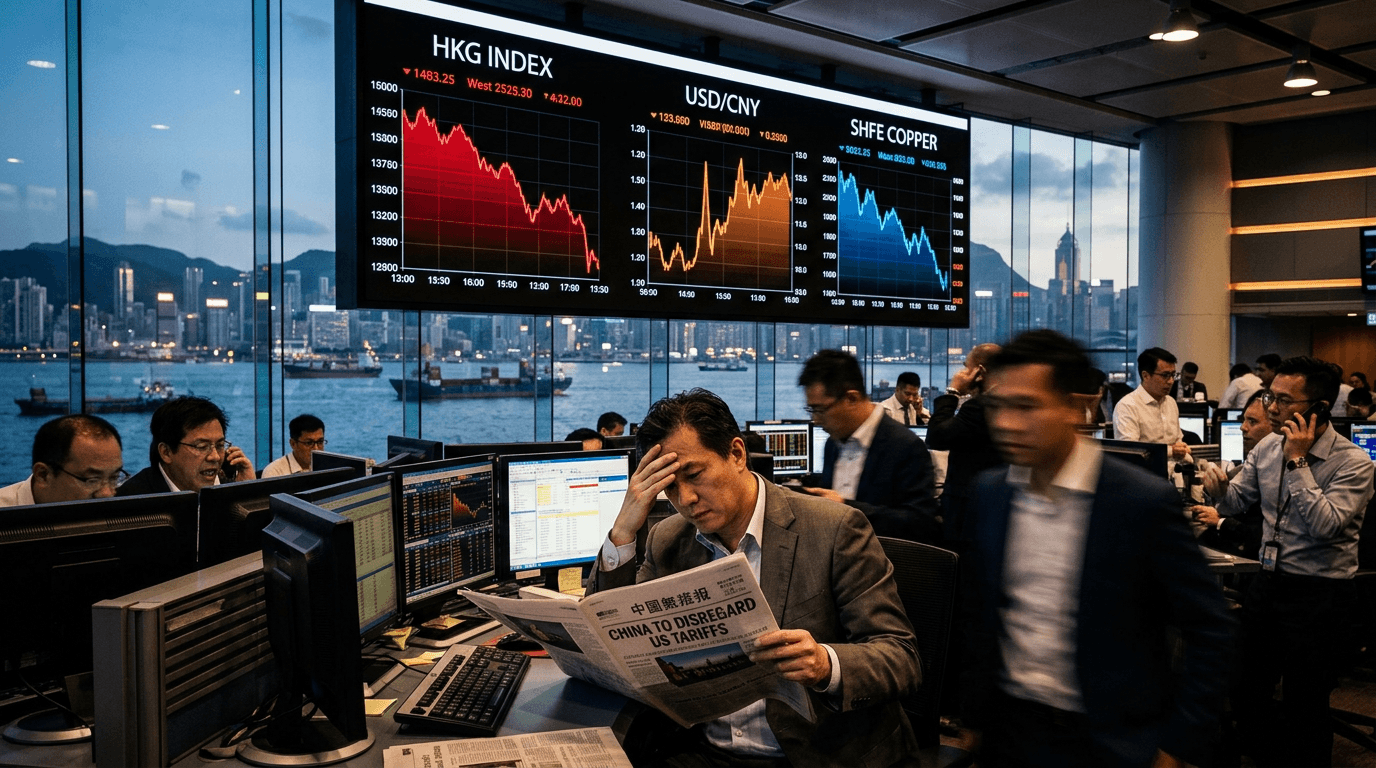
The trade war between the United States and China has entered a new and potentially more volatile phase. China has issued a stark warning that it will disregard further US tariff threats, marking a significant shift in Beijing's approach to the escalating trade conflict. This development signals that both nations are moving toward more entrenched positions, with serious implications for global markets, currency movements, and trading opportunities across multiple asset classes.
Understanding The Current Escalation
The immediate trigger for China's hardened stance comes from ongoing threats of massive tariffs from Washington. President Trump has threatened tariffs ranging from 100 to 155 percent on Chinese imports, with November 1 being positioned as a key deadline for negotiations. Rather than capitulating to these threats, China has responded with a calculated strategy of its own, implementing targeted countermeasures including rare earth export controls, special port service fees for US vessels, and antitrust investigations into American technology companies.
What makes this moment distinct from previous trade tensions is China's willingness to target vulnerabilities in US defense and semiconductor supply chains. By controlling rare earth exports and implementing non-tariff barriers, Beijing is demonstrating that it has learned from earlier trade cycles and can inflict meaningful economic damage through channels beyond simple import tariffs. The statement that China will "ignore" US tariff threats represents more than rhetorical posturing—it signals a fundamental refusal to engage in the negotiation framework Washington is attempting to establish.
Market Implications For Traders
For traders and investors, this escalation creates both risks and opportunities. The first major impact flows through equity markets, particularly for companies with significant exposure to China trade. Technology companies, automotive manufacturers, and industrial firms face margin pressure from both tariff costs and potential supply chain disruptions. US large-cap indices that are heavily weighted toward multinational corporations with China exposure are vulnerable to downside moves as tariff uncertainty increases.
Currency markets are another critical battleground. The Chinese yuan often weakens during trade war escalations as capital flows shift and growth concerns mount. Meanwhile, the US dollar typically strengthens as investors seek safe havens. However, the current dynamic suggests that if trade tensions escalate further, both currencies could face volatility as markets repriced risk across multiple scenarios. Traders should monitor USD/CNY movements closely, as this currency pair tends to move dramatically when trade war rhetoric intensifies.
Commodity markets present another dimension to consider. Given China's control over rare earths and other critical minerals, tariff escalation could trigger commodity price spikes in metals like lithium, cobalt, and rare earth elements themselves. These commodities are essential for technology production, and supply disruptions could create opportunities for traders positioned in commodity futures markets.
Countermeasures And Strategic Responses
China's approach this time differs markedly from its previous trade war responses. Rather than simply retaliating with tariffs on American goods, Beijing is employing more sophisticated tools. The rare earth export controls now require individual government review for advanced semiconductor chips, manufacturing equipment, and military AI applications. This creates genuine supply chain pain for US defense contractors and semiconductor manufacturers, effectively weaponizing China's position in critical materials.
The announcement of special port service fees and antitrust investigations into companies like Qualcomm demonstrates that China is coordinating multiple pressure points simultaneously. This multifaceted approach is designed to make the cost of continued escalation clear to American policymakers and business interests. For traders, this means the disruption could extend beyond tariffs into operational delays, compliance costs, and unexpected regulatory obstacles.
What Traders Should Monitor
For SimFi traders tracking this situation, several key indicators deserve close attention. First, watch for actual implementation dates of threatened tariffs and countermeasures. The difference between threats and implementation can create trading opportunities as markets react to concrete policy moves. Second, track semiconductor and technology stock performance, as these companies are particularly vulnerable to both tariff impacts and rare earth supply concerns.
Third, monitor negotiation signals. Official statements from Chinese and US officials often contain subtle language shifts that precede policy changes. Fourth, observe commodity prices, particularly for rare earth elements and other strategic materials. These prices can signal market expectations about supply disruption severity. Finally, pay attention to volatility indices and options market pricing, which often reflect institutional traders' hedging decisions during periods of high uncertainty.
Strategic Takeaways For Traders
The current environment rewards active risk management. Portfolio hedging becomes more valuable when trade war escalation seems probable. Consider diversifying exposure away from tariff-vulnerable sectors and toward industries with less China trade dependency. Volatility-based trading strategies may generate opportunities as fear indices spike during announcement periods.
Long-term, this trade conflict appears structural rather than cyclical, suggesting traders should prepare for sustained uncertainty rather than a quick resolution. Building flexible trading strategies that can adapt to rapid policy shifts offers better risk-adjusted returns than betting on a particular outcome.
China's declaration that it will ignore US tariff threats represents a critical inflection point in the trade war. Rather than a sign of imminent resolution, it signals deepening entrenchment and suggests that traders should expect continued volatility, disruption, and opportunity across global markets for the foreseeable future.