
China's Services Sector: A Resilient Front with Underlying Challenges
In February 2026, China's services sector saw a significant upswing, with the RatingDog China General Services PMI hitting 56.7, a peak since May 2023. Yet, beneath this apparent recovery lie persistent challenges that investors and policymakers must navigate. For those keeping a close eye on China's economic trajectory in 2026, understanding these nuances is crucial.
A Closer Look at the Services PMI
The PMI, a measure of expansion and contraction in the services sector, remains in growth territory. However, the trajectory tells a deeper story than the number alone. February's rise was fueled by effective promotional strategies and an uptick in client interest, especially as foreign demand saw its highest growth in a year due to increased tourism. Despite this optimism, underlying structural issues continue to challenge growth and employment within the sector.
The Services PMI in Context
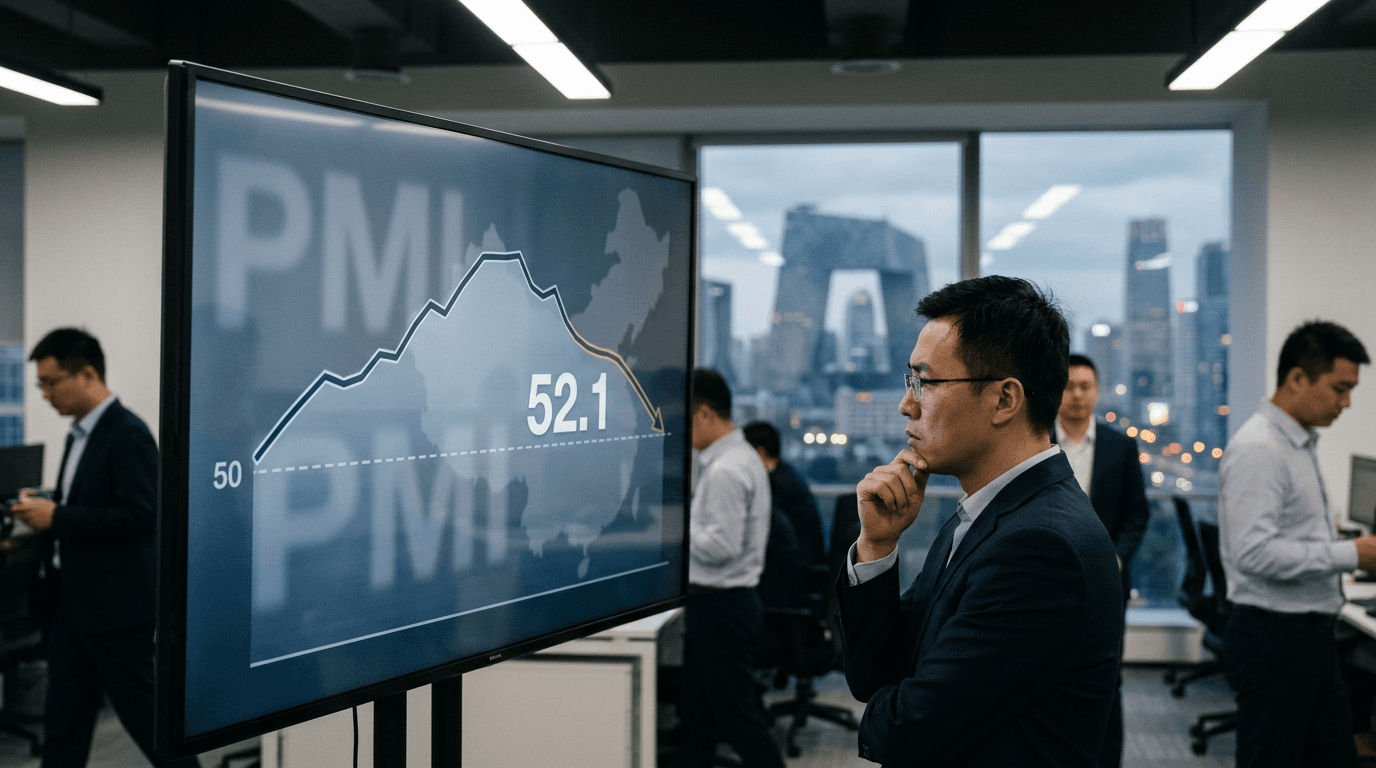
The PMI uses 50.0 as a benchmark, with readings above this indicating growth. China’s services sector has consistently surpassed this mark, but the numbers, often in the 52-53 range, suggest a slow-paced expansion rather than a robust surge. When juxtaposed with historical data, such as the high of 58.40 in June 2020 and an average of 52.10 from 2012 to 2026, the current level, though positive, remains modest. The services sector shines brighter than manufacturing but falls short of driving broader economic recovery.
Demand Dynamics: Domestic Strength vs. Export Weakness
Recent PMI data reveals a split between domestic and external demand. February saw new orders climbing at their fastest since May 2024, bolstered by effective promotions and rising local interest. This domestic strength is vital for maintaining sector momentum in the face of uncertain external demand.
However, the export outlook is less rosy. In December, export demand contracted due to reduced tourist inflows, particularly from Japan. Although February saw a rebound in foreign demand, the volatility highlights the fragility of external conditions. The reliance on promotions to sustain domestic demand also indicates intense price competition, squeezing profitability.
Employment and Structural Challenges
The most concerning aspect of the PMI data is the steady decline in employment. By December, service providers had cut staff for the fifth month in a row, marking the sharpest decline since September. This reflects cost pressures and ongoing restructuring, impacting both full-time and part-time roles.
Despite a rise in business confidence to a nine-month high and optimism for 2026, employment continued to contract early in the year. This disconnect between sentiment and hiring suggests a cautious approach to capacity expansion. Service providers seem to be maintaining lean operations in anticipation of potential growth.
Pricing Pressures and Cost Dynamics
Input costs have been climbing, driven by higher raw material and labor expenses. Yet, service providers face limited pricing power. Intense competition led firms to cut prices twice in three months by December to boost sales. By February, prices rose for the first time in three months, but the increase was modest, reflecting the highest rate since May.
The squeeze between rising costs and limited pricing ability highlights the competitive pressures faced by service firms. This may explain the reluctance to expand headcount despite improved demand.
Implications for Traders and Investors
The services PMI paints a complex picture: steady expansion with structural challenges hindering rapid growth. Traders should note that while services outshine manufacturing, the sector lacks the momentum for significant economic acceleration in 2026. Employment cuts and pricing pressures suggest optimization over aggressive investment.
The uptick in business confidence offers some hope, hinting at improved conditions as the year progresses. However, external demand uncertainty and employment weakness remain constraints. Investors should watch whether February's foreign demand growth is sustainable and if domestic promotions translate into real demand growth or merely shift market shares.
Ultimately, the services PMI underscores that China's economic recovery is uneven and fragile, necessitating continued policy support for meaningful growth acceleration.