
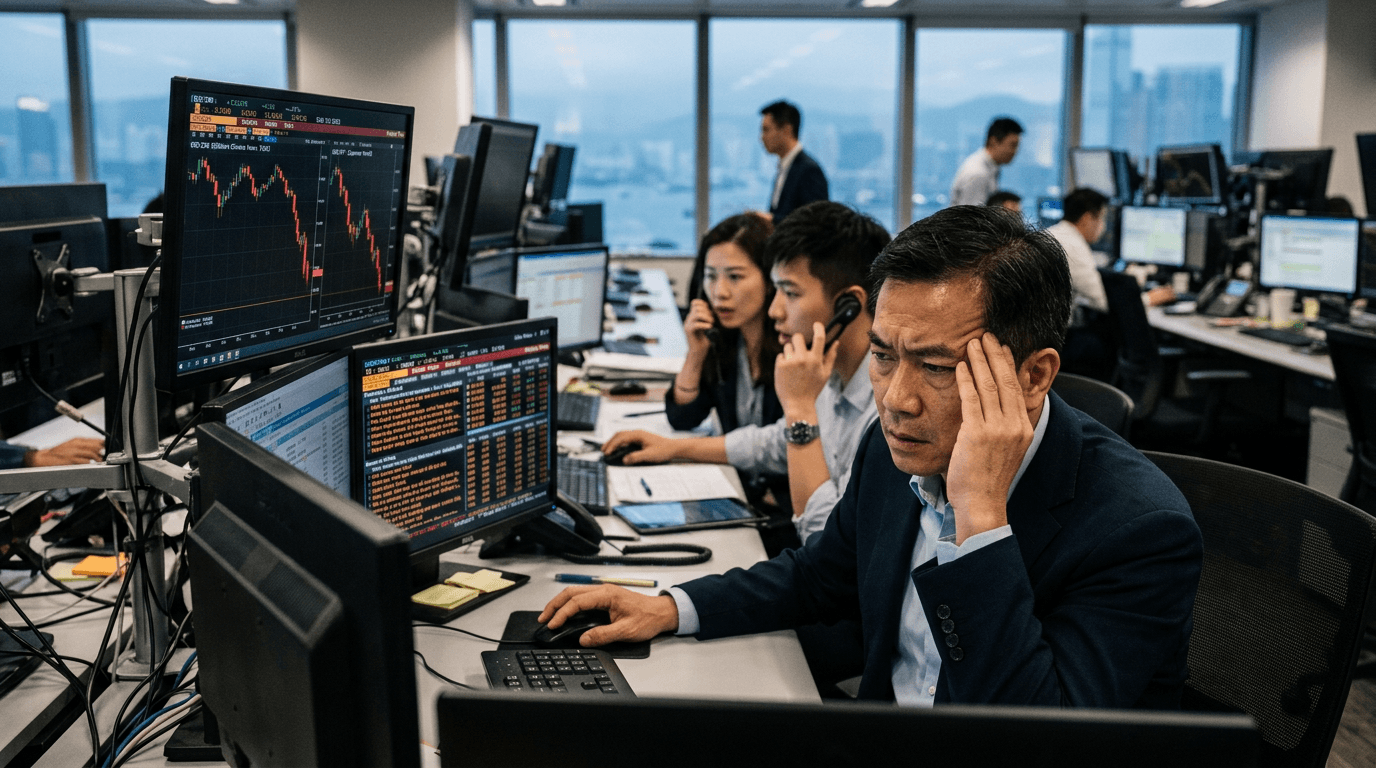
Tariff headlines between the world’s two largest economies are back on center stage, and this time China’s decision to impose additional levies on U.S. goods is feeding a fresh wave of risk aversion. For traders, the key story is not only the politics but how this escalation is pressuring Asian currencies and rippling across broader risk assets, from equities to futures and commodities.
CHINA–U.S. TARIFF ESCALATION: WHY MARKETS CARE
New tariffs immediately alter the pricing of global trade, but markets react even faster to the signal they send about future growth and policy. When China raises duties on U.S. imports, investors infer weaker trade volumes, more strained supply chains, and greater uncertainty for export‑oriented Asian economies that sit between the two in global value chains.
History shows that tariff shocks rarely stay confined to the countries directly involved. During previous rounds of U.S.–China tensions, Asian currencies such as the Korean won, Taiwanese dollar, Singapore dollar and Thai baht weakened as traders reassessed the region’s growth prospects. The yuan itself often becomes the focal point, with any sustained depreciation seen as a warning that China’s policymakers are willing to tolerate currency softness to cushion the export hit.
This latest escalation comes at a time when markets were already juggling other macro themes, including central bank policy, AI‑led equity rallies and shifting commodity demand. Fresh tariff measures act as a “confidence tax”: they may not fully show up in hard data immediately, but they erode business and market sentiment, nudging investors toward a more cautious stance.
How Tariffs Pressure Asia Fx
Tariff shocks hit Asian FX through three main channels: trade, risk sentiment and policy expectations.
First, higher tariffs directly threaten export competitiveness. If U.S. demand for Chinese goods falls, the knock‑on effects are felt in economies supplying intermediate goods and services throughout the region. Lower expected export volumes mean weaker corporate earnings, slower investment, and potentially softer growth, all of which tend to weigh on local currencies over time.
Second, risk sentiment deteriorates. Tariff escalation is a classic “risk‑off” catalyst: investors reduce exposure to higher‑beta, emerging‑market assets and rotate into perceived safe havens. Asian currencies with strong trade links to China or reliance on global demand—such as the won, baht, rupiah, and ringgit—often see outflows as foreign investors pare back positions in local bonds and equities.
Third, policy expectations shift. If tariffs are expected to dent activity, central banks in the region may lean more dovish or pause tightening plans. Narrower yield differentials versus the U.S. reduce the carry advantage of holding Asian currencies, limiting upside and sometimes adding downside pressure. Traders quickly price in these policy shifts, especially in futures and swaps markets that feed back into FX valuations.
The combination of these channels means Asia FX can weaken even in environments where the U.S. dollar itself is not particularly strong. It is the regional risk premium—and uncertainty about how long the tariff regime will last—that drives the repricing.
SAFE HAVENS, RISK ASSETS, AND CROSS‑MARKET FLOWS
Whenever trade tensions flare, it is not just FX that moves. Cross‑market flows reinforce the pressure on Asia FX and reshape the broader risk landscape.
Safe‑haven currencies such as the Japanese yen and Swiss franc tend to benefit as investors seek stability. Developed‑market government bonds, especially U.S. Treasuries and JGBs, often see inflows, pushing yields lower and signaling defensive positioning. At the same time, risk‑sensitive assets—Asian equities, high‑yield credit, cyclical commodities—can underperform as growth concerns resurface.
Interestingly, not all moves are straightforward. There have been episodes where tariff headlines hurt the U.S. dollar as markets worry about the long‑term damage to U.S. growth, allowing some Asian currencies to stabilize or even gain temporarily. In other cases, the dollar firms on safe‑haven demand while China‑sensitive FX such as the Australian and New Zealand dollars sell off sharply.
For traders, this means correlation structures can change quickly. Currency pairs that normally track global risk may decouple, and safe havens can behave differently depending on how crowded positioning has become. Volatility can spike even if net price moves over a week look modest, underscoring the need to think in terms of intraday swings, not just daily closes.
What This Means For Traders In Simulated And Live Markets
In a tariff‑driven environment, traders need to adjust both their directional views and their risk management framework. Whether you are trading live capital or practicing on a SimFi platform like E8 Markets, the dynamics are similar: markets become more headline‑driven, correlations tighten across Asia FX, and shock events can produce outsized moves in short windows.
One practical takeaway is to watch the yuan as a regional anchor. Sudden weakness in CNY or CNH often precedes broader selling in Asia‑ex‑Japan FX and can serve as an early warning signal for risk‑off flows. Monitoring how policymakers talk about currency stability versus growth support can help traders gauge whether depreciation pressure is likely to be tolerated or resisted.
Another is to think in scenarios rather than single forecasts. For example:
- Escalation persists without clear negotiation: Asia FX underperforms, safe havens outperform, and volatility remains elevated. Range‑trading strategies may need wider stops and position sizes should be smaller.
- Tariffs are partially rolled back or paused: the U.S. dollar can soften, Asia FX may rebound, and carry trades in higher‑yielding regional currencies can become attractive again—though lingering uncertainty keeps volatility above pre‑tariff norms.
- Tariff escalation triggers broader growth fears and central bank easing: risk‑off dominates initially, but as policy support builds, some emerging‑market assets with strong domestic fundamentals can outperform in the recovery phase.
Using simulated trading to stress‑test portfolios across these scenarios allows traders to learn how their strategies perform under different volatility regimes without risking capital. It also highlights where models may be too reliant on “stable” correlation assumptions that break down during trade shocks.
KEY TAKEAWAYS FOR NAVIGATING TARIFF‑DRIVEN MARKETS
There are several concrete steps traders can take to navigate the current escalation in China–U.S. tariffs and the resulting pressure on Asia FX and risk sentiment:
Focus on the transmission channels. Track trade data, corporate guidance from export‑heavy sectors, and central bank commentary to understand how tariffs are feeding into growth and policy expectations, rather than trading headlines in isolation.
Watch regional beta to China. Currencies and equity markets with higher sensitivity to Chinese demand—Korea, Taiwan, ASEAN exporters—are likely to see larger swings. Position sizing and leverage should reflect this higher beta.
Respect volatility. Tariff shocks often produce sharp, two‑way moves and gap risk around news releases. Use conservative leverage, wider but well‑defined stops, and consider scaling in rather than entering full positions at once.
Think cross‑asset. FX does not move alone. Bond yields, equity indices, and commodity prices provide confirmation (or contradiction) of the message FX markets are sending. A coherent cross‑asset view is more robust than a single‑asset thesis.
Use simulation to prepare. Practicing in a simulated environment helps traders internalize how quickly sentiment can flip, how safe‑haven flows behave, and how their strategies react to sustained headline risk. This preparation is especially valuable in tariff‑driven markets where many moves are policy‑, not data‑led.
As China’s latest tariff escalation weighs on Asian currencies and risk‑sensitive assets, the core challenge for traders is to distinguish noise from signal and translate complex geopolitics into concrete trading plans. Those who understand the FX transmission channels, respect the new volatility regime, and use both live and simulated experience to refine their approach will be better positioned to navigate whatever the next round of tariff headlines brings.