
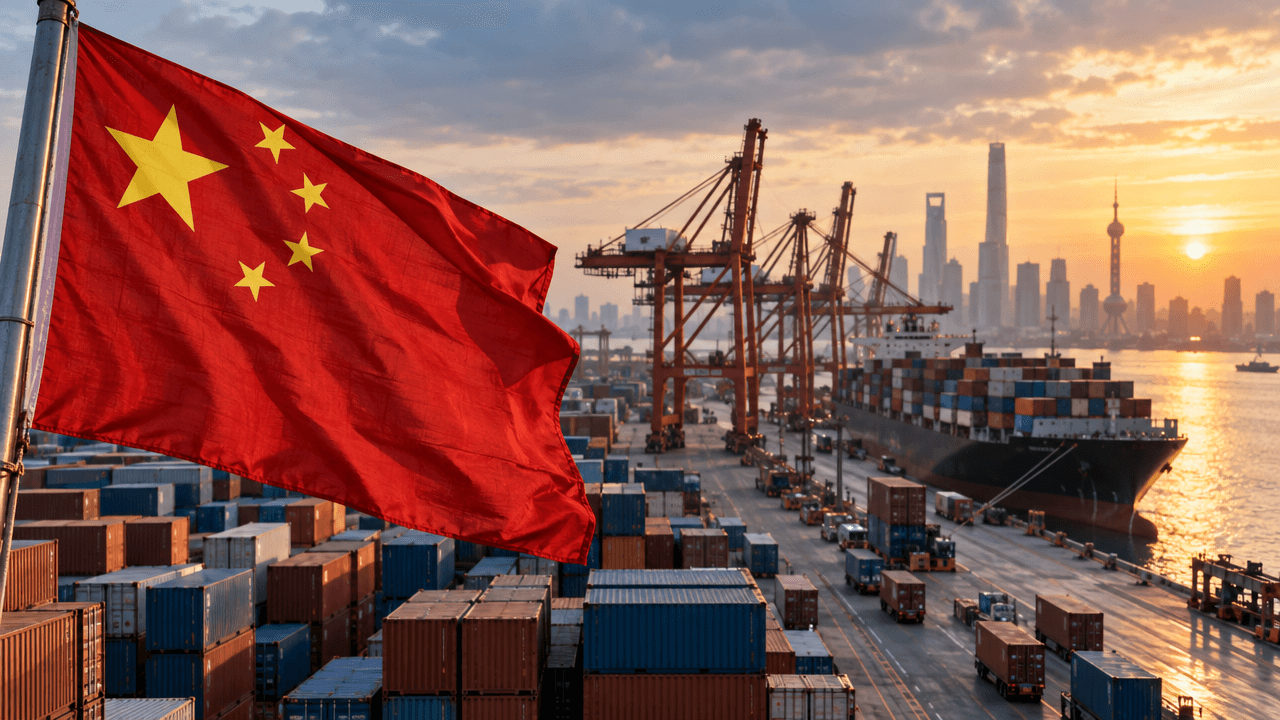
China’s trade surplus has surpassed $1 trillion in the first ten months of 2026, an extraordinary milestone that highlights the continued strength of the country’s export machine. The surplus reached approximately $1.04 trillion between January and October, crossing the threshold for a second consecutive year and doing so one month earlier than in 2025. [1]
The headline figure matters well beyond China’s borders. It affects expectations for Asian currencies, commodity demand, global manufacturing, interest rates, and trade policy. At the same time, it reveals an important imbalance in the Chinese economy: exports are surging, but domestic demand remains comparatively weak.
What The Numbers Show
China’s October trade data delivered strength on both sides of the ledger. Exports increased 35.2% from a year earlier to approximately $412.3 billion, exceeding economists’ expectations for growth of 33.5%. Imports rose even faster, climbing 41.6% to about $307.1 billion. [6]
Despite the strong import performance, China still recorded a monthly trade surplus of roughly $105.3 billion. That was below September’s $133.5 billion surplus and lower than forecasts near $126.5 billion, indicating that domestic purchases and input demand accelerated during the month. [4]
The cumulative result remains the more striking statistic. A $1.04 trillion surplus after only ten months means China is on pace to exceed its full-year 2025 surplus of approximately $1.2 trillion, assuming trade conditions remain broadly stable through December. [2]
The composition of export growth is also important. Demand linked to artificial intelligence infrastructure, electronics, semiconductors, computer components, electric vehicles, batteries, and renewable-energy equipment has helped support shipments. The global investment cycle in data centers and advanced computing appears to be creating a powerful source of demand for Chinese-made products. [9]
Why Exports Are So Strong
Several forces are working together. First, global companies and governments continue to invest heavily in technology infrastructure. This has increased demand for electrical equipment, computing hardware, components, and related industrial products.
Second, Chinese manufacturers remain highly competitive on cost and scale. Years of investment in supply chains, logistics, industrial capacity, and technical expertise allow many companies to produce goods at prices that are difficult for competitors to match.
Currency conditions may also be contributing. A relatively weak yuan supports the overseas price competitiveness of Chinese exports by making them less expensive in foreign-currency terms. Meanwhile, lower prices inside China have created another advantage: even when foreign buyers face inflation in their own economies, Chinese goods can remain comparatively affordable.
Trade diversion is another factor. Restrictions and political tensions have changed the route through which some Chinese products reach end markets. Goods may be shipped to intermediary countries, assembled elsewhere, or sold through regional supply chains. That can complicate the interpretation of bilateral trade balances without changing the broader reality of China’s strong global export position.
The Domestic Demand Warning
A large trade surplus is not automatically a sign that every part of an economy is healthy. China’s export gains are partly offsetting weakness in domestic consumption, property investment, and private-sector confidence.
The October import figures offer a more constructive signal because imports grew faster than exports. Stronger imports can indicate rising purchases of energy, industrial inputs, machinery, and consumer goods. However, one month does not establish a durable recovery. Traders will need to examine whether import growth continues and whether it is driven by genuine domestic demand rather than temporary restocking or export-related production.
If households remain cautious and businesses delay investment, China may continue relying on overseas buyers to absorb excess industrial capacity. That creates pressure on policymakers to support consumption, stabilize the property market, and improve confidence.
For markets, the key question is not simply whether China exports more. It is whether export strength is eventually matched by healthier internal demand.
Implications For Currencies And Commodities
The trade surplus provides a fundamental source of foreign-currency inflows and may help stabilize the yuan. However, currency markets will weigh that support against interest-rate differentials, capital flows, expectations for monetary easing, and broader U.S.-China tensions. A strong surplus does not guarantee a stronger yuan if investors expect lower Chinese interest rates or prefer to hold assets elsewhere.
Other Asian currencies could face competing pressures. Strong Chinese exports may support regional manufacturing and supply-chain activity, benefiting economies that provide components, raw materials, or logistics services. Yet Chinese products can also compete directly with manufacturers in neighboring countries, potentially limiting their pricing power.
Commodity markets may receive mixed signals. Strong exports require energy, metals, shipping capacity, and industrial inputs, while rising imports suggest improved demand for some commodities. But weak property activity and excess capacity could restrain demand for construction-related materials such as iron ore and copper. Traders should distinguish between demand generated by advanced manufacturing and demand associated with a broad-based economic recovery.
Trade Tensions And The Market Outlook
The surplus is likely to intensify scrutiny from China’s major trading partners. A rapidly expanding surplus can trigger calls for tariffs, import restrictions, anti-subsidy investigations, or negotiations over market access. Such measures could raise costs for global businesses and increase volatility across equities, currencies, and commodities.
For traders, the most useful approach is to track several indicators together: monthly export and import growth, the yuan’s exchange rate, shipping activity, commodity imports, Chinese retail sales, industrial production, and policy announcements. A widening surplus alongside weak consumption would suggest continued external dependence. A narrowing surplus caused by stronger imports and improving domestic data would point to a healthier rebalancing.
China’s $1 trillion trade surplus is therefore both a display of industrial power and a reminder of economic vulnerability. It confirms that Chinese exporters remain highly competitive, particularly in technology and clean-energy supply chains. But it also raises questions about global trade friction and whether domestic demand can catch up.
The most important development in the months ahead will be the balance between external strength and internal recovery. If Chinese households and businesses begin spending more confidently, the surplus could become part of a broader expansion. If not, the record may instead signal a deeper imbalance—one that continues to shape markets and international trade policy.