
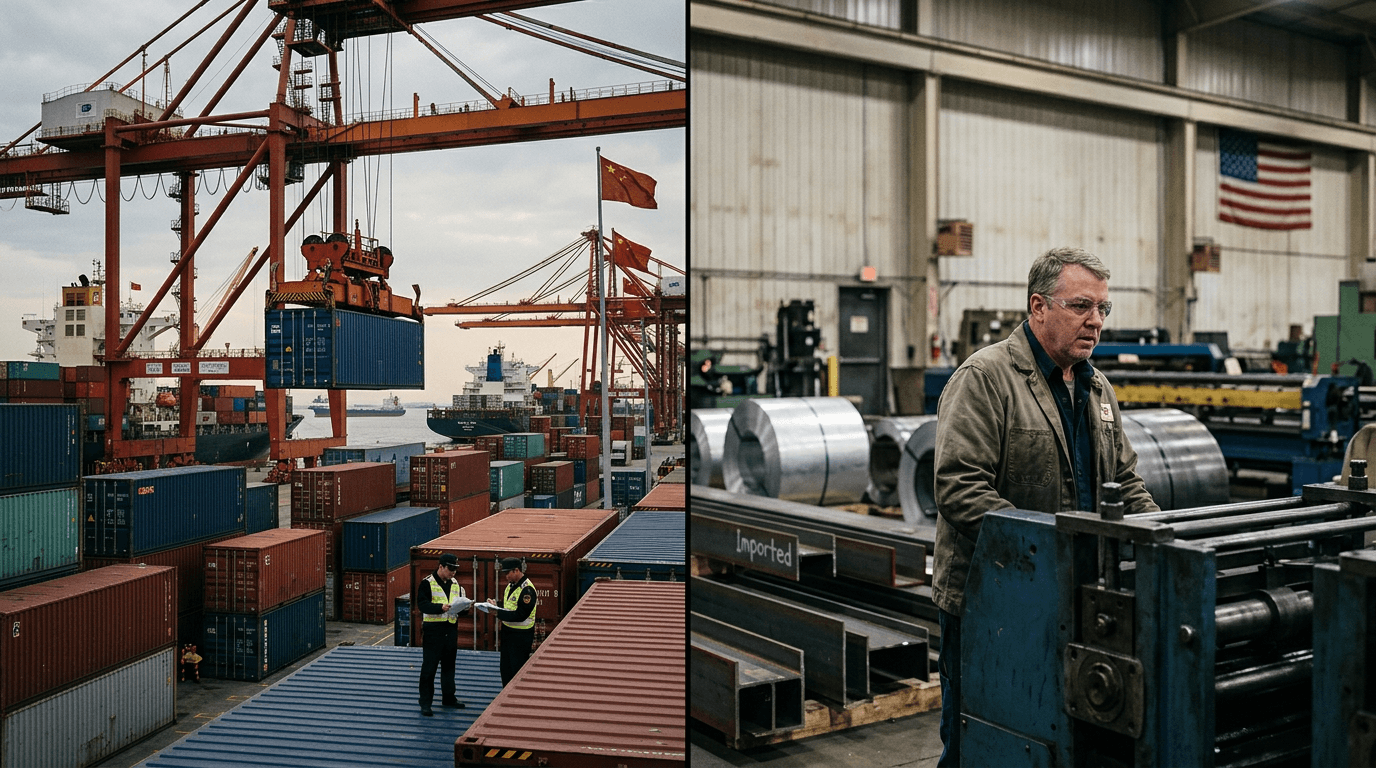
China's Staggering 125% Tariff: A Tipping Point in the US Trade Conflict
As the world watched, China announced a dramatic 125% tariff on American goods, effective April 12, 2025. This move escalated tensions between the two largest economies to unprecedented levels, marking a critical inflection point in the US-China trade conflict. Understanding the mechanics behind this tariff, its underlying causes, and the broader implications for investors and traders is crucial in navigating an increasingly uncertain economic landscape.
The Escalation Sequence: A Strategic Chess Game
The path to China's 125% tariff was anything but straightforward. It began with the Trump administration's second-term strategy, imposing a hefty 145% duty on Chinese imports due to concerns over fentanyl trafficking and broader trade imbalances. This initial move triggered a series of rapid responses, fundamentally altering the trading environment in a matter of days.
On April 9, 2025, China's State Council Tariff Commission announced an 84% tariff on all US goods, effective April 10—China's first major counteroffensive. This signaled Beijing's unwillingness to absorb punitive US measures without retaliation. Within 24 hours, US tariffs rose to 125% on Chinese goods, prompting China to match the rate precisely. On April 11, China declared its own 125% tariff, set to take effect on April 12.
This escalation was notable for its calculated nature. China's Ministry of Finance described the 125% rate as the "final adjustment," suggesting a strategic ceiling where "the market can no longer accept US goods exported to China." This indicated strategic thinking rather than mere reaction, even as the pace of escalation accelerated.
Economic Consequences Ripple Across Asia
The economic fallout from these tariffs extended beyond the US-China relationship. Economists predicted China's annual GDP growth would decline by one to two percentage points—a substantial drag for an economy accustomed to 4-6% growth rates. For an export-dependent nation, this represented a significant headwind, rippling through manufacturing, logistics, and financial sectors.
Hong Kong, having exported approximately 38 billion dollars in goods to the US in 2024, faced particular vulnerability. The interconnected nature of regional supply chains meant that tariff tensions between Washington and Beijing created cascading effects across Asia, impacting companies far removed from direct US-China trade.
In response, the People's Bank of China strategically weakened the yuan, setting the USD/CNH reference rate to 7.2066 on April 9—the lowest level since September 2023. This currency depreciation aimed to boost the global competitiveness of Chinese exports, making products more affordable in foreign currencies despite higher tariff burdens.
Beyond Tariffs: A Broader Trade Strategy
The tariff escalation represented only part of China's response arsenal. The Ministry of Commerce added 12 US companies to its export control list, effectively blocking them from receiving Chinese dual-use exports. Additionally, six companies were placed on the Unreliable Entity List due to alleged involvement in arms sales or military technology cooperation with Taiwan.
These non-tariff measures marked a significant shift in economic coercion strategy, targeting technology transfer pathways and investment relationships beyond traditional import duties. For multinational corporations with complex supply chains spanning both countries, these measures created new compliance burdens and strategic uncertainties.
Key Implications for Traders and Investors
Several critical insights emerged for market participants. First, expect sustained volatility across equities, currencies, and commodities as negotiations evolve or further escalations occur. Sectors heavily exposed to US-China trade flows—particularly technology, automotive, and consumer goods—demand heightened risk assessment and portfolio positioning.
Currency markets presented unique opportunities as central banks adjusted policy responses to tariff-induced economic pressures. The deliberate weakening of the yuan suggested the People's Bank would maintain accommodative monetary policy, creating identifiable technical and fundamental trading patterns worth monitoring.
Despite aggressive posturing from both sides, indicators suggested a willingness to negotiate. Market participants positioning for potential de-escalation through diplomatic breakthroughs could be rewarded if negotiations led to tariff reductions. The 125% tariff announcement represented a pivotal moment where tariff policy became the primary driver of global asset prices and economic trajectories.
Navigating Uncertainty: A Strategic Path Forward
The tariff escalation underscored a fundamental reality: trade policy had become the dominant force shaping market dynamics and economic growth trajectories. Successful navigation of this environment required understanding both immediate market implications and longer-term strategic positioning. Traders needed to balance expectations of continued volatility against potential opportunities created by policy shifts, currency movements, and sector-specific impacts.
The coming weeks would prove critical in determining whether 125% represented a stable equilibrium or merely another step in an ongoing escalation cycle.
News Impact Score: 9