
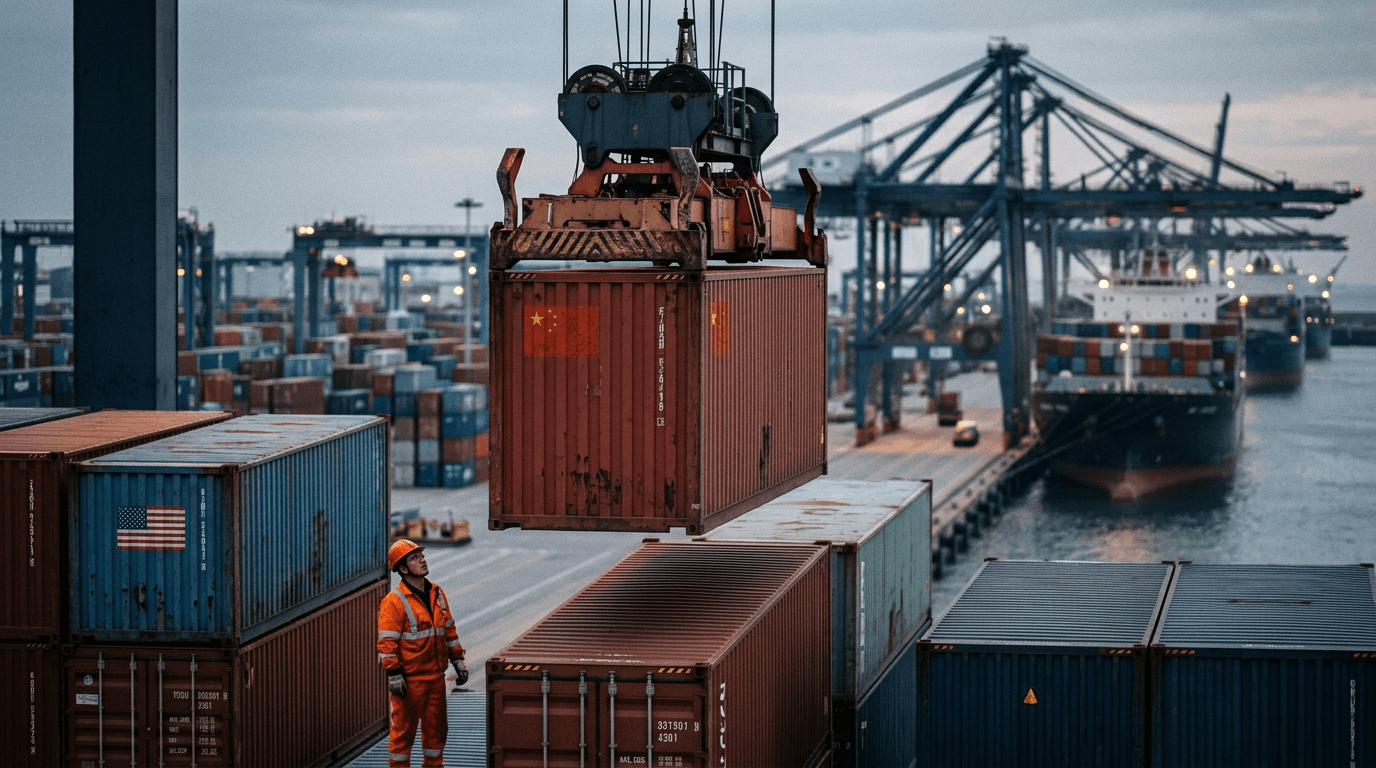
The US-China trade conflict has reached a pivotal juncture. On April 11, 2025, China's Ministry of Finance declared a significant escalation: an imposing 125% tariff on all American goods, effective the very next day, April 12th. This marks the third major retaliatory wave in under two weeks, signifying that trade tensions have escalated beyond traditional negotiation tactics into a realm of genuine economic warfare. For traders, investors, and those tracking macroeconomic shifts, this event demands immediate strategic recalibration.
The Escalation Timeline: Understanding The Rapid Acceleration
To fully grasp the significance of China's 125% tariff announcement, one must consider the compressed timeline leading up to this moment. On April 9, 2025, President Trump raised tariffs on Chinese goods to 104% through a reciprocal tariff framework. China swiftly responded the same day with an 84% counter-tariff on American goods. However, the situation rapidly deteriorated. On April 10, the US dramatically escalated its tariff on Chinese imports to 145%, citing national security and fentanyl trafficking concerns. China's 125% response came within 24 hours of the US move.
This rapid sequence of actions highlights the unprecedented speed at which modern trade policy can escalate. Both sides are effectively matching and incrementally exceeding each other's actions, creating an automated escalation mechanism. The Ministry of Finance's stark declaration that "the market can no longer accept US goods under current tariff levels" indicates that China views the 145% US tariff not as a negotiating stance but as an existential threat to bilateral trade.
China's Strategic Messaging: Drawing A Line In The Sand
Despite the aggressive tariff rate, China's official communications contain a crucial nuance that traders should carefully analyze. The government explicitly labeled this 125% tariff as "the final hike," warning that if the US continues to raise tariffs, China will cease further negotiations entirely. This declarative statement serves multiple purposes: it establishes a credible commitment to containing further escalation, signals resolve domestically, and potentially creates psychological pressure on US policymakers.
At the same time, China's State Council issued a white paper on April 9 indicating openness to diplomatic talks. This dual messaging—combining aggressive tariff action with diplomatic openness—creates a complex environment. Market participants must discern between tactical positioning and genuine negotiation intent. The open diplomatic channel suggests both sides recognize the mutual damage unchecked tariff escalation could cause, even as they continue imposing extraordinary trade barriers.
Beyond tariffs alone, China has employed additional policy tools. The government added 11 US companies to its "unreliable entity list," effectively barring them from Chinese trade and investment opportunities. These firms were accused of military-related technology cooperation with Taiwan, demonstrating that the trade war now encompasses broader geopolitical dimensions beyond simple tariff disputes.
Sectoral Impacts: Where Risks And Opportunities Concentrate
The increase from 84% to 125% tariffs creates severe headwinds for specific industries. Technology firms reliant on Chinese components face compressed margins as input costs surge. Manufacturers dependent on Chinese supply chains must rapidly reassess sourcing strategies. Agricultural exporters, historically sensitive to Chinese trade tensions, face diminished access to the world's largest agricultural importer.
Conversely, domestically focused businesses and defensive sectors may experience relative strength. Companies with minimal China exposure or those serving primarily domestic markets could outperform as investors rotate toward lower-risk positions. The tariff shock creates supply chain uncertainty that will likely persist for quarters, forcing companies to reassess their entire operational architecture.
For traders on simulated finance platforms, this environment presents classic volatility expansion opportunities. Currency markets will likely experience significant moves as traders reprice expectations for US-China bilateral trade flows. Export-sensitive equity indices will face pressure, while defensive sectors and domestic consumer stocks may attract capital flows.
Strategic Implications For Market Participants
This tariff announcement demands sophisticated analytical frameworks from serious market participants. The explicit messaging about market tolerance thresholds, combined with simultaneous diplomatic signaling, suggests both escalation and negotiation risks remain elevated. The situation is sufficiently dynamic that multiple scenarios warrant contingency planning.
Traders should consider how their portfolios would perform under three potential scenarios: continued escalation if diplomatic talks fail; de-escalation if both sides recognize mutual damage; or a frozen conflict at current tariff levels. Each scenario generates meaningfully different outcomes for different asset classes.
The 125% tariff on Chinese goods represents more than headline news—it's a policy shock reshaping global trade relationships and supply chain assumptions. Understanding both the tactical implications and the underlying strategic postures of both governments is essential for navigating the volatility ahead.
---
NEWSIMPACTSCORE: 9