
1. Write ONLY the article content in PLAIN TEXT format 2. NO preamble, introduction, or meta-commentary 3. Start directly with the first paragraph 4. Use ALL CAPS for section headings on their own line 5. Separate paragraphs with blank lines 6. Include 3-5 main sections with clear takeaways 7. Make it engaging and educational 8. End with TITLE, EXCERPT, and NEWSIMPACTSCORE
Looking at the search results: - China raised tariffs from 84% to 125% on US goods, effective April 12, 2025 - This was in response to Trump's 145% tariffs on Chinese imports - The tariffs are unprecedented - not seen in 100 years - Bay Area businesses are struggling with costs - Both economies will be hurt by these tariffs - Companies need to import from each other (machinery, pharmaceuticals, airplanes, AI tech) - JD announced it would buy $27.3 billion worth of Chinese exports
Wait, I need to check the dates. The search results are from April 11-12, 2025, but the current date is April 28, 2026. So this event happened about 1 year ago in the timeline. However, I should write the article as if discussing this news event from the perspective of when it occurred.
Let me structure the article: 1. Opening paragraph with the main news 2. The escalation context 3. Market impact and business implications 4. Economic analysis - how it hurts both sides 5. Takeaways and what to watch
Let me write this in plain text with clear sections and no markdown formatting.
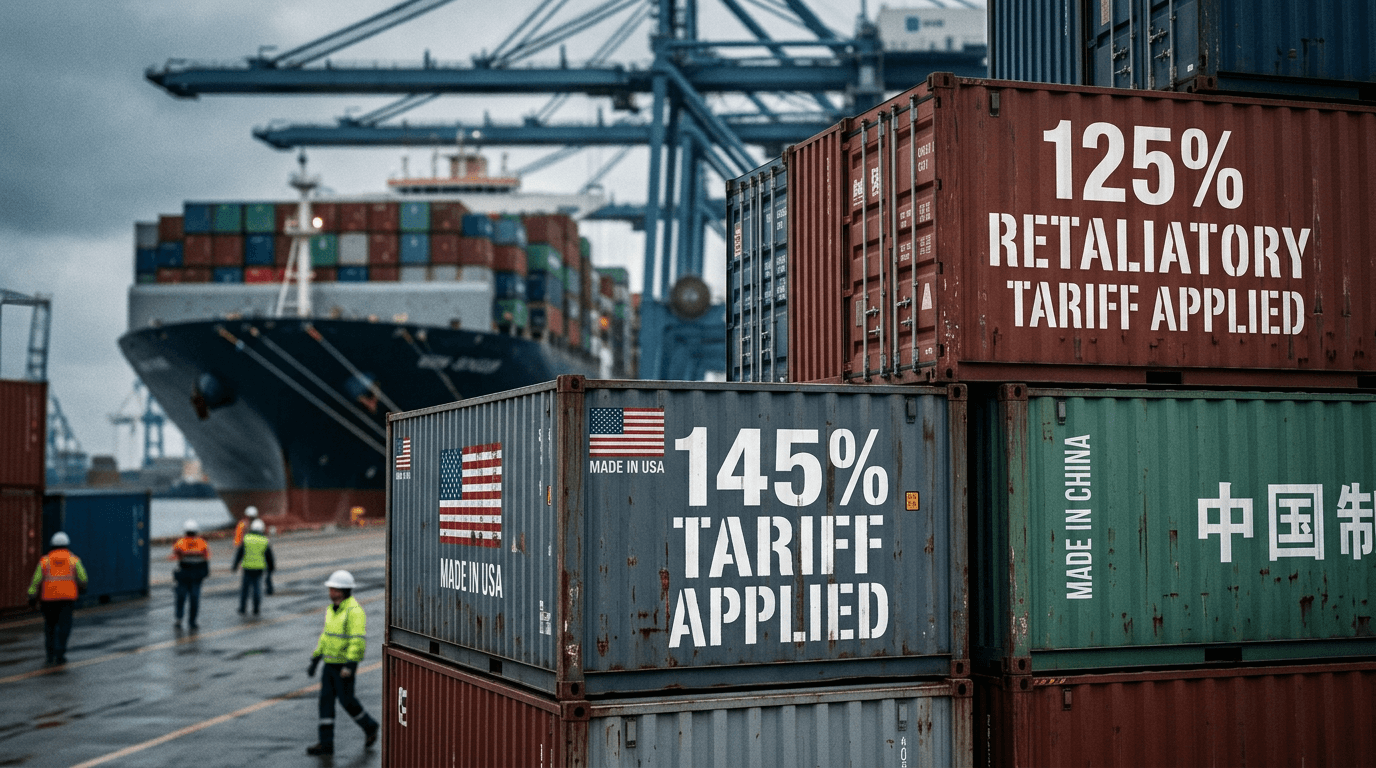
The trade war between the world's two largest economies has reached unprecedented levels, with China announcing a sweeping 125% tariff on US goods effective April 12th in direct retaliation against the Trump administration's 145% tariffs on Chinese imports.[1][2] This dramatic escalation marks a critical turning point in global trade relations, creating shock waves across financial markets and forcing businesses worldwide to reassess their supply chains and profitability strategies.
Understanding The Escalation
The tariff crisis unfolded rapidly over just a few days. China initially announced retaliatory tariffs of 84% on US goods, but quickly escalated to 125% as tensions intensified.[1][2] To put this in perspective, these tariff levels are virtually unprecedented, with economists noting that such rates have not been seen in approximately 100 years of modern trade history.[2] The escalation represents far more than typical trade negotiations; it signals a fundamental breakdown in diplomatic channels and a hardening of both nations' positions.
President Trump indicated he remained optimistic about reaching a deal, stating the countries would "end up working something out that's very good for both countries."[1] Conversely, President Xi Jinping called on the European Union to join China in opposing what he characterized as "bullying" from the United States, while cautioning that "there are no winners in a tariff war."[1] These competing narratives reveal the deep ideological and strategic divide driving the conflict.
Market Impact And Business Realities
The practical implications of 125% tariffs are staggering. When tariffs exceed 100%, companies must pay more than double the base price for imported goods, effectively pricing many products out of profitability.[1] For Bay Area businesses and companies across the United States, this creates an impossible arithmetic: absorbing costs that directly undermine margins or passing them to consumers in ways that may reduce demand.
Restaurant owners in Oakland's Chinatown provide a concrete example of this squeeze. As wholesale prices surge due to tariffs, businesses must increase retail prices, and ultimately consumers bear the burden through higher dining costs.[2] This domino effect reverberates across sectors including technology, agriculture, manufacturing, and consumer goods. The tariff war transforms abstract trade policy into tangible economic pain for everyday Americans.
The Mutual Cost To Both Economies
While these tariffs are designed to pressure China, economic analysis reveals they inflict significant damage on Beijing's interests as well. China requires imports from the United States across critical sectors including machinery, pharmaceuticals, airplanes, and advanced artificial intelligence technology that the country does not yet produce domestically.[2] By imposing sweeping tariffs without meaningful negotiations, both sides sacrifice the mutual gains from trade.
UC Berkeley economics professor Matilde Bombardini explains that these unprecedented tariff levels, implemented without negotiation, damage both economies fundamentally.[2] The tariffs target entire industries essential to global competitiveness, including AI and supercomputing sectors where technological advancement depends on international collaboration and supply chain integration.[2]
Private sector coordination adds another dimension to China's response strategy. JD, one of China's largest e-commerce platforms, announced plans to purchase $27.3 billion worth of Chinese exports to sell into the Chinese market, effectively circumventing US tariffs through domestic consumption strategies.[3] This move signals that Beijing is marshaling private sector support to mitigate the trade war's impact.
Strategic Positioning And National Pride
President Xi has invested substantially in cultivating a strong sense of national pride within China, and observers note this psychology influences Beijing's refusal to back down in trade negotiations.[2] This dynamic introduces an element beyond pure economic calculation; political credibility and national prestige now factor prominently into decision-making on both sides. Neither leader can appear to capitulate without facing serious domestic political consequences.
What Traders And Investors Should Watch
For forex traders and financial market participants, this tariff escalation creates significant volatility. The 145% US tariffs on Chinese goods and China's retaliatory 125% tariffs will pressure the US dollar, create trading opportunities in currency pairs reflecting the economic divergence, and influence stock markets tied to affected industries. Companies with substantial China exposure face margin compression, while those focused on domestic markets may find relative strength.
The April 12th implementation date marked the point where theoretical tariffs became operational reality, affecting real supply chains and pricing immediately. Market participants should monitor whether either side signals willingness to return to negotiations or whether further escalations follow.
This trade war represents uncharted economic territory. The tariff levels are extreme, the rhetoric is hardened, and both nations have tied themselves to positions that make compromise politically difficult. For simulated finance platforms and real traders alike, the unpredictability and scale of this conflict creates both risks and opportunities that will shape market dynamics for months to come.