
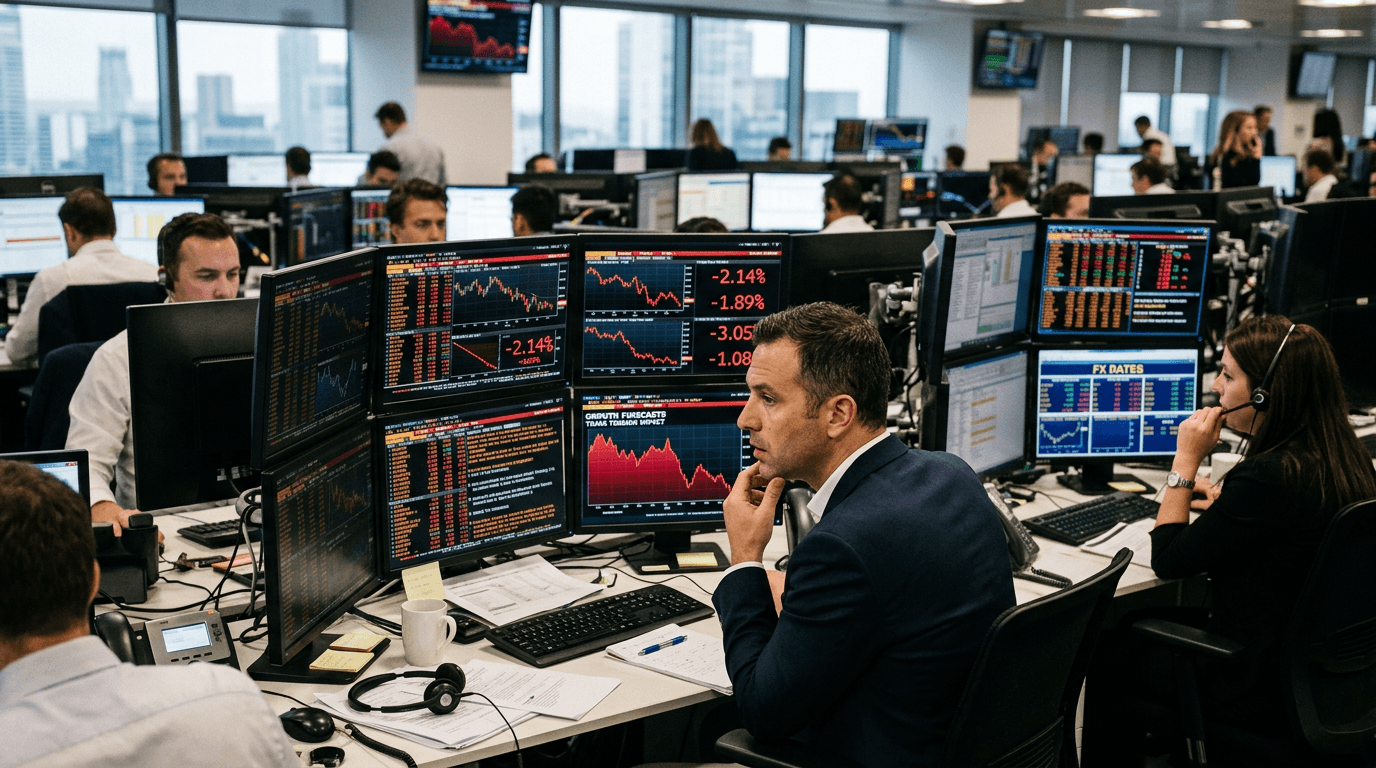
China’s latest move to slap steep additional tariffs—reportedly up to 125%—on a broad range of U.S. goods has jolted markets and revived one of investors’ least favorite phrases: “renewed trade war.” The announcement immediately shifted attention to USD/CNH and Asian foreign exchange, as traders reassessed the global growth outlook, supply-chain risks, and the path of risk assets from equities to commodities.
WHAT JUST HAPPENED?
In simple terms, Beijing has raised the cost of importing selected U.S. products into China by a very large margin, with some tariff lines now facing duties in the triple digits. This is not a first in the relationship: since 2018, China has periodically imposed additional tariffs on U.S. goods in response to U.S. measures, targeting sectors like automobiles, agricultural products, and chemicals.[5] These steps have often come as explicit retaliation to U.S. tariff hikes and export controls.[3][5]
The new round of duties, reportedly climbing as high as 125% on some items, mirrors past escalation cycles in which both sides layered new tariffs on top of existing ones.[3][4] In earlier phases of the dispute, reciprocal tariff rates in the triple digits were used as political and economic leverage, dramatically raising effective trade barriers.[3][4] The result has been a structurally higher tariff environment between the world’s two largest economies, with no comprehensive rollback in place as of mid-2025.[5]
What makes this announcement particularly sensitive is its timing and magnitude. Markets had grown accustomed to a fragile truce, including periods where both sides agreed to modestly reduce or suspend certain duties.[5][7] A sharp new increase signals that the détente is shaky and that tariff risk remains a live macro factor rather than a resolved historical episode.
For global investors, the message is clear: U.S.–China trade policy is still a key source of headline risk and a powerful driver of cross-asset volatility.
Why Markets Care: Growth, Inflation, Risk Sentiment
Tariffs act like a tax on cross-border trade. They raise the landed cost of imported goods, squeeze profit margins, and can dampen trade volumes. During the earlier waves of the U.S.–China trade war, average tariffs on bilateral trade climbed sharply, covering nearly all goods traded between the two economies.[6] That experience showed how quickly targeted tariffs can evolve into broad-based barriers.
Higher tariffs tend to hit global growth through several channels:
- Weaker trade flows, as some shipments become uneconomic.
- Investment hesitation, as firms delay decisions amid policy uncertainty.
- Supply-chain reconfiguration costs, as companies consider shifting production.
At the same time, tariffs can prove inflationary in the short to medium term, particularly in sectors where substitution is difficult. Importers may pass some or all of the higher costs on to consumers, or absorb them via lower margins, both of which affect corporate earnings and equity valuations.
Risk sentiment is especially sensitive to signs of escalation. In previous episodes, tariff headlines triggered quick rotations out of cyclical sectors and emerging-market assets into perceived safe havens such as the U.S. dollar, Treasuries, and the Japanese yen. Periods of intensified trade tension have coincided with spikes in volatility and sharp reversals in equity indices and industrial commodities.
FX SPOTLIGHT: USD/CNH AND ASIAN CURRENCIES
Whenever U.S.–China tensions flare, USD/CNH (the offshore yuan) becomes one of the market’s primary barometers. The latest tariff announcement again pushed traders to focus on this pair and on broader Asian FX, as it injects fresh uncertainty into the macro outlook.
A few dynamics matter here
- The yuan often weakens when trade tensions rise, reflecting concerns about Chinese growth and export prospects.
- Authorities in China actively manage the pace of currency moves, so traders pay close attention to daily fixings and policy signals.
- A weaker CNH can spill over into other regional currencies, particularly those of export-oriented economies such as South Korea and Taiwan.
For Asian FX more broadly, heightened tariff risk can be a double-edged sword. On one hand, some economies may benefit from supply-chain diversification as firms look beyond China, supporting their currencies over the medium term. On the other, short-term risk-off moves tend to pressure higher-beta currencies, widen credit spreads, and reduce appetite for local-currency debt.
For traders, the interaction between trade headlines, CNH moves, and regional risk sentiment creates a complex but potentially rich set of opportunities—provided risk is managed carefully.
What It Means For Traders And Simulated Strategies
News-driven macro shocks like a surprise tariff hike are where preparation, process, and practice really matter. In both live and simulated environments, traders can think about the impact across several dimensions:
- Directional FX trades: Positioning around USD/CNH and key Asian pairs, with scenario plans for both further escalation and de-escalation.
- Equity indices: Monitoring export-heavy markets and sectors—industrials, autos, semiconductors, and selected commodity producers—that are sensitive to trade flows.[3][5]
- Rates and credit: Assessing whether renewed growth fears support duration (lower yields) and how corporate spreads react to increased policy uncertainty.
Simulated finance (SimFi) environments are particularly useful in this context. They allow traders to:
- Recreate past tariff shocks and study how assets behaved across days and weeks.
- Test systematic rules—for example, trading CNH when tariffs are announced above a specified threshold, or using volatility filters around key policy events.
- Practice scaling in and out of positions as news evolves, without real capital at risk.
Because tariff headlines often arrive unexpectedly and trigger fast price moves, having pre-defined playbooks and tested strategies can be a genuine edge—even if those strategies are first developed and refined in a simulated setting.
Practical Playbook: Navigating A Renewed Tariff Shock
To turn headline risk into a structured trading framework, consider the following practical steps:
1. Anchor on scenarios, not predictions Build two or three clear macro scenarios: sustained escalation, quick compromise, and muddle-through. Map out how you expect key assets (USD/CNH, major Asian FX, global indices, industrial commodities) to behave under each. This shifts the focus from guessing the next headline to reacting intelligently when it arrives.
2. Watch the policy “tells” Track not only tariffs themselves but complementary measures such as export controls, technology restrictions, and investment screening.[3][5] These often signal whether tensions are broadening from trade into a more structural economic confrontation, with deeper and longer-lasting market implications.
3. Use risk management as your first line of defense During volatile policy episodes, consider:
- Smaller position sizes to account for gap risk.
- Wider but clearly defined stop levels.
- Tighter control of gross and net exposure across correlated trades.
Options, where available, can provide cleaner ways to express a view on volatility or directional risk without unlimited downside.
4. Lean on cross-asset confirmation Before committing heavily to a trade idea based on tariffs, look for confirmation across assets. For instance, a bearish trade on Asian equities might be more compelling if accompanied by a weaker CNH, wider credit spreads, and softening industrial metals.
5. Use simulation to stress-test your approach Run your strategy through historical periods of trade tension and hypothetical scenarios where tariffs climb further or are partially rolled back.[5][6] Assess drawdowns, win rates, and behavior under stress. The goal is to ensure that when real money is on the line, you have already seen your playbook perform through similar environments.
In the end, China’s decision to impose steep additional tariffs on U.S. goods is a reminder that the U.S.–China economic rivalry is not a past event but an evolving process. For traders and investors, the key is not to predict every policy twist, but to stay structurally prepared: informed about the history of the dispute, disciplined in managing risk, and practiced in executing strategies that can adapt as the trade narrative shifts.