
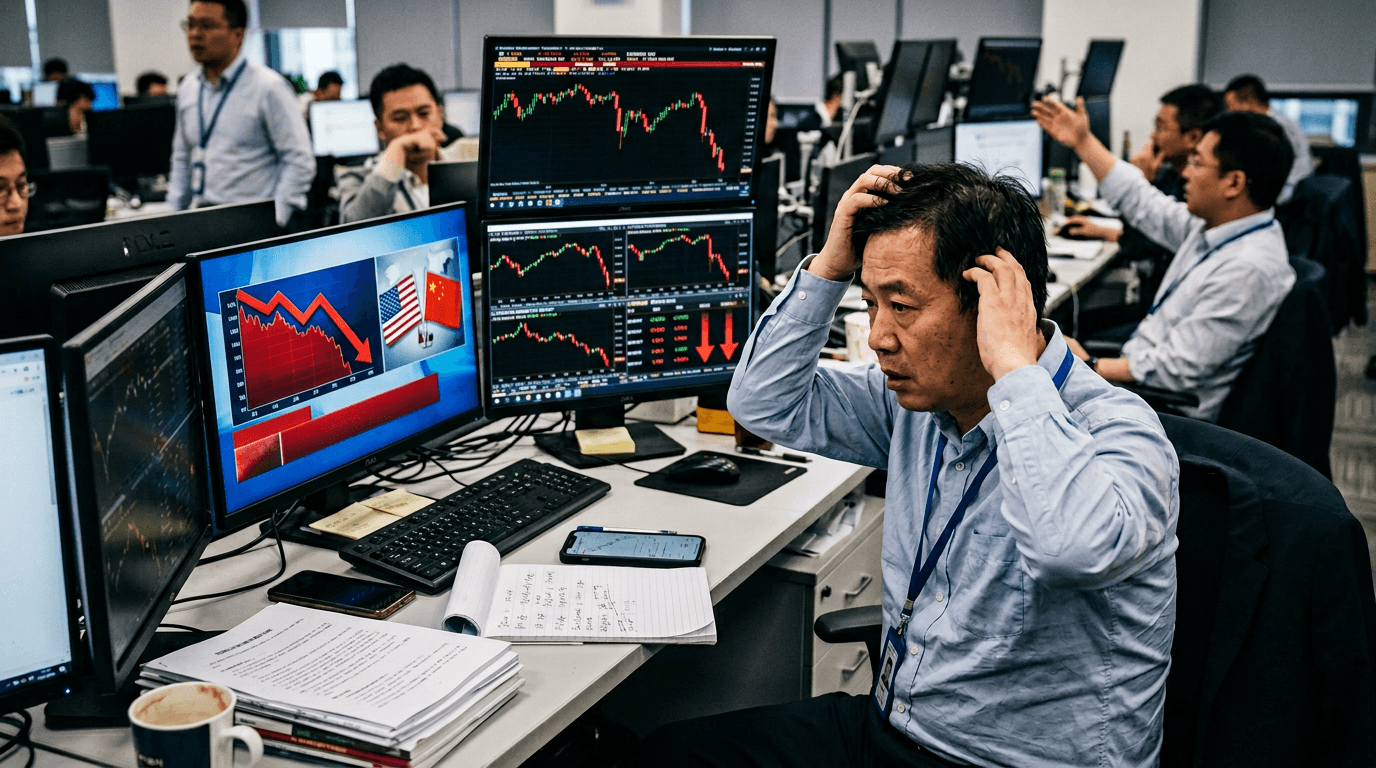
## Navigating the Storm: China's 125% Tariff Surge and Its Impact on Traders
On April 11, 2025, the US-China trade dispute reached a critical juncture as China announced significant tariffs on American goods, soaring to 125% effective April 12. This move marks a dramatic escalation in the ongoing tit-for-tat trade measures, shaking global markets and compelling investors to rethink their strategies. For traders, understanding the intricacies of this escalation and its economic implications is vital to navigating the volatile landscape ahead.
### The Timeline of Rapid Escalation
To fully grasp China's decision, one must look at the accelerated escalation of tariffs in early April 2025. The Trump administration intensified its tariff strategy, citing retaliatory measures and fentanyl-related concerns. On April 9, the US imposed an additional 50% tariff on Chinese goods, elevating the overall rate to 104%. This was further increased to 125% by the following day, with allegations of China's "disrespect" for global markets.
In response, China mirrored the US rate, raising its tariffs from 84% to 125% on April 12. China's Ministry of Finance declared this the final adjustment, indicating that "under the current tariff levels, the market can no longer accept US goods exported to China." This message signals both determination and a limit, suggesting that further escalation could have more severe repercussions for bilateral trade.
### Economic Impact on China and Global Trade
The tariff increase poses significant challenges to China's economic growth trajectory. Economists predict that the combined effect of US tariffs and diminished purchasing power could reduce China's GDP growth by one to two percentage points—a notable decline for an economy accustomed to 4-6% annual growth. Given China's reliance on exports as a growth engine, this scenario places manufacturers in a precarious position.
The effects extend beyond mainland China. Hong Kong, which exported approximately 38 billion dollars worth of goods to the US in 2024, now faces increased economic challenges due to reciprocal tariffs. This illustrates how trade tensions between Washington and Beijing ripple across the Asian economic landscape, creating headwinds for supply chains and corporate profitability throughout the region.
In addition to traditional tariffs, China has employed non-tariff measures to expand its trade response. The Ministry of Commerce added 12 US companies to its export control list, effectively barring them from receiving Chinese dual-use exports. Furthermore, six US companies were placed on the Unreliable Entity List due to involvement in arms sales or military technology cooperation with Taiwan. These actions broaden trade restrictions into technology access and investment limitations, extending well beyond simple tariff warfare.
### Currency Strategy and Competitive Positioning
One of China's most significant responses has been its currency strategy. To counteract tariff pressures on Chinese exporters, the People's Bank of China deliberately weakened the yuan, setting the USD/CNH reference rate at 7.2066 on April 9—the lowest point since September 2023. This currency depreciation aims to enhance the global price competitiveness of Chinese goods by effectively reducing their dollar-denominated costs for foreign buyers.
For traders, this strategy offers crucial insights: currency depreciation can partially mitigate tariff impacts by making exports cheaper in foreign currency terms. While this approach does not fully counterbalance a 125% tariff, it provides some relief and indicates Beijing's willingness to use monetary policy tools alongside trade measures. Traders should closely monitor USD/CNH movements, as further depreciation may occur as the trade conflict evolves.
### Key Implications for Traders and Investors
The implementation of these tariffs creates distinct opportunities and risks for market participants. Volatility across equities, currencies, and commodities is likely to increase as negotiations progress or break down. Sectors heavily exposed to US-China trade deserve particular attention, as earnings guidance and profit margins face mounting pressure.
Currency fluctuations in USD/CNH and other emerging market pairs present trading opportunities, especially as central banks adjust policy responses to tariff-induced economic pressures. The divergence between US and Chinese growth trajectories, driven by trade tensions, may lead to carry trade adjustments and rotation patterns across foreign exchange markets.
Importantly, the potential for breakthrough negotiations remains significant. Both sides have expressed willingness to engage in dialogue, and China's firm yet measured language—stating this is the final tariff hike—suggests both parties recognize that 125% tariffs represent an unsustainable equilibrium. Current levels may prove temporary rather than permanent, creating opportunities for traders who position ahead of potential de-escalation.
### Navigating Uncertainty
For investors with exposure to Chinese and US equities, this environment demands active monitoring and potential rebalancing. Companies with diversified supply chains and those less dependent on bilateral trade are likely to outperform. Simultaneously, the currency weakness in the yuan may create attractive entry points for long-term investors betting on eventual stabilization.
The unfolding trade war remains dynamic, with outcomes contingent on political developments and diplomatic breakthroughs that remain challenging to predict. However, positioning portfolios for both continued escalation and potential de-escalation scenarios represents a pragmatic approach to navigating these turbulent waters.
NEWSIMPACTSCORE: 8