
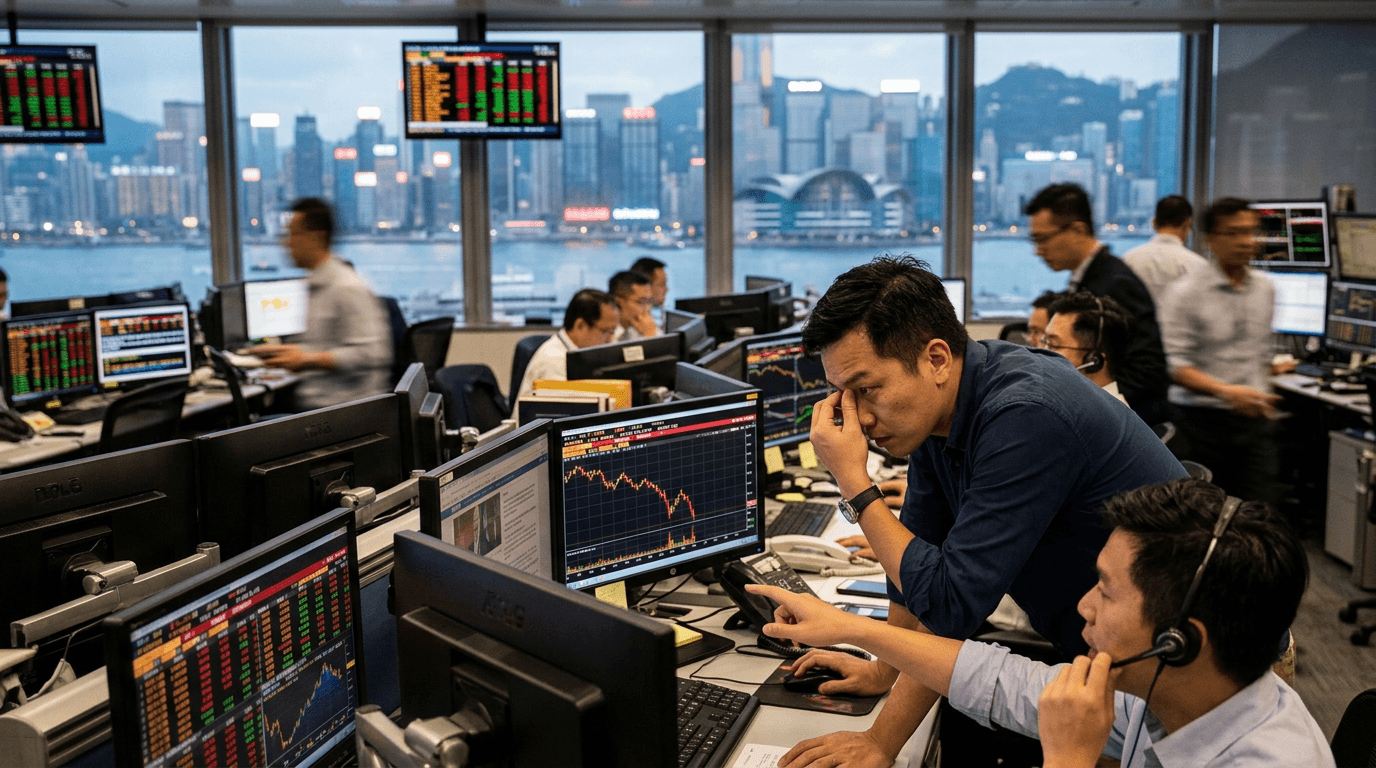
Global markets were jolted as China announced additional tariffs of up to 125% on a wide range of US goods, sharply escalating the trade confrontation with Washington and signaling a more hardline stance on economic retaliation.[1][2] Chinese authorities warned that persistent US tariff hikes “no longer make economic sense” and insisted the US should bear responsibility for the economic damage caused, framing the move as a defensive response rather than a negotiating tactic.[1][2][5]
WHAT CHINA’S NEW TARIFFS MEAN
China’s finance ministry has raised duties on many US imports from around 84% to as high as 125%, closing off much of the Chinese market to American exporters at current price levels.[1][2][6] These increases follow a series of US tariff hikes that have pushed effective duties on Chinese goods toward roughly 145%, turning what was once a tariff skirmish into a full-scale trade war.[1][3][4]
Beijing’s statement emphasized that, at such elevated tariff levels, there is effectively no market for US imports in China, and suggested that any further US escalation would simply be ignored.[2] This language marks a shift from earlier phases of the dispute, when both sides still framed tariffs as temporary bargaining chips; now, China is signaling it is prepared to live with a highly restricted bilateral trade channel for an extended period.[1][2]
In practical terms, tariffs of 125% mean targeted US products will be more than twice as expensive once they enter China, unless exporters absorb the cost or find loopholes. According to prior tariff rounds, heavily impacted categories have typically included industrial machinery, electronics, agricultural products, and consumer goods, which are central to US export flows to China.[1][2][6] While exact coverage depends on detailed tariff schedules, investors should assume that many high-visibility US brands and industrial suppliers now face a significantly harder path into the Chinese market.
Market Reaction: Risk Sentiment Under Pressure
The announcement immediately pressured global risk sentiment, particularly in Asia, where export-driven companies and supply-chain hubs are most directly exposed to US–China trade flows.[1] Trade-sensitive equity markets in Northeast and Southeast Asia often react quickly to tariff news, as investors reassess earnings projections for manufacturers that depend on both Chinese demand and US-linked production networks.
In foreign exchange markets, renewed tension adds uncertainty to the path of the yuan and the dollar.[1] A prolonged confrontation could encourage yuan weakness as China cushions its export sector, while episodes of “risk-off” sentiment tend to support the dollar as a defensive haven. However, authorities on both sides have strong incentives to manage currency volatility, meaning traders should prepare for a mix of market-driven moves and policy interventions.
Commodity futures are another pressure point. Higher tariffs can dampen demand for raw materials and energy products tied to US–China trade flows, while also disrupting agricultural exports that rely on Chinese buying.[1] In previous tariff rounds, soybeans, industrial metals and petrochemicals have all experienced increased volatility as trade flows rerouted and inventories built up or ran short.[1][2] The current escalation raises the risk that such dislocations could reappear or intensify.
For simulated traders on platforms like E8 Markets, this environment offers a live stress test in how macro shocks transmit across asset classes. Watching how Asian indices, the yuan, the dollar and major commodity contracts react to tariff headlines helps build intuition about cross‑market relationships under trade stress.
Winners, Losers And Supply-chain Shifts
When tariffs rise to triple‑digit levels, the immediate losers are exporters directly in the crosshairs. US firms selling machinery, electronics, consumer goods and agricultural products into China face a sudden collapse in price competitiveness, which can translate into lost market share, lower revenues and pressure on margins.[1][2] On the Chinese side, companies that depend on US components or technology, and now face the mirror‑image of elevated US tariffs, confront higher costs and disrupted production plans.[1][4][6]
Yet tariff shocks also create relative winners. Manufacturers in third countries—such as Vietnam, Mexico, or India—often step in to fill gaps left by US or Chinese suppliers, accelerating existing trends toward supply‑chain diversification. While this dynamic is not explicitly detailed in the latest announcement, prior waves of US–China tariffs have already led global companies to re‑route production away from bilateral trade chokepoints.[6][9] Investors and traders increasingly monitor these “bystander” economies as potential beneficiaries of prolonged friction.
Another subtle impact is on corporate investment decisions. When the world’s two largest economies signal that tariff levels may remain punitive for an extended period, multinational firms may hesitate to expand capacity that depends on US–China flows, instead favoring more flexible or regionally diversified strategies.[1][2] Over time, this can reshape global trade patterns in ways that persist even if tariff levels are later partially rolled back.
For traders, a key takeaway is that the effect of tariffs is rarely linear. Some sectors face immediate pain, others enjoy opportunistic gains, and the timing can vary. Scenario analysis—mapping out who suffers, who gains, and how fast—is essential.
How Traders Can Navigate The New Trade War Phase
Heightened trade tension tends to increase volatility, but volatility is only an opportunity if it is managed carefully. On a SimFi platform, traders can practice responding to tariff shocks without real capital at risk, making it an ideal environment to refine strategies before applying them in live markets.
A few practical approaches to consider
First, focus on correlations. Trade war headlines often trigger synchronized moves: risk‑off selling in equities, strength in defensive currencies, and choppy price action in commodities tied to global growth.[1] Tracking these patterns helps traders identify which instruments tend to move together, and which might offer diversification.
Second, build event‑driven playbooks. When a major policy announcement hits—like China lifting tariffs to 125%—markets frequently overreact in the short term and then partially mean‑revert.[1][2] Practicing how to trade around the immediate spike and the subsequent consolidation can improve timing and risk‑reward.
Third, emphasize risk management. Wider trading ranges, gap opens and rapid intraday swings are common in trade war phases. Using calibrated position sizes, stop‑loss levels and clear maximum drawdown rules becomes even more critical. Simulated environments allow traders to test how their risk controls behave under stress, and to adjust before real money is on the line.
What To Watch Next
Despite the sharp rhetoric, Chinese officials maintain that they remain open to negotiations on equal terms.[2] Past episodes have shown that even severe tariff escalations can be followed by temporary truces or partial rollbacks when economic pressure mounts on both sides.[7][8][9] Traders should therefore watch not only for new tariff rounds, but also for signs of dialogue—summits, working‑level talks, or joint statements—that might signal a shift back toward de‑escalation.
Key indicators to monitor include
- Official statements from the US Trade Representative and China’s commerce and finance ministries
- Moves in the yuan and Chinese onshore equities, which often reflect domestic expectations about policy direction
- Trade data and corporate guidance from globally exposed sectors, especially technology, industrials and agriculture
For market participants, the message is clear: the US–China trade relationship has entered another volatile phase, with tariffs at levels that challenge basic economic logic and threaten to reshape global supply chains.[1][2] Whether this becomes a prolonged stand‑off or a prelude to renewed negotiations, traders who understand the mechanics of tariffs—and practice navigating them in simulated markets—will be better positioned to respond to whatever comes next.