
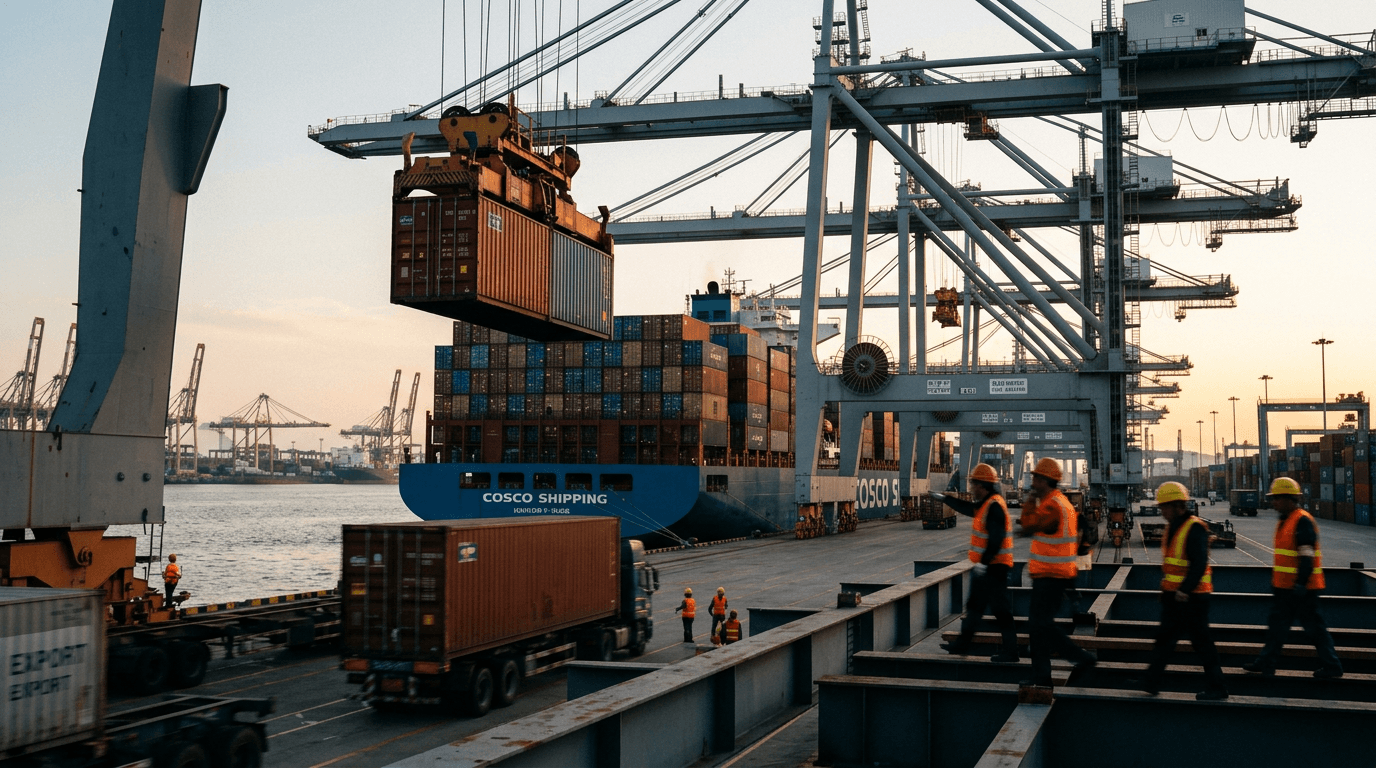
China's exports surged 14.1% in April compared to the same period last year, dramatically exceeding economist expectations and signaling robust demand for Chinese goods despite mounting global uncertainties. The data, released over the weekend, reveals a trade surplus of $84.8 billion for the month alone, contributing to what economists describe as a narrowing but still substantial annual trade position. This resilience in export activity comes at a crucial juncture, just as U.S. President Trump prepares to visit Beijing, intensifying focus on the bilateral trade relationship that continues to define both economies' trajectories.
What's Driving The Export Surge
The acceleration in Chinese exports stems from two primary drivers that paint a picture of both opportunity and hedging behavior in global markets. First, manufacturers worldwide are ramping up orders for semiconductors and artificial intelligence-related equipment, capitalizing on the global AI boom that shows no signs of slowing. China's dominance in electronics manufacturing and semiconductor supply chains positions it as an indispensable supplier for companies racing to build AI infrastructure and meet surging computational demands.
Second, buyers across multiple industries are engaging in precautionary stockpiling. Concerns about potential supply disruptions stemming from the Middle East conflict, combined with anxiety over higher energy prices, have driven companies to front-load their purchases of Chinese goods. This represents classic risk-averse behavior in uncertain times, where securing inventory takes precedence over typical procurement patterns. The combination of structural AI demand and temporary stockpiling effects created the perfect storm for Chinese exporters in April.
Trade Surplus Dynamics And Implications
The $84.8 billion monthly trade surplus marks a significant milestone in China's external accounts, though economists like those at ING caution that the all-time high of $1.2 trillion achieved last year may not be repeated in 2026. Several factors could constrain future surpluses. Trade tensions with the U.S., ongoing geopolitical complications, and lingering effects from higher American tariffs all threaten to moderate the export boom. However, the resilience demonstrated in April data suggests China's exporters have adapted remarkably well to the higher-tariff environment.
The bilateral trade surplus with the United States alone has widened to $87.7 billion in just the first four months of 2026, underscoring the persistent imbalance that remains central to U.S.-China trade negotiations. This asymmetry continues to fuel American political pressure and likely will feature prominently in Trump's Beijing discussions. For traders monitoring currency and equity markets, these figures suggest China retains substantial economic leverage through its export capabilities, even as geopolitical tensions simmer.
Implications For Asian Markets And Emerging Markets
The strong export performance is already rippling through financial markets. The yuan has been supported by these positive trade dynamics, with forecasts for further strengthening gaining credibility among currency traders. When China's trade surplus widens, it typically signals demand for yuan in international transactions, creating upward pressure on the currency. For emerging market portfolios and Asian equity investors, this data point carries multifaceted significance.
Chinese exporters' success directly benefits manufacturing sectors throughout Asia, as China remains an integral part of global supply chains. South Korean semiconductor companies, Vietnamese electronics manufacturers, and regional logistics providers all benefit from China's export strength. Additionally, robust Chinese exports typically lead to improved corporate earnings and government revenues, supporting equity valuations across the region. The data released this weekend has consequently lifted Asian market sentiment, with investors reassessing their positioning in EM assets that had been weighed down by earlier uncertainty.
What This Means For Traders And Simfi Investors
From a trading perspective, several actionable insights emerge from China's April export data. First, the resilience in AI-related exports suggests that demand for semiconductor and technology stocks remains strong despite broader economic concerns. Second, the precautionary stockpiling behavior indicates supply chain anxiety that could persist throughout 2026, potentially supporting export-oriented manufacturers and logistics companies. Third, the yuan's strengthening trajectory offers opportunities in currency markets for those positioned correctly.
For SimFi traders, this data supports several strategic considerations. Long positions in Chinese exporters and Asian semiconductor manufacturers appear justified given the structural AI demand dynamics. Currency bets on CNY strength against major currencies could prove rewarding. Conversely, traders should remain alert to the geopolitical risks that could suddenly reverse these trends, particularly around the Trump-Xi discussions.
Looking Ahead
China's April export surge demonstrates that despite significant global headwinds—from Middle East tensions to U.S. trade policy uncertainty—market fundamentals continue to support Chinese export growth. The widening trade surplus bolsters China's negotiating position even as Trump prepares to visit Beijing. For investors and traders, the message is clear: underlying economic resilience in Asia's largest economy remains intact, even if political theater suggests otherwise.
Monitor upcoming trade data closely, as May and June figures will indicate whether April represents a peak driven by stockpiling or the beginning of sustained strength supported by structural AI demand. The answer will significantly shape portfolio allocations and trading strategies across emerging markets and technology sectors.