
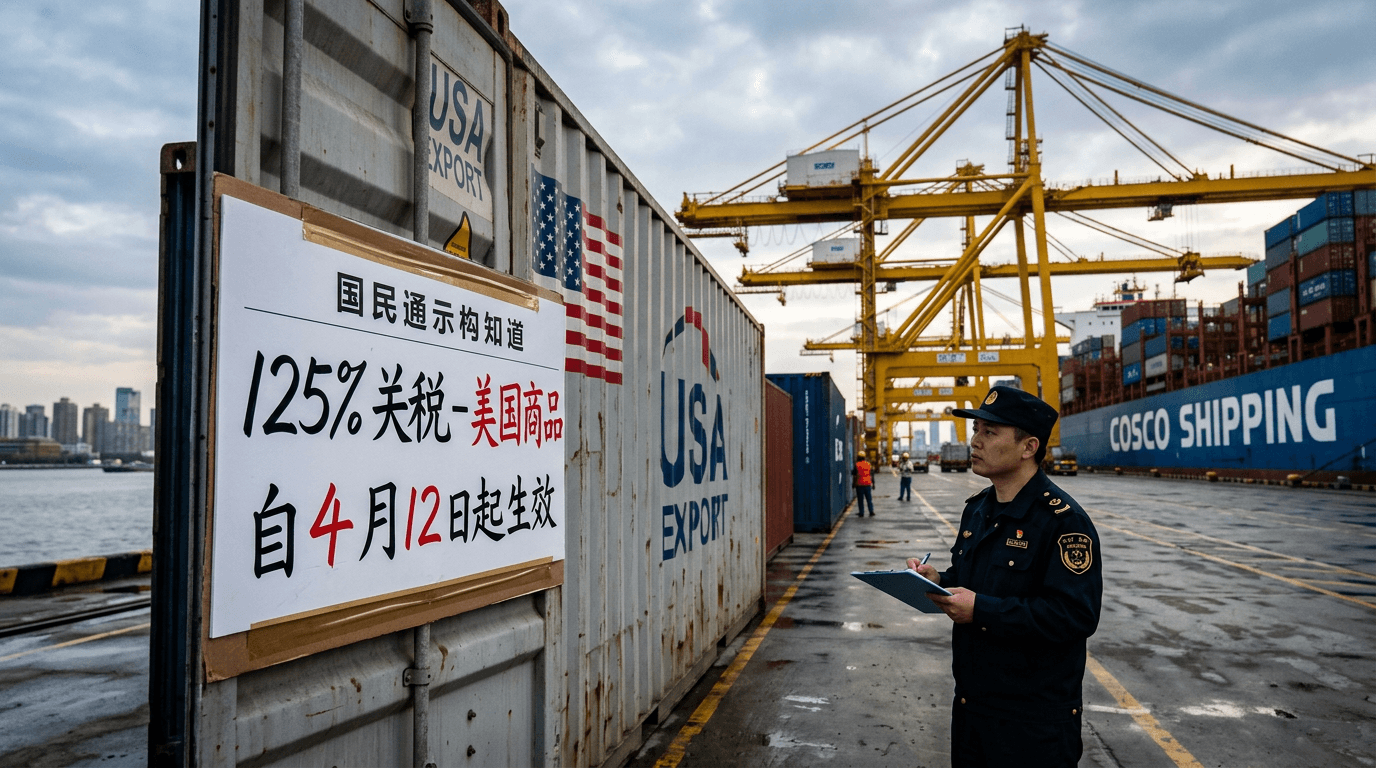
China's Escalation: A New Era in US-China Trade Tensions
On April 12, China catapulted its trade tensions with the United States into a new dimension by enforcing a sweeping 125% tariff on all American goods. This drastic leap from an earlier 84% tariff signifies not just a shift but a critical juncture in the US-China trade relationship, indicating that the world's two dominant economies are no longer engaged in cautious negotiations but rather in an open economic confrontation with profound global consequences.
Rapid Escalation: From Tactics to Conflict
The pace of this escalation is nothing short of astonishing. On April 10, the United States elevated its tariffs on Chinese imports to an assertive 145%, citing national security concerns and illicit fentanyl trafficking as its rationale. China's rapid counter-move, announcing a 125% tariff just two days later, underscores how quickly trade disputes can spiral into full-scale economic warfare. Each side now views the other's actions as intolerable provocations, rather than mere negotiating strategies.
Tracing the Escalation Timeline
The path to the 125% tariff was not abrupt. Earlier in April, China had set an 84% tariff in response to previous US actions. The March 4 imposition of a 20% US tariff on Chinese goods served as a precursor to this unprecedented series of retaliatory moves. Notably, each successive increase has been more aggressive than the last, suggesting that restraint is no longer a consideration for either nation. The shift from 84% to 125% is not a mere adjustment but a signal that China perceives the current conditions as untenable and that conventional negotiations have faltered.
China's Ministry of Finance emphasizes that the market can no longer absorb American goods at these tariff levels. This statement is pivotal, suggesting that Chinese officials believe tariffs have crossed a threshold where continued trade is not just costly, but economically irrational. When a government signals that markets cannot function, it indicates a willingness to endure significant economic hardship to make a political point.
Implications for Market Participants
For traders in today's volatile environment, the 125% tariff is a seismic policy shock. Such extreme tariff levels create substantial market disruptions and, importantly, opportunities for those who can anticipate sectoral rotations and currency shifts. Companies with significant US-China trade exposure are immediately pressured to recalibrate profit margins and fundamentally restructure business strategies.
The ramifications span multiple asset classes. Technology firms reliant on Chinese manufacturing face increased costs and supply chain uncertainties. Agricultural exporters, a vital segment of US trade, confront the reality that major Chinese markets have effectively closed. Manufacturers operating across both nations must make difficult decisions regarding production locations and supply chain architecture. Conversely, defensive sectors and domestically focused businesses may find themselves in stronger positions as investors seek refuge from trade volatility.
Currency markets are experiencing heightened volatility as traders adjust for prolonged trade tensions. Commodity prices, especially those linked to affected supply chains, face downward pressure as demand expectations shift. Traditional portfolio strategies that once worked may prove inadequate amidst these structural changes.
The Diplomatic Glimmer: A Ray of Hope?
Despite harsh rhetoric, a faint glimmer of diplomatic possibility remains. On April 9, China's State Council released a white paper indicating an openness to dialogue with the US government, even as it prepared retaliatory measures. This suggests that, despite escalating tariffs, communication channels are still open. For market participants, this nuance is significant as it presents a possibility, albeit remote, for de-escalation.
However, China's assertion that the 125% tariff is its final retaliatory measure should be viewed cautiously. Such declarations are often temporary, subject to change as circumstances evolve. The inclusion of 11 US companies on China's "unreliable entity list" for alleged military-related technology cooperation with Taiwan shows that China is employing a multifaceted strategy to exert pressure on the United States. This complexity indicates that even if tariff escalation halts, other economic coercion tools remain available.
Strategic Insights for Simulated Finance Environments
For traders in simulated finance platforms, this trade war escalation offers an exceptional case study in how macroeconomic policy shocks propagate through global markets. The scenario presents multiple analytical challenges: determining which sectors will suffer most, identifying which currencies will bear the brunt of capital reallocation, and timing potential reversals if diplomatic efforts succeed.
The 125% tariff announcement requires sophisticated analytical frameworks that consider multiple scenarios and timeframes. Traders must resist the temptation to assume linear progression and instead consider how rapidly conditions can shift if negotiations advance or deteriorate unexpectedly.
Conclusion: A New Economic Reality
China's 125% tariff on US goods marks more than just another headline in an ongoing trade dispute. It represents a deliberate crossing of thresholds both nations previously respected. Whether this escalation is a prelude to even greater conflict or a negotiating stance from which both sides can eventually retreat remains uncertain. What is clear is that the global economy has entered a new phase characterized by unprecedented trade tensions, and market participants must adapt to this new reality.
NEWSIMPACTSCORE: 8