
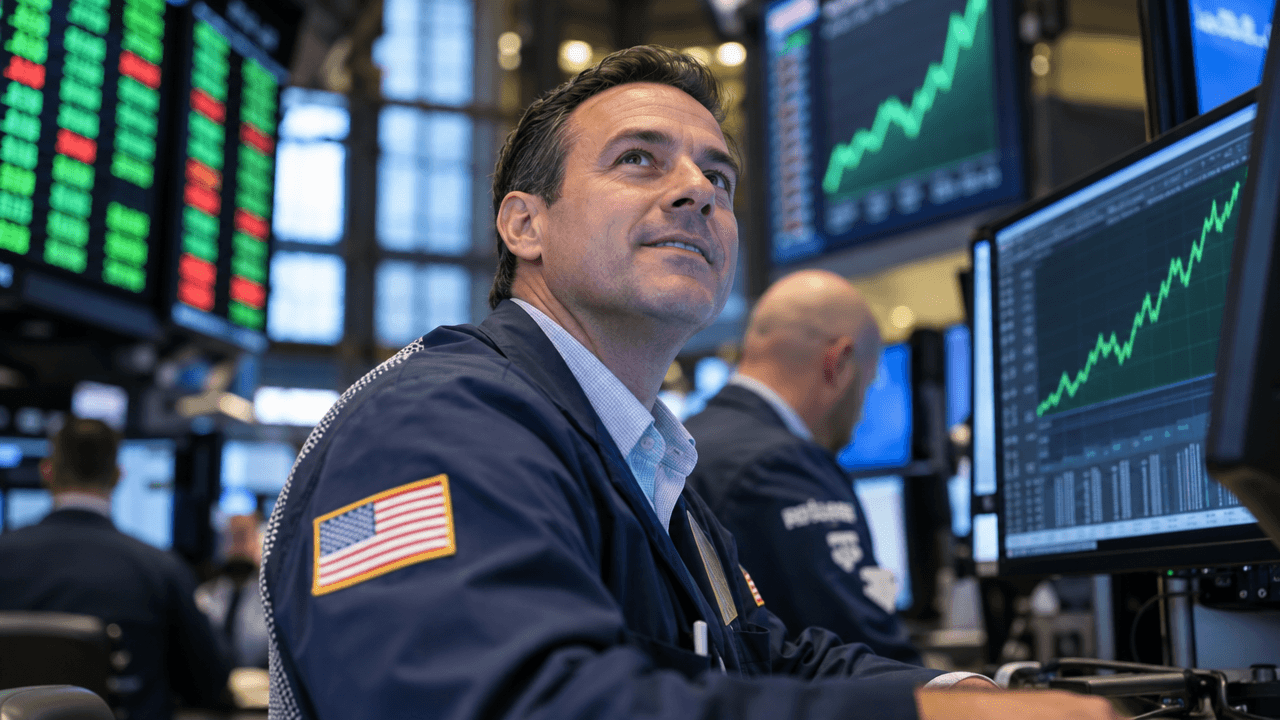
U.S. equity futures are extending their rebound as chipmakers regain ground, offering relief to technology investors after a punishing week for artificial intelligence and semiconductor shares. The early move suggests that traders are willing to buy the dip, but it does not yet prove that the recent selloff has run its course.
Nasdaq 100 futures recently rose 0.2% after the index gained 1.2% in the previous session. The Philadelphia Semiconductor Index also climbed 1.6%, ending an eight-session losing streak. [1] That combination matters because chip stocks have become one of the clearest gauges of investor confidence in the AI-led growth trade.
The Chipmaker Rebound
Semiconductor companies sit at the center of the current technology investment cycle. Their processors, memory products, networking equipment, and data-center components support the computing infrastructure required for generative AI. When these stocks rise, investors often interpret the move as evidence that demand for AI infrastructure remains strong.
The recent recovery follows a sharp decline that pushed the Nasdaq 100 toward its worst weekly performance since the tariff-related market turmoil of April 2025. [5] Chip stocks were particularly vulnerable because many had already delivered substantial gains, leaving them exposed to profit-taking when investors began questioning valuations, interest rates, and the cost of financing AI expansion.
A rebound after such a decline can have several explanations. Some investors may be covering short positions, while others may view lower prices as an opportunity to accumulate shares in companies with strong earnings momentum. In either case, the move can produce a powerful rally even before the broader economic outlook improves.
Why Futures Matter
Equity futures provide an early indication of how markets may open, although they are not a guarantee of the regular-session result. Futures can react quickly to overnight earnings announcements, overseas trading, bond-market movements, and changes in investor positioning.
For traders, the important question is whether strength in futures remains visible after the opening bell. A durable recovery would likely require continued buying across the semiconductor sector, stronger breadth among technology shares, and participation from economically sensitive groups such as industrials and financials.
If futures rise but only a small group of highly valued chipmakers advances, the market may be experiencing a narrow technical bounce rather than a broad change in sentiment. By contrast, gains spreading across software, hardware, consumer discretionary companies, and smaller technology stocks would provide stronger evidence that risk appetite is returning.
The Bigger Investor Debate
The underlying debate is not simply whether AI is important. Most investors already accept that AI could transform corporate productivity and technology spending. The more difficult question is whether current share prices properly reflect future earnings.
That distinction has become increasingly important. Companies may continue reporting strong revenue growth while their stocks struggle if expectations are rising even faster. Investors are also evaluating how quickly data-center spending will translate into profits, whether competition will pressure margins, and how much debt or capital companies must commit to maintain their AI strategies.
Interest rates add another layer of uncertainty. Higher yields generally make future corporate earnings less valuable in present-day terms, which can weigh particularly heavily on growth stocks. Technology shares with long-duration valuations are therefore sensitive not only to company results but also to inflation data, Federal Reserve expectations, and Treasury-market volatility.
The latest futures rebound may indicate that traders are temporarily looking beyond those concerns. It does not eliminate them.
What Traders Should Watch
The first signal is market breadth. A healthy rebound should involve more than the largest semiconductor names. Traders can monitor the percentage of Nasdaq stocks advancing, the relative performance of equal-weighted indexes, and whether cyclical sectors participate.
The second signal is volume and follow-through. A one-day rally can reflect short covering, but several sessions of gains accompanied by expanding volume would suggest more committed buying. Traders should also watch whether the semiconductor index can hold its recovery after ending an eight-session losing streak.
The third signal is volatility. When markets are recovering from a sharp decline, large intraday swings are common. A stock may open higher and reverse lower as investors lock in profits or reassess fresh information. Managing position size and avoiding excessive leverage can be more important than predicting the exact opening price.
For SimFi traders, the episode is a useful exercise in separating direction from risk management. A bullish futures signal may support a long-market scenario, but a responsible plan should define the entry, invalidation level, profit objective, and maximum acceptable loss before the trade is placed.
Practical Takeaways
First, treat the rebound as information rather than confirmation. The market is showing renewed demand for chipmakers, but one recovery session cannot establish a new uptrend.
Second, track whether leadership broadens. Strong performance from semiconductors is constructive, but a wider advance would make the signal more reliable.
Third, respect event risk. Earnings reports, interest-rate expectations, bond yields, and economic data can quickly change the market’s interpretation of technology valuations.
Finally, avoid chasing the first move. Waiting for confirmation, using defined risk, and comparing the trade’s potential reward with its downside can help traders participate without turning a short-term rebound into an outsized portfolio risk.
Conclusion
U.S. equity futures are extending a technology-led recovery, with chipmakers providing the immediate catalyst. The move offers a reminder that heavily sold sectors can rebound quickly when valuations attract buyers and short sellers begin covering positions.
Whether this becomes a lasting recovery will depend on breadth, earnings, interest rates, and evidence that AI spending can support future profits. For now, the most disciplined approach is cautiously constructive: recognize the improving momentum, but require confirmation before assuming that the market’s recent weakness has fully ended.