
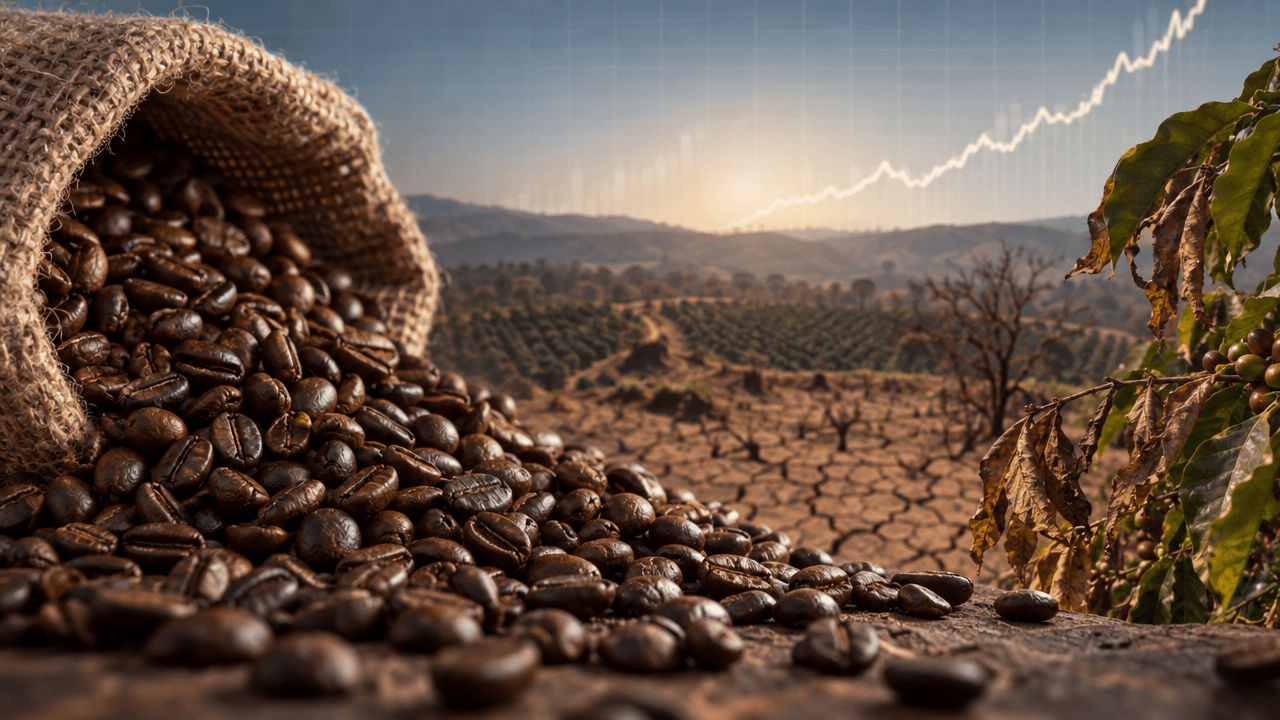
Coffee prices have surged to their highest level since 1977, turning an everyday breakfast staple into a fresh warning signal for financial markets. Arabica futures in New York reached 320.10 US cents per pound, moving close to the historical high of 337.50 cents recorded in 1977. The rally reflects growing concern that drought in Brazil, the world’s largest coffee producer, will reduce supplies from upcoming harvests. [2]
For consumers, the immediate impact may appear in higher prices for roasted coffee, ground beans and beverages sold by cafés. For investors and policymakers, however, the move represents something broader: a reminder that weather-sensitive commodities can reignite inflation even when central banks are trying to guide price growth lower.
The Weather Premium In Coffee
Coffee production depends heavily on predictable rainfall during flowering and fruit development. Brazil’s recent drought and high temperatures have raised doubts about the size and quality of future Arabica crops. When coffee trees experience severe water stress, flowering can be disrupted, and even flowers that appear after rainfall may fail to develop into healthy coffee cherries.
That uncertainty is particularly important because Brazil is a dominant force in the global Arabica market. A production problem there can affect international prices quickly, especially when inventories are already limited. Traders do not need to wait for official harvest data before repricing contracts. Futures markets respond to the probability of a smaller crop months in advance.
The result is a weather premium: buyers pay more today to secure supply against the possibility of greater shortages tomorrow. The current rally also extends a broader climb that has already been driven by tight inventories, delayed deliveries and concerns over production in other coffee-growing regions. [4]
Supply, Inventories And Market Positioning
A commodity rally is rarely caused by one factor alone. Brazil’s drought is the central concern, but supply-chain behavior can amplify the move. Farmers may delay selling if they expect prices to rise further, reducing the amount of coffee available to exporters in the short term. Traders and roasters that anticipated regular deliveries may then be forced to compete for a smaller pool of beans.
Low inventories make this dynamic more powerful. When stockpiles are comfortable, a poor harvest forecast can be absorbed by existing supplies. When inventories are tight, even a modest disruption can produce a sharp price response.
Arabica is not the only coffee segment facing pressure. Robusta, a lower-cost variety commonly used in instant coffee and blends, has also experienced supply concerns, including adverse weather in Vietnam. This limits the ability of roasters to switch entirely from Arabica to a cheaper alternative. [6]
For traders, the key lesson is that futures prices reflect expectations rather than confirmed physical shortages. Prices can rise dramatically before crop losses are fully measured, but they can also fall quickly if rainfall improves, harvest estimates recover or speculative positions are unwound.
Why Coffee Matters For Inflation
Coffee is not large enough by itself to determine global inflation. Energy, housing, food and wages generally have a much greater influence on broad consumer-price indexes. Nevertheless, coffee is a visible and internationally traded product, making it a useful example of how climate-related supply shocks can complicate monetary policy.
Higher futures prices eventually work through the supply chain. Importers may pay more for green coffee, roasters may increase wholesale prices, and cafés may adjust menus to protect profit margins. The timing varies because businesses often use inventories, contracts and hedging strategies to delay the effect on customers.
The broader concern is that several commodity shocks occurring at once can make inflation more persistent. Central banks may be willing to look through a temporary jump in one food item, but repeated increases across agricultural goods can influence consumer expectations and wage negotiations. The World Bank has noted that central banks may keep policy tighter when inflation memories remain strong and price pressures appear persistent. [9]
What Markets Should Watch Next
The most important indicator will be Brazil’s weather during the next stages of the crop cycle. Traders will monitor rainfall totals, soil moisture, flowering conditions and official production estimates. A return to favorable weather could reduce supply fears, while renewed dryness would likely reinforce the rally.
Global inventories and exchange-certified stocks also deserve attention. Falling inventories would confirm that demand is outpacing immediately available supply. Rising stocks, by contrast, could signal that the market is beginning to absorb the shock.
Currency movements matter as well. Coffee is priced internationally in US dollars, so changes in the dollar can affect purchasing power for buyers outside the United States. Shipping conditions, export schedules and trade regulations may add further volatility.
Finally, traders should distinguish between a structural trend and a temporary squeeze. Coffee prices can remain elevated when climate risks, limited acreage and changing consumption patterns persist. But futures markets can also retrace sharply when a harvest improves or speculative enthusiasm fades. Risk management is therefore essential: position sizing, defined exit levels and awareness of contract volatility matter more than attempting to predict the exact top.
Practical Takeaways For Traders And Consumers
Traders should avoid treating the headline alone as a complete investment thesis. Study the crop outlook, inventory data, futures curve and weather forecasts together. A steeply rising market may offer momentum opportunities, but it also carries a higher risk of sudden reversals.
Consumers and businesses can prepare by reviewing purchasing contracts and considering how much price exposure they carry. Cafés may benefit from transparent menu planning, while households can compare package sizes, brands and brewing methods as retail prices adjust.
The coffee surge demonstrates how quickly a localized weather problem can become a global market story. Brazil’s drought has pushed Arabica prices toward a historic peak, but the next major move will depend on whether supply fears are confirmed or relieved. For financial markets, the episode is a timely reminder that inflation is not controlled by interest rates alone. Sometimes, it begins with the weather in a coffee field.