
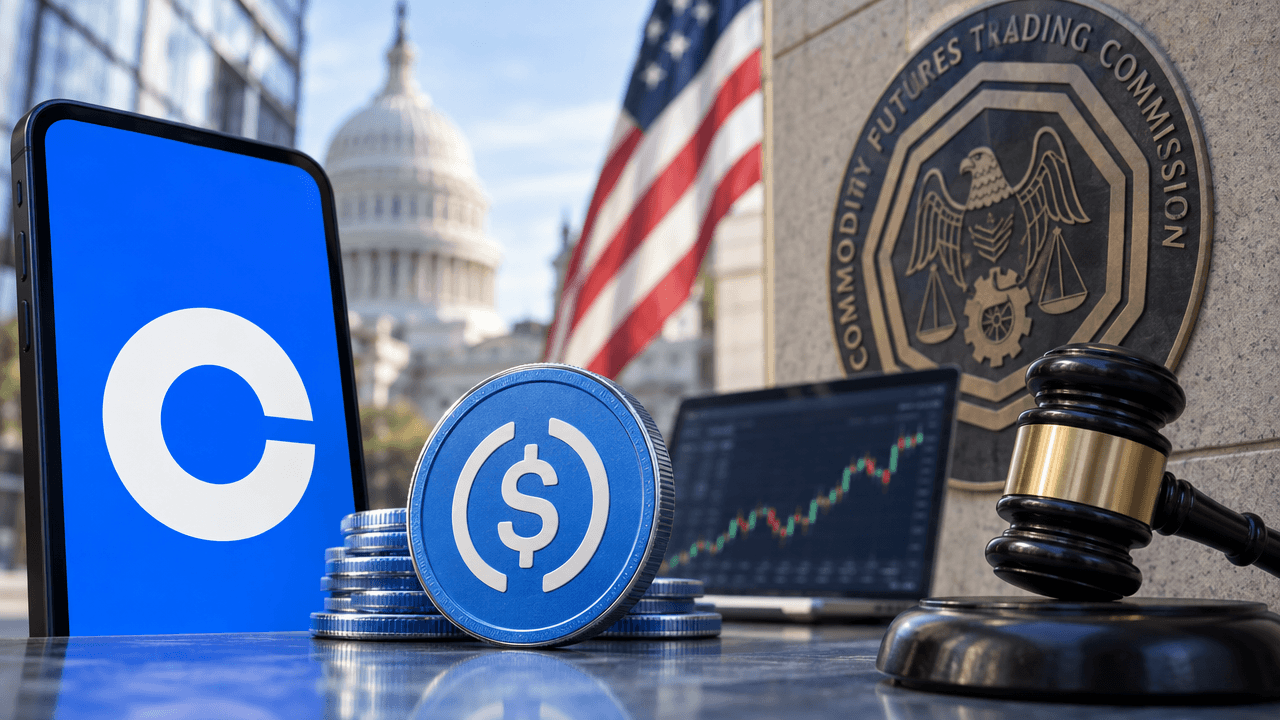
Coinbase’s new approval to clear its own derivatives in the United States marks a turning point in how crypto markets are structured and supervised.[2][9][10] By registering Coinbase Clearing LLC as a derivatives clearing organization, the CFTC has effectively allowed Coinbase to bring a key post-trade function in-house, creating a more vertically integrated, institutional-grade derivatives platform.[2][9][10] For traders and investors, this move signals that regulated crypto derivatives are moving closer to the standards of traditional futures markets while remaining native to digital assets.[1][8][13]
Market Context: A Fully Integrated Derivatives Stack
Before this approval, Coinbase already operated a designated contract market through Coinbase Derivatives LLC, where futures and options contracts are listed and traded.[3][9][10] It also held registration for a futures commission merchant, Coinbase Financial Markets, which acts as the brokerage layer connecting clients to the derivatives venue.[4][8][9] The new CFTC registration completes that stack by adding a clearinghouse—Coinbase Clearing—so Coinbase now controls exchange, brokerage, and clearing for fully collateralized derivatives in the U.S.[4][9][10][13] This level of vertical integration mirrors the structure of large traditional derivatives venues and strengthens Coinbase’s positioning as an institutional trading hub in crypto.[3][9][10]
What The Cftc License Actually Allows
Under the CFTC order, Coinbase Clearing is permitted to clear fully collateralized futures, options on futures, and swaps.[2][3][6][9] “Fully collateralized” means traders must post the entire notional collateral upfront, so the clearinghouse is not exposed to leveraged or margin-based risk on these products.[2][6][11][15] The registration explicitly does not extend to leveraged or margined crypto derivatives, which will continue to rely on third-party clearing partners for the time being.[5][6][9][11] Coinbase has positioned the clearinghouse as USDC-native, enabling derivatives contracts to be collateralized and settled in the USD-backed stablecoin, with the aim of supporting 24/7 settlement in line with around-the-clock crypto markets.[1][8][11][13] This combination of regulatory oversight and stablecoin-based collateral is a notable innovation compared with traditional, bank-hour-centric futures markets.[1][8][13]
Impact On Competition Among Crypto Venues
Bringing clearing in-house gives Coinbase tighter control over risk management, collateral processes, and product design across its derivatives platform.[3][8][10] This can reduce dependencies on external clearinghouses, streamline operational workflows, and potentially lower overall transaction costs for institutional clients.[3][5][8] At the same time, the approval is likely to intensify competition among crypto market venues, especially those that still rely on a patchwork of partners for listing, brokerage, and clearing.[3][9] Exchanges that can offer a regulated, end-to-end derivatives stack may have an advantage in attracting institutional capital, as asset managers, prop desks, and corporates typically favor venues where governance, risk controls, and operational responsibilities are clearly consolidated and supervised.[3][8][10] For the broader market, more competition in regulated derivatives infrastructure can translate into deeper liquidity, tighter spreads, and more sophisticated hedging tools over time.
Implications For Institutional Traders
For institutions, the key takeaway is that crypto derivatives are becoming more recognizable in structure and oversight, even while they remain native to digital assets like USDC.[1][8][11][13] A regulated clearinghouse sitting between counterparties can reduce bilateral counterparty risk and provide a transparent framework for margin, settlement, and default management, similar to traditional futures markets.[2][3][6] The ability to clear fully collateralized contracts directly on Coinbase’s platform may simplify collateral management for firms that already hold USDC or operate 24/7 trading strategies.[1][8][13] However, since the approval currently excludes leveraged products, institutions using margin-heavy strategies in crypto futures will still need to work with external clearing providers and manage a multi-venue setup.[5][6][9][11] That split between fully collateralized and leveraged products will shape how sophisticated traders allocate risk across different clearing solutions.
What This Means For Retail And Simulated Finance Traders
For active retail traders and those practicing on Simulated Finance platforms, this development is a live case study in how market infrastructure evolves as an asset class matures. Coinbase’s end-to-end derivatives stack helps illustrate the roles of the exchange, the brokerage (FCM), and the clearinghouse, and how they interact to manage risk and settlement.[3][8][9][10] Understanding that only fully collateralized futures, options, and swaps are covered by the current approval reinforces a core risk principle: leverage introduces additional layers of regulatory scrutiny, margin mechanics, and potential systemic risk.[2][5][6][11] In a SimFi environment, traders can model strategies assuming full collateralization—no borrowed exposure—and compare those outcomes with hypothetical leveraged scenarios, gaining an appreciation for how collateral and clearing rules affect position sizing, drawdowns, and stress events. That kind of structured practice can make it easier to transition from simulated trading to real-world venues where clearing rules are binding and capital efficiency is critical.
Practical Takeaways For Trading And Risk Management
- Treat this approval as confirmation that regulated crypto derivatives are converging with traditional market structures, especially around clearing and risk management.[2][3][9][10]
- Recognize the distinction between fully collateralized and leveraged products, and design strategies that can operate under stricter collateral requirements when necessary.[2][5][6][11]
- For institutional-style trading, explore workflows that assume 24/7 settlement in stablecoin collateral, and test how that affects liquidity, funding, and overnight risk.[1][8][11][13]
- In a SimFi environment, simulate the operational impact of clearinghouse rules: margin calls, default waterfalls, and collateral haircuts, even if your practice capital is virtual.
- Monitor future regulatory developments, since any expansion of clearing permissions into leveraged products would materially change the risk and opportunity set in crypto derivatives.[5][6][9][11]
Conclusion
Coinbase’s CFTC approval for its own derivatives clearinghouse is more than a headline—it is a structural milestone that pushes crypto deeper into the regulated, institutional mainstream.[2][3][9][10] By completing its U.S. derivatives infrastructure stack across exchange, brokerage, and clearing, Coinbase has created a vertically integrated platform that can support fully collateralized futures, options on futures, and swaps with USDC-native settlement.[1][2][8][13] The immediate impact will be felt most strongly among institutions and sophisticated traders seeking familiar market infrastructure in a digital-asset context, but the educational value extends to every market participant who wants to understand how professional derivatives markets actually function. For simulated and live traders alike, this is an ideal moment to revisit clearing mechanics, collateral strategies, and how regulation shapes the tools available on the trading desk—today and in the next phase of crypto’s evolution.