
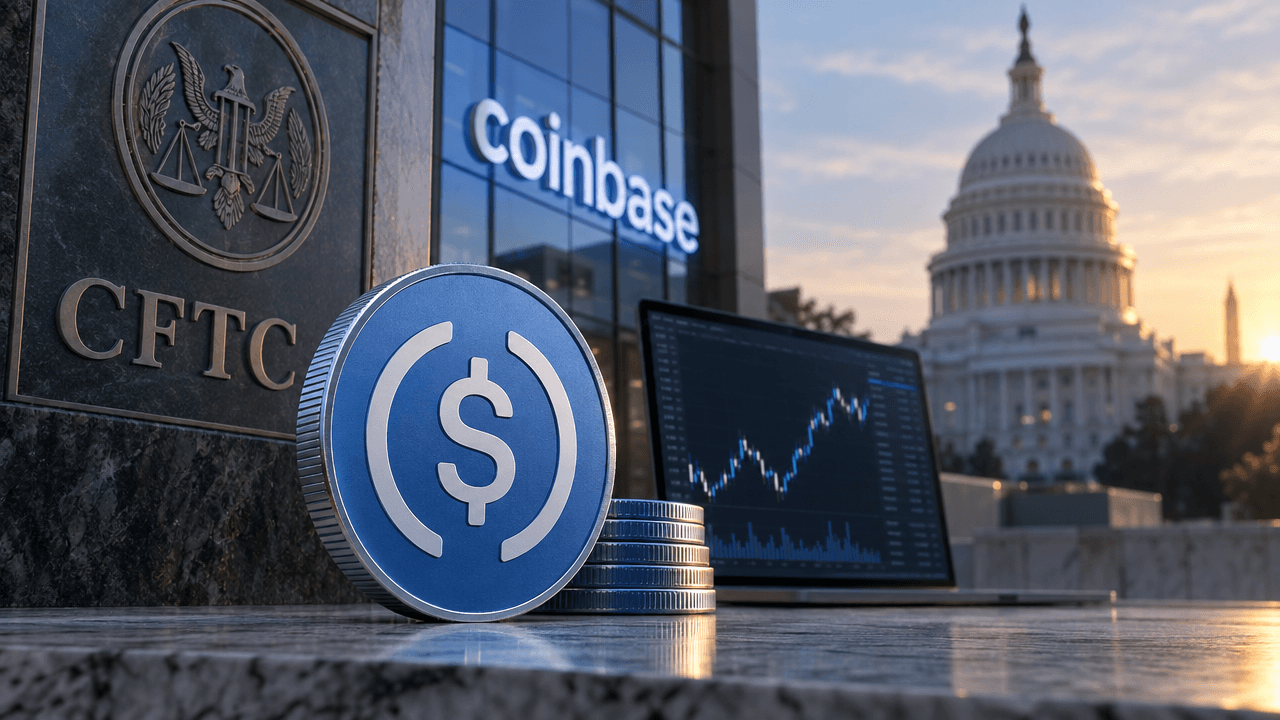
Crypto derivatives just took an important step toward mainstream, regulated status in the United States, with Coinbase securing approval to operate its own derivatives clearing organization (DCO).[2][10] This move positions the exchange as a vertically integrated player across listing, brokerage, and clearing, and could reshape how crypto futures and options are offered to US traders.[8][11][13]
What Exactly Coinbase Just Won Approval To Do
The Commodity Futures Trading Commission has registered Coinbase Clearing LLC as a derivatives clearing organization, formally authorizing it to clear certain derivatives contracts in the US.[2][10] In practice, that means Coinbase can now stand between buyers and sellers, manage collateral, and handle settlement for approved products on its platform.[4][14]
The registration allows Coinbase Clearing to clear fully collateralized futures, options on futures, and swaps, but notably does not extend to leveraged products.[2][5][10] Fully collateralized means positions must be backed one-for-one with collateral, limiting credit risk and constraining leverage but simplifying risk management for the clearinghouse.[2][6]
Coinbase describes the new clearing entity as “USDC-native,” meaning contracts will be collateralized and settled using the USD Coin stablecoin rather than traditional bank money.[1][9][13] The design supports near-24/7 collateral movement and settlement, aligning the clearing function with crypto’s always-on trading cycle.[9][13]
This approval effectively completes Coinbase’s US derivatives stack: it already operates a designated contract market (derivatives exchange) and a futures commission merchant (brokerage), and now adds its own clearinghouse.[8][11][13] Previously, parts of its clearing activity were outsourced to third-party providers, limiting flexibility and economics.[3][4]
Why This Matters For The Us Crypto Derivatives Landscape
Derivatives—futures, options, and swaps—account for a majority of trading volume in global crypto markets, with perpetual futures and options representing roughly 80% of overall activity.[1] Historically, much of that volume has concentrated on offshore venues, often with higher leverage and looser regulatory oversight.[1][5]
By obtaining a CFTC-regulated clearinghouse, Coinbase strengthens the domestic infrastructure needed to host a larger share of that activity onshore, in a fully regulated environment.[6][8][11] Vertical integration across exchange, brokerage, and clearing can translate into faster product development, more tailored margin frameworks, and tighter operational control.[8][13]
This structure also opens the door for more institutional-grade crypto derivatives, because many professional investors are required to trade on regulated exchanges with central clearing.[6][8] Clearinghouses reduce counterparty risk by guaranteeing trades, so institutional desks, asset managers, and risk-averse corporates may find the Coinbase setup more familiar and accessible.[4][9]
For the broader crypto ecosystem, a USDC-native clearinghouse introduces an interesting convergence of stablecoins and traditional market plumbing.[1][9][13] Using tokenized dollars as collateral could, over time, influence how capital is allocated between banks, stablecoin issuers, and trading venues, especially if other platforms follow a similar design.[9][13][15]
Implications For Active Traders And Risk Managers
For active US-based traders, the approval means more of the derivatives lifecycle can be handled within a single, regulated platform.[8][11][13] Traders can access listed contracts, route orders through a futures commission merchant, and have trades cleared centrally, all under a CFTC-supervised stack.[8][11]
Because Coinbase Clearing is limited to fully collateralized products, traders should expect a more conservative leverage profile for contracts cleared in-house, at least initially.[2][5][10] That may dampen some speculative interest compared with offshore venues, but it also reduces blow-up risk and forced liquidations driven by extreme leverage.[6][9]
The USDC collateral model and 24/7 settlement can be a meaningful operational advantage for sophisticated participants.[9][13] Risk managers can move collateral quickly, rebalance positions around the clock, and avoid the cut-off times and wire delays that traditionally complicate weekend or overnight risk adjustments.[9][13]
Institutional desks may also gain more comfort with crypto exposure via cleared derivatives, which can be ring-fenced within existing risk frameworks.[4][8] Central clearing simplifies counterparty credit analysis and enables more standardised margin and settlement processes, potentially making board-level approval for crypto strategies easier to secure.[4][6]
Risks, Limitations, And Regulatory Signals
Despite the headline, Coinbase Clearing’s approval is deliberately scoped: leveraged products remain outside its remit and must continue to be cleared elsewhere.[5][7][10] Coinbase has indicated that certain margined derivatives and upcoming single-stock perpetuals will still rely on third-party clearing partners for the time being.[7]
This limitation reflects ongoing regulatory caution around highly leveraged crypto products in the US market.[5][10] Clearing fully collateralized contracts is a more contained risk profile for regulators, who remain focused on preventing systemic issues and protecting less sophisticated participants from extreme downside scenarios.[6][12]
Vertical integration also comes with responsibilities. Coinbase’s clearinghouse must meet stringent risk management, collateral, and governance standards to retain its DCO status.[2][6] Margin models, stress testing, default management, and collateral eligibility will be closely monitored, especially given the novelty of a USDC-native clearing design.[1][2][13]
The approval sends a clear signal that US regulators are willing to license crypto-native infrastructure—provided it fits within existing risk and compliance frameworks.[2][6][12] For traders and builders, that suggests the next phase of crypto’s evolution will likely combine blockchain-based rails with legacy-style oversight rather than replacing it.[8][11]
How Traders Can Position Themselves Around This Shift
For E8 Markets users and other active traders, the key opportunity is educational: understanding how central clearing, margin, and collateral work in a regulated derivatives environment, then applying those concepts to crypto.[4][6] Simulated trading can be an effective way to explore how futures and options behave under different volatility regimes and collateral constraints.
Consider using a simulated environment to test strategies that rely on fully collateralized positions rather than high leverage, reflecting the risk profile of products cleared by Coinbase.[2][5][10] This approach encourages robust position sizing, realistic drawdown planning, and an emphasis on longevity over short-term swings.
Risk managers and aspiring professionals can practice building margin frameworks that account for stablecoin collateral, intraday volatility, and 24/7 markets.[9][13] Scenario analysis around weekend gaps, sudden regulatory headlines, or stablecoin-specific risks can help traders understand where traditional models may need adjustment.
Finally, keep an eye on how product listings evolve on US-regulated venues: new index futures, volatility products, or structured options could emerge as clearing capabilities mature.[8][11][13] Watching how volumes migrate between offshore and onshore platforms will offer clues about where liquidity, spreads, and institutional activity are heading.
Conclusion
Coinbase’s derivatives-clearing approval marks a meaningful milestone in the convergence of crypto markets and traditional financial infrastructure in the United States.[2][8][11] By combining a regulated exchange, broker, and clearinghouse under one roof—and doing so with USDC collateral and near-24/7 settlement—the platform helps define what a modern, crypto-native derivatives stack can look like.[1][9][13]
For traders, this is less about one company and more about a structural shift: cleared, regulated crypto derivatives are becoming more accessible, more robust, and more aligned with institutional standards.[4][6][8] Using simulated environments to understand and adapt to this new landscape can turn regulatory change into a practical edge, positioning market participants for the next phase of crypto’s evolution.