
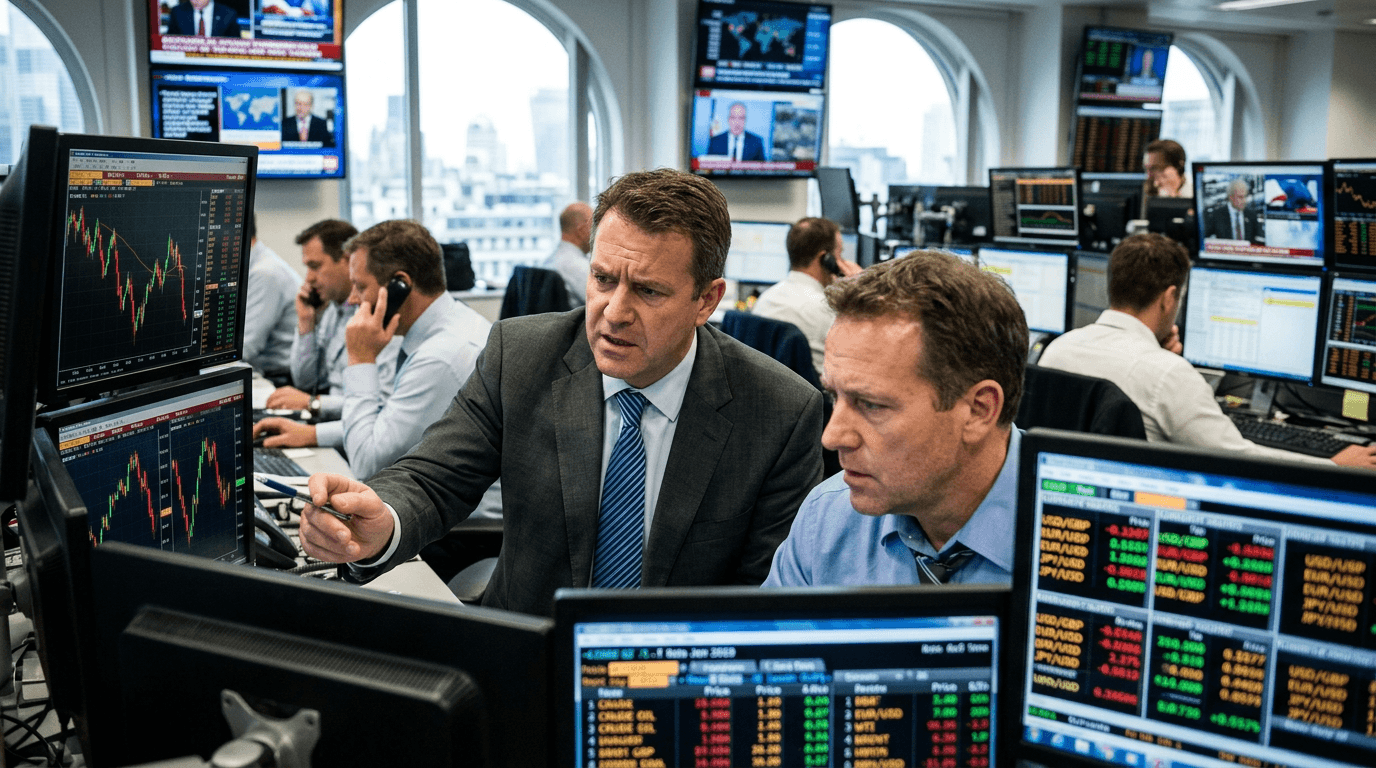
Crude oil futures have once again moved to the center of the macro picture, with prices swinging sharply as traders react to escalating tensions in the Middle East and ongoing conflict with Iran. U.S. crude has spiked intraday above $80 per barrel while Brent has traded in the mid‑$80s, reflecting a significant geopolitical risk premium layered on top of fundamental supply‑demand dynamics[1][5]. Elevated and volatile energy prices are feeding inflation worries, shaping expectations for interest rates, and rippling through currency markets as investors seek safety in the dollar and reassess the outlook for energy‑importing economies[1][5].
Global Oil Market On Edge
The Middle East remains the critical chokepoint of the global oil system, and recent hostilities have exposed just how quickly sentiment can change. The Strait of Hormuz alone handles roughly 20% of world oil flows, plus substantial liquefied natural gas shipments, making it one of the most strategically important shipping lanes on the planet[2]. When Iran has threatened or effectively restricted transit through the strait, Brent futures have surged dramatically, including a period where prices jumped nearly 60% in a single month amid fears of prolonged disruption[2]. These episodes underscore why any hint of conflict or blockade risk in the Gulf can translate almost instantly into higher futures prices.
Military actions, attacks on vessels, and shifting diplomatic signals have all contributed to sharp intraday moves. Reports of cargo ships targeted near Oman and heightened risk in the Gulf of Oman have repeatedly stoked supply fears before later easing as more tankers safely exited the area[3]. At times, renewed U.S.–Iran strikes or missile exchanges have driven crude up more than 3% in a single session, lifting WTI back above key psychological levels such as $90 per barrel while Brent has pressed toward the mid‑$90s and beyond[8]. In other bursts of tension, WTI futures have jumped around 8% in volatile sessions, reaching eight‑month highs before settling lower as traders reassessed headline risk[6]. In the most extreme cases, Brent has spiked intraday toward $120 per barrel during exceptionally volatile trading before retracing back below $100 by the close[11]. These swings illustrate a market that is highly reactive to geopolitical newsflow, with a substantial risk premium embedded in prices.
Why Middle East Tensions Matter For Oil Futures
For futures traders, the key is understanding that crude prices are not just about today’s supply and demand—they also reflect expectations around future disruptions and the cost of insuring against them. When conflict damages infrastructure, clogs export terminals, or delays tankers, the forward curve can move higher across multiple maturities as the market prices in sustained tightness[11]. Regional producers such as Kuwait, Iraq, and the UAE have reported operational challenges to output, refinery runs, and exports during heightened hostilities, adding to concerns that logistical bottlenecks could persist[11]. Analysts warn that even if outright war risk fades, the lingering threat of renewed disruption can create a “structural risk premium” that keeps prices higher than they would be in a calm environment[8].
At the same time, oil futures are constantly balancing geopolitics against evolving supply fundamentals. When evidence builds that more tankers are passing safely through Hormuz or that Middle Eastern supply might increase, markets can reverse sharply, with crude extending declines as traders price in an easing of the worst‑case scenarios[3][9]. There have been sessions where Brent and WTI fell 4–5% as investors “looked past” fresh tensions to focus on improving flow data and the potential for additional barrels reaching global markets[3]. This tug‑of‑war—between fear of disruption and confidence in supply normalization—is at the heart of the volatility currently seen in crude futures.
Inflation, Rates And Currencies: The Macro Ripple Effect
Oil’s renewed strength is not just an energy story; it is a macro story with direct implications for inflation, interest rates, and foreign exchange. Higher crude prices feed through into gasoline, diesel, aviation fuel, and industrial input costs, lifting both headline and core inflation measures over time. With WTI and Brent elevated and prone to sudden spikes, investors and policymakers are reassessing how quickly inflation can fall back toward targets, especially in economies heavily reliant on imported energy[1][5][8]. That uncertainty complicates central bank decisions: persistent energy‑driven inflation can delay rate cuts or even revive hawkish rhetoric, particularly if wage growth remains firm.
Governments are watching closely too. G7 finance ministers have signaled a willingness to deploy strategic petroleum reserves if necessary to counter acute shortages and cap price spikes, highlighting how energy security is now intertwined with broader economic stability[11]. In currency markets, periods of intense Middle East stress have supported the U.S. dollar both as a safe haven and as the dominant invoicing currency for global oil trade[1][5]. Energy‑importing currencies—such as those of parts of Europe and Asia—can come under pressure as higher oil costs widen trade deficits and raise domestic inflation, while exporters tend to benefit from improved terms of trade. For traders, the message is clear: crude futures are not trading in isolation; they are driving and being driven by cross‑asset flows.
How Traders Can Navigate Oil Futures Volatility
In this environment, risk management and process discipline matter as much as directional calls. One pattern visible in recent months is the tendency for oil to react sharply to new headlines—whether a threat to “obliterate” energy infrastructure, a fresh round of missile exchanges, or talk of closing Hormuz—followed by partial reversals as markets digest the actual impact[2][8][10]. For example, after a strong 4% rally on escalation concerns, traders have sometimes taken profits the next day, pushing prices modestly lower as they reassess how much disruption will truly materialize[10]. That behavior can create opportunities for both momentum and mean‑reversion strategies, but only for traders who respect the speed and magnitude of potential moves.
Practical tools include using tighter position sizing in front‑month contracts—where geopolitical risk is most concentrated—and avoiding excessive leverage that can amplify intraday swings. Traders should also watch the shape of the futures curve: in periods of severe supply concern, the market often moves into steep backwardation, with near‑dated contracts more expensive than longer‑dated ones as refiners and hedgers compete for prompt barrels. When supply fears ease, that backwardation can flatten or even flip, signaling a different balance of risk. Combining technical levels with key geopolitical milestones—cease‑fire talks, shipping lane updates, statements from major producers and consuming nations—helps build a more robust framework than trading headlines alone.
Practical Takeaways For Simulated Traders
For traders using simulated finance platforms like E8 Markets, the current oil environment offers a real‑time laboratory for building and testing strategies without capital at risk. One high‑value exercise is to map out different scenarios—prolonged conflict, rapid de‑escalation, partial disruption of shipping—and observe how futures, inflation expectations, and FX pairs respond. This encourages thinking in probabilities rather than certainties, a critical mindset when dealing with geopolitical drivers. Another is to back‑test rules on how to react to large intraday moves: for example, whether to fade 6–8% spikes after infrastructure news or to ride momentum with tight trailing stops during periods of escalating tension[6][11].
Simulated trading also allows you to practice integrating oil into a broader macro view: How does an $80–$90 WTI environment change your assumptions about central bank policy? How might that affect equity indices, high‑yield credit, or commodity‑sensitive currencies? Watching how markets sometimes “look past” fresh tensions and refocus on fundamentals—such as tanker flows or production data—reinforces that not every dramatic headline warrants a dramatic trade[3][7]. In a world where Middle East risk and the Iran conflict are likely to remain part of the backdrop, understanding the mechanics of crude futures volatility and its macro spillovers is becoming a core skill for modern traders, whether they are live in the market or honing their edge in a SimFi environment.