
1. PLAIN TEXT format (no markdown, no HTML) 2. Start DIRECTLY with the first paragraph - no preamble 3. ALL CAPS for section headings on their own line 4. 3-5 main sections with clear takeaways 5. Engaging and educational tone 6. At the END: TITLE, EXCERPT, and NEWSIMPACTSCORE
The search results provide good information: - WTI at $81.64, Brent at $85.85 - Direct result of US-Iran military tensions - Strait of Hormuz disruptions (20% of world's oil supply) - 10-11 million barrels per day removed - Goldman Sachs predicts oil could spike to $200/barrel if conflict continues - Gasoline prices risen to $3.25, could reach $3.50+ - Over 200 vessels anchored outside Strait of Hormuz - Saudi Aramco's Ras Tanura refinery hit
I need to write this in plain text format with proper line breaks, no markdown formatting. Let me structure it with: 1. Opening paragraph setting the scene 2. Section on what's happening (geopolitical context) 3. Section on market impact 4. Section on supply chain disruptions 5. Section on what traders/investors should watch
I should use citations from the search results. Let me write this as plain text without markdown.
The date context shows it's May 3, 2026. The search results reference events that seem to have happened recently (March 2026 based on one reference), so this is timely.
Let me count to aim for around 800 words and structure it properly.
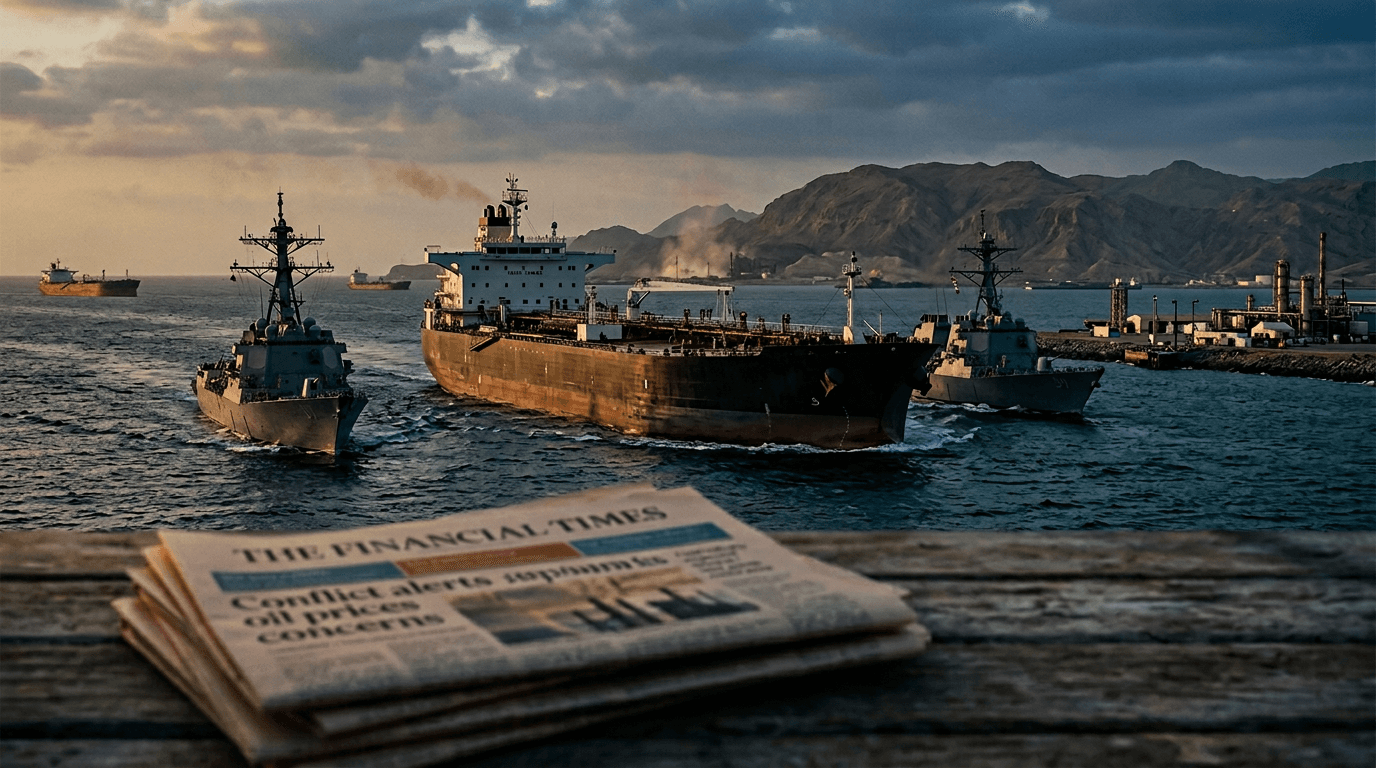
The energy markets are sending an unmistakable message: geopolitical tensions have the power to swiftly and significantly impact prices. West Texas Intermediate crude has surged nearly 9 percent to reach $81.64 per barrel—its highest level since the summer of 2024—while Brent crude has climbed to $85.85.[1] This spike represents far more than routine market fluctuation. Instead, it reflects a genuine supply crisis stemming from escalating military tensions between the United States and Iran, tensions that are now reshaping investment outlooks and consumer wallets with remarkable speed.
Understanding The Geopolitical Crisis
The current shock stems from intensifying conflict between the US and Iran, including retaliatory Iranian strikes targeting critical oil infrastructure and essential shipping lanes.[1] The situation has evolved into a full-blown global supply crisis, with the Strait of Hormuz—a narrow passage through which approximately 20 percent of the world's daily oil supply flows—becoming the epicenter of economic disruption.[1] This chokepoint between Iran and Oman connects the Persian Gulf to the Arabian Sea and serves as a vital artery for global energy trade.
Following recent military exchanges, over 200 vessels including oil and liquefied gas tankers have dropped anchor outside the Strait, unwilling or unable to navigate through the conflict zone.[1] Major petroleum infrastructure has also come under direct attack. Saudi Aramco's Ras Tanura refinery, one of the world's largest, was hit by drone strikes.[1] These aren't theoretical risks to energy markets—they are immediate, tangible disruptions affecting actual barrels of oil that would have reached global consumers.
Supply Disruption And Market Impact
Analysts estimate that 10 to 11 million barrels per day have been removed from circulation due to shipping disruptions and infrastructure damage—roughly 10 percent of global oil supply.[1] In commodity markets, a supply loss of this magnitude cannot be ignored. The price response reflects the market's rational assessment that this oil will not easily be replaced in the near term.
The surge in crude benchmarks underscores the breadth of the disruption. Brent crude climbing to $85.85 and West Texas Intermediate jumping significantly signals that markets are pricing in a prolonged period of elevated energy costs rather than a temporary spike.[1] Historical precedent suggests that significant oil price spikes often lead to broader market corrections as investors reassess growth expectations in an inflationary environment.
This isn't merely an oil market story. The ripple effects are already visible at the pump. Average gasoline prices have risen to $3.25 per gallon, marking a sharp 9 percent increase from $2.98 just one week earlier.[1] By mid-March, prices had escalated to $3.58 per gallon—a 60-cent rise within a single month. US gasoline futures surged by as much as 9.1 percent to $2.496 a gallon, their highest since July 2024.[2] For traders and investors, this price transmission from crude to refined products creates both risks and opportunities across the energy complex.
The Worst-case Scenario
Analysts have issued stark warnings about potential escalation scenarios. If the conflict continues and the Strait of Hormuz remains closed through June, crude oil could spike to $200 per barrel.[1] Goldman Sachs predicts that in such a scenario, US gasoline prices could reach $3.50 per gallon or higher, and inflation could become a persistent problem.[1] This isn't alarmism—it's a logical extrapolation from genuine supply losses that have no immediate replacement.
Consider the math: a $200 barrel scenario would represent a near 150 percent increase from current prices. That trajectory would have cascading effects throughout the global economy, impacting transportation costs, manufacturing inputs, and consumer spending power. For traders in the SimFi environment, such extreme moves present both exceptional volatility and significant hedging opportunities.
Meanwhile, Citi analysts expect Brent to trade between $80 and $90 a barrel this week amid the ongoing conflict.[2] This range reflects the uncertainty embedded in markets right now—a narrow band of normalized trading could expand dramatically depending on military developments.
What Traders Must Watch
The key variables for traders monitoring this situation are clear. First, any new military escalation or de-escalation will immediately reprrice the oil curve. Second, real-world supply data—how many vessels resume normal transits, whether Saudi Aramco brings Ras Tanura back online, and actual daily production numbers—will either validate or challenge the current risk premium built into prices.
Third, watch for policy responses. Strategic Petroleum Reserve releases, coordinated international responses, or diplomatic breakthroughs could all alter the trajectory. Fourth, broader market sentiment matters: if equity markets begin pricing in recession risk from higher energy costs, the correlation between crude and stock indices will intensify.
For SimFi traders, this environment underscores a fundamental principle: geopolitical risk is real risk, and it moves markets. The current 9 percent rally in crude isn't speculative excess—it's the market rationally incorporating the possibility that millions of barrels of daily supply may remain disrupted for weeks or months.
The energy crisis is live, and the market is pricing accordingly.