
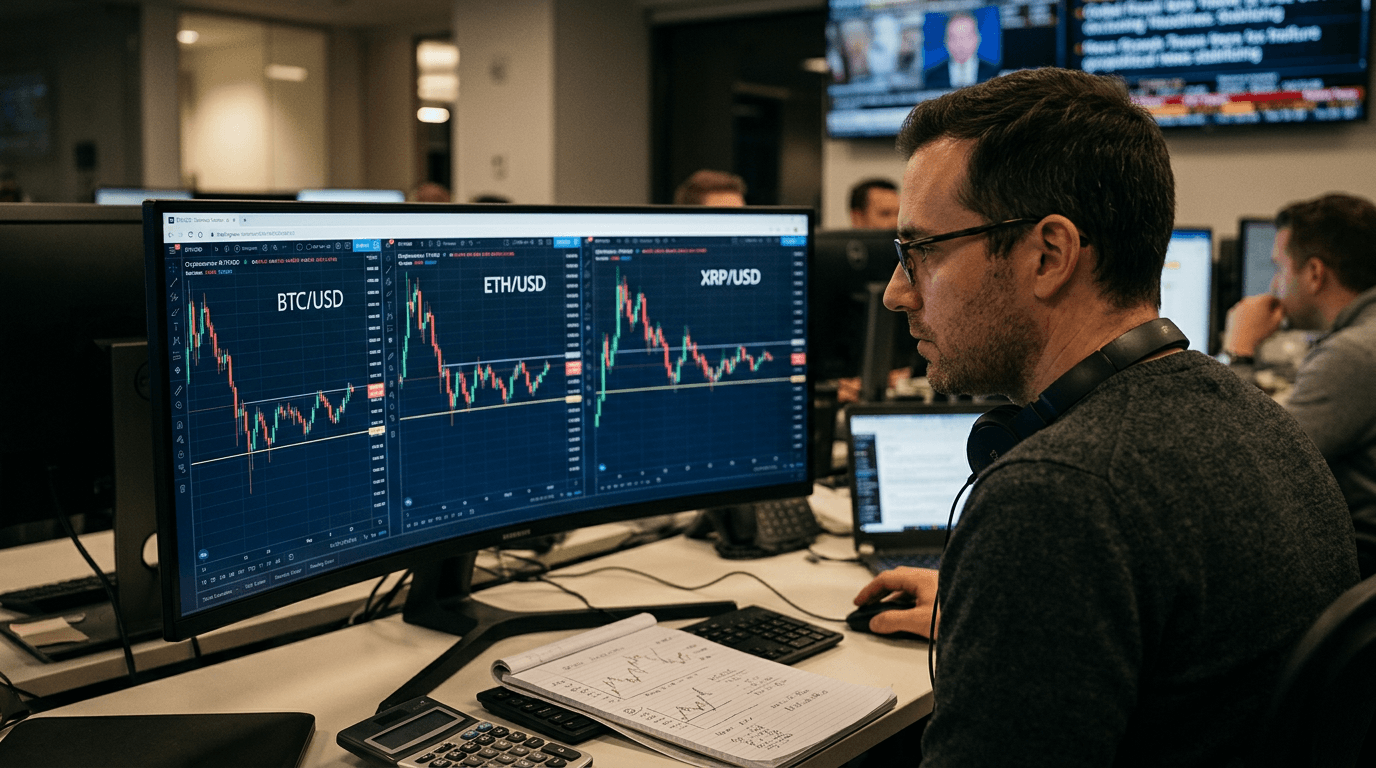
The cryptocurrency market is navigating a fascinating shift as major digital assets dip near key support levels amid easing geopolitical tensions. Bitcoin, Ethereum, and Ripple, which have been in the spotlight throughout April 2026, are now consolidating after a 2% drop from recent peaks, probing critical technical zones that will influence their paths in the coming weeks.[1] This decline is not merely about profit-taking; it signifies a fundamental change in how investors assess risk and opportunity as external pressures recede. For traders in the SimFi ecosystem, grasping this pivotal moment is crucial for strategic positioning in an ever-evolving market landscape.
The Geopolitical Paradox And Crypto Volatility
The announcement of a conditional ceasefire between the United States and Iran in early April 2026 has dramatically reshaped market dynamics, presenting what experts call a geopolitical paradox for digital assets.[2] At the height of tensions, cryptocurrencies initially fell as investors moved from risk-on to risk-off strategies. The late February 2026 escalation, marked by military actions, caused sharp declines: Bitcoin fell 6.4%, Ethereum 8%, and XRP 9%.[3] However, as tensions eased, the narrative flipped significantly.
The ceasefire announcement triggered a relief rally, pushing Bitcoin beyond $72,000 and lifting broader crypto markets.[2] This 4-5% single-session spike highlighted the high-beta nature of digital assets amid macroeconomic shifts. Yet, this raises a critical question for traders: when geopolitical risks decrease, do cryptocurrencies retain their momentum as risk assets, or do they lose their safe-haven status? The current 2% retracement indicates the market is wrestling with this uncertainty.[1]
Following the ceasefire announcement, oil prices fell sharply, with Brent crude dropping over 10%.[2] Traditional safe-haven assets like gold experienced reduced demand as investors rotated back into higher-yielding risk assets. Bitcoin mirrored this trend initially, but whether gains driven by geopolitical relief rather than fundamental macro improvement can be sustained remains uncertain. The Dollar Index has climbed 0.48%, Treasury spreads have widened by 27 basis points, and the VIX volatility index remains near 25, all pointing to a challenging environment despite eased tensions.[1]
Bitcoin, Ethereum, And Xrp At Critical Junctures
Bitcoin is currently positioned between $71,000 and $74,000, maintaining key support levels despite external pressures and market uncertainty.[1][3] The technical landscape reveals a market in consolidation, neither strongly bullish nor bearish. Bitcoin has rebounded from a late-March low of $68,500, testing its ability to establish a stable base above $73,000.[3] Analysts indicate Bitcoin's movement toward the $75,000-$76,000 range reflects improving short-term momentum, bolstered by easing tensions and institutional demand indicators such as a positive Coinbase premium and decreased miner selling.[4]
Ethereum has recovered from near $1,808 to stabilize above the $2,100 support zone, a level with both psychological and technical significance.[1] This support area is crucial as Ethereum has traded within the $2,100 to $2,800 range for much of 2024, making these levels familiar to long-term participants and institutional traders.[1] The key question for Ethereum traders is whether there is enough buying interest to uphold this support and drive the asset toward $2,800 resistance. Currently within an inclining parallel channel on the weekly chart, a drop below the February 2 candle low would confirm a bear flag pattern, potentially intensifying declines toward the $1,270 to $1,351 support zone.[1]
XRP is trading around $1.42, maintaining a neutral technical stance as institutional interest remains tempered by the broader risk-off environment.[1] Technical indicators show balanced forces, with the Relative Strength Index at about 49 and the MACD slightly above its signal line but near zero, indicating consolidation after the recent pullback from monthly highs near $1.54.[1] This neutrality reflects the uncertainty over whether XRP will join a broader risk-asset recovery or continue consolidating within narrow ranges.
Trading Strategy In Uncertain Times
The Crypto Fear and Greed Index, though improved from March's low of 10, stands at 14, emphasizing ongoing market anxiety.[3] This low reading highlights heightened sensitivity to geopolitical risks and macroeconomic pressures that overshadow traditional technical indicators. For simulation traders on platforms like E8 Markets, this environment requires disciplined risk management and strict adherence to defined technical levels.
Bitcoin, Ethereum, and Ripple offer clear scenarios for establishing predetermined entry and exit points based on support and resistance zones.[1] Traders should determine position sizes around key technical thresholds while monitoring how geopolitical developments continue to affect financial markets and cryptocurrency pricing. The current consolidation phase offers a valuable opportunity to study market psychology and refine trading strategies before the next significant move.
Recognizing that geopolitical events have become as influential as technical analysis is crucial for contemporary crypto traders. The fragility of ceasefires and the potential for renewed tensions mean that risk management must take priority over aggressive position sizing. Keep a close watch on key support levels, track institutional flows, and be ready for rapid directional changes as external pressures evolve.
Forward-looking Considerations
Persistent inflation concerns, potential interest rate uncertainty, and the possibility of renewed geopolitical tensions could limit upside or trigger pullbacks in digital assets.[2] The current market climate requires flexibility and adaptability. The convergence of technical support levels, geopolitical developments, and institutional positioning creates multiple scenarios for the remainder of April and into May 2026. Traders should remain vigilant, disciplined, and focused on risk-adjusted returns rather than chasing unsustainable rallies driven purely by sentiment changes.
---