
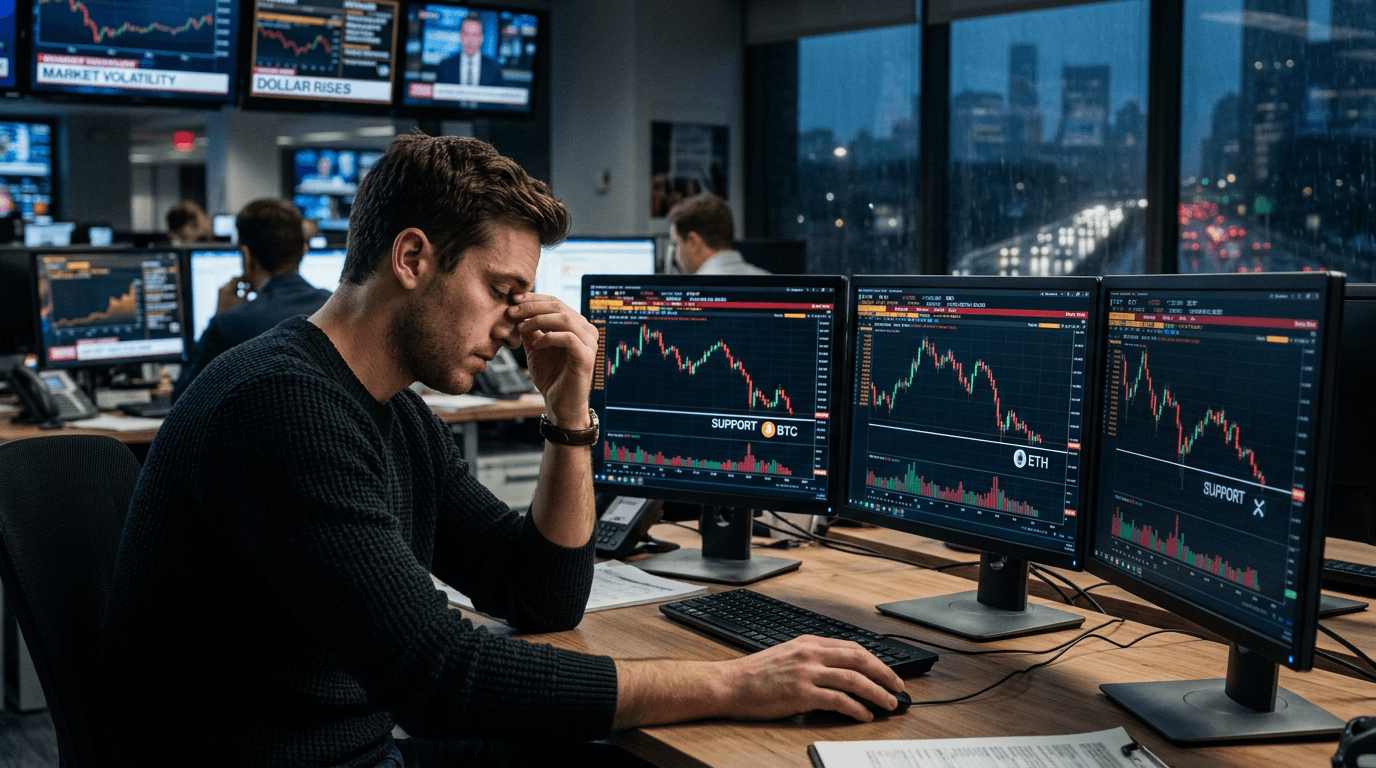
Crypto majors are trading with a distinctly cautious tone, hovering just above key support levels as traders weigh rising geopolitical risks and a broader risk-off mood across global markets. Bitcoin is holding near the $71,000 area, Ethereum is orbiting around $2,000, and Ripple is stabilizing near its recent base after roughly a 2% pullback, suggesting buyers are still defending critical zones but are reluctant to chase prices aggressively higher[4]. In this environment, every test of support carries more informational value: it tells you whether bulls still have conviction or whether fatigue is starting to set in.
Markets Pause At Critical Levels
From a technical perspective, the major cryptocurrencies remain resilient, with prices consolidating above important horizontal support areas that have previously attracted demand[1]. Bitcoin is trading just above a well-watched support band, while Ethereum and XRP show similar behavior, holding above levels that have acted as launchpads for prior rallies[4]. This posture often reflects an uneasy equilibrium between dip buyers and risk-reducing sellers: buyers are active enough to keep charts intact, but not strong enough to push prices to fresh highs.
At the same time, crypto price action is feeding back into correlated assets like high-beta tech stocks and speculative equity futures. When Bitcoin and Ethereum move into “wait-and-see” mode near key levels, you often see a parallel slowdown in momentum across risk-sensitive segments of equity markets, as algorithmic and discretionary strategies alike respond to the same volatility and liquidity signals. The result: choppy, range-bound trading where intraday moves are sharp, but directional follow-through is limited.
Geopolitical Risk And The Risk-off Feedback Loop
The latest bout of caution is being driven in part by heightened US-Iran war risk, which has pushed investors to reassess their exposure to high-volatility assets. Historically, serious geopolitical flare-ups tend to trigger a “flight to safety,” favoring cash, short-duration bonds, and in some cases the US dollar, while pressuring assets that are perceived as speculative or cyclical. Crypto may occasionally be framed as “digital gold,” but in practice it often trades like a high-beta risk asset that amplifies broader sentiment moves.
A strong-to-mixed US dollar is reinforcing that risk-off tone. When the dollar holds firm or strengthens, it tightens global liquidity conditions and raises the opportunity cost of holding non-yielding assets, including many cryptocurrencies. That dynamic can cap upside, even when technical structures remain constructive. In this environment, traders are less inclined to chase breakouts and more focused on whether support zones can survive repeated tests.
Why Key Supports Matter More In Choppy Phases
Key levels in crypto trading are horizontal support and resistance zones where price frequently bounces or stalls[3]. These zones represent psychological boundaries: support areas where many traders agree the asset looks “cheap enough to buy,” and resistance zones where the consensus shifts toward “expensive enough to sell”[3]. In today’s market, the fact that Bitcoin, Ethereum and XRP are still above their supports tells you buyers are defending those psychological lines in the sand[1][4].
Most of the time, prices respect these levels and bounce, especially when the broader trend is up[3]. Traders often place buy orders near support and set stop-losses just below those levels, creating dense clusters of orders that can produce sharp, technical reactions. When a key support finally breaks, however, it often signals strong momentum and opens the door to a more pronounced move in that direction[3]. That is why the current “hold or fold” dynamic near support is pivotal: a successful defense can reset the bullish narrative, while a clean break could quickly shift focus to deeper downside targets, as recent episodes of support loss in Bitcoin have illustrated[5][7].
In choppy, risk-off conditions, horizontal levels matter even more because trend-following signals are less reliable. With news-sensitive swings in sentiment, traders rely on clear reference points to anchor risk: “If support holds, I stay long; if it breaks, I step aside.” That framework can help prevent emotional decision-making when headlines are noisy and volatility clusters.
Practical Playbook For Traders In A Cautious Market
For both live and simulated traders, this environment is an opportunity to refine process rather than chase quick wins. A few practical guidelines can help:
First, map your key horizontal levels before you trade. Identify recent swing lows that have acted as support and swing highs that have served as resistance, then note where current prices sit relative to those zones[3]. For Bitcoin near $71,000 and Ethereum around $2,000, ask: how many times have these areas held, and what happened when they were tested before[4]?
Second, pair price levels with simple technical indicators to gauge momentum and risk. Moving averages can show whether the medium-term trend is still up, while oscillators like RSI help highlight overbought or oversold conditions[8]. If price is sitting on support with an oversold RSI and rising volume, that’s very different than price at support with waning interest and falling participation.
Third, adjust position sizing and leverage to reflect heightened uncertainty. When geopolitical risk is elevated and the dollar is firm, even “good” setups can fail as macro flows overwhelm micro signals. Keeping trade sizes modest, respecting stop-losses placed just below support for long positions, and taking profits near the next resistance can improve durability in a choppy tape[3][8].
Finally, use simulated environments to test how your strategy behaves across different scenarios: support holds and markets grind higher; support breaks and volatility spikes lower; or price whipsaws around the level before choosing a direction. Reviewing those outcomes can help you build rules you can trust when conditions get noisy and emotional.
What To Watch Next
With crypto majors hovering near key supports, the next significant move is likely to be driven by a combination of technical resolution and macro headlines. A clear de-escalation in US-Iran tensions or a softening in the dollar could catalyze a renewed bid for risk assets, allowing Bitcoin and Ethereum to bounce decisively from current floors and re-challenge recent highs. In that scenario, traders will be watching whether resistance zones cap the move or break to confirm a fresh leg higher[3][8].
Conversely, any sharp escalation in geopolitical risk, hawkish surprise from policymakers, or sustained dollar strength could turn the current cautious consolidation into a more meaningful correction. If Bitcoin were to lose its nearby support band, chart focus would quickly shift to lower technical floors that have acted as prior demand zones[5][7]. The same logic applies to Ethereum and XRP: each break of support forces the market to search for the next area where buyers are willing to step in size.
For now, the message from price action is balanced but fragile: bulls remain on the field, but they are playing defense rather than offense. Traders who treat key levels as information, manage risk around them, and stay grounded in a disciplined process—whether in live markets or simulated finance platforms—will be better prepared for whichever way this tension resolves.