
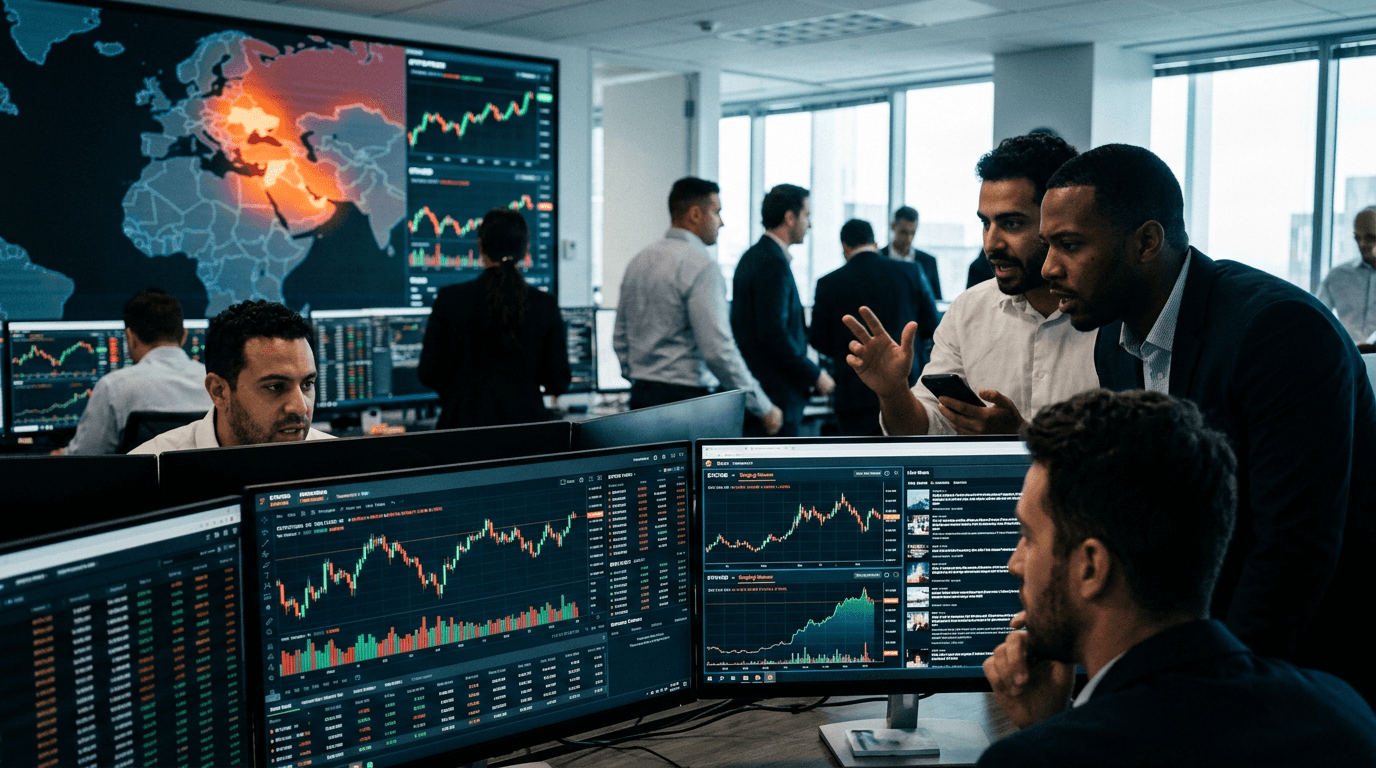
Crypto markets are holding firm even as geopolitical headlines grow louder, creating an unusual backdrop where price action has steadied but trading activity and intraday volatility remain elevated.[1][5][10] For active traders, this combination of macro uncertainty and resilient digital assets is turning geopolitics into one of the most important inputs in their decision-making, alongside traditional liquidity and sentiment indicators.[1][3][4]
Current Market Landscape
Bitcoin has recently staged a rebound, trading back above key psychological levels after a sharp selloff, as policy momentum in Washington and rising geopolitical tensions intersected.[1] In several episodes linked to Middle East risks, Bitcoin has oscillated between risk-off dips and relief rallies, including moves above the $70,000–$72,000 range as markets digested ceasefire headlines and shifting energy concerns.[3][5] Broader crypto market capitalization has climbed from recent lows, with many large-cap tokens posting double‑digit percentage gains over short windows even as dispersion between winners and laggards remains high.[5] Activity in altcoins and niche tokens, including those tied to new derivatives platforms and prediction markets, has also picked up, reinforcing the sense that speculative appetite remains alive beneath a calmer surface in headline indices.[2][10]
Weekend trading has become especially important, with volumes on platforms such as Hyperliquid and Polymarket rising during periods of heightened conflict risk.[2] Data show that around 20% or more of weekly volume in major tokens is now frequently transacted on Saturdays and Sundays, a notable shift from earlier cycles where liquidity was more concentrated in US and European trading hours.[2] Flow has increasingly migrated toward Asian time zones, reflecting both regional investor engagement and the global, always‑on nature of crypto markets.[2] Taken together, these developments point to a market that is steadier at the index level, but highly active beneath the surface, with intraday swings and volume surges closely tied to real‑world events.
Geopolitical Volatility As A Trading Catalyst
Recent months have underscored the sensitivity of digital assets to geopolitical shocks, particularly around US–Iran tensions and conflict risks in the broader Middle East.[3][4][5] Escalations have typically triggered risk‑off moves, with investors rotating into traditional safe havens such as gold and oil, while crypto sells off alongside equities.[4][7] However, when ceasefire announcements or peace‑deal headlines hit the tape, crypto often reacts as a high‑beta risk asset, rebounding sharply in relief rallies that outpace many traditional markets.[3][6][9] In one such episode, a preliminary US–Iran peace agreement drove Bitcoin above $66,500, liquidating more than $150 million in short positions and sparking a broader rally in crypto‑related equities.[6]
This pattern illustrates how geopolitics can act both as a source of volatility and as a catalyst for directional trades, particularly around well‑defined event windows such as ceasefire talks, sanctions decisions, or energy supply disruptions.[3][4][9] Weekend increases in volumes during war‑risk periods show traders positioning aggressively when traditional markets are closed, using crypto’s 24/7 structure to express views on conflict probabilities and policy outcomes.[2][10] Tokens linked to emerging narratives—whether new infrastructure plays or event‑connected assets—tend to see the strongest reactions, with relatively illiquid names often experiencing outsized moves when sentiment swings.[2][5]
CRYPTO’S EVOLVING ROLE IN MACRO MARKETS
While crypto still behaves largely as a risk asset, its response to recent geopolitical strains suggests an evolving role in the broader macro ecosystem.[4][10] During Middle East tensions, Bitcoin and Ethereum initially tracked declines in tech stocks but then recovered more quickly than equities, hinting at a growing ability to absorb shocks and attracting institutional interest in their macro properties.[4] Analysts increasingly describe crypto as an “in‑between” asset: part speculative risk trade, part emerging hedge against structural themes like inflation, energy disruptions, and financial repression.[4][10]
At the same time, Bitcoin’s high volatility continues to limit its usefulness as a true medium of exchange or unit of account, especially over short horizons where price swings can be extreme.[8] Episodes of sharp drawdowns during geopolitical flare‑ups, followed by equally swift rebounds on positive headlines, reinforce that crypto remains a leveraged expression of risk sentiment rather than a classic safe haven like gold.[4][7][8] However, structural shifts in market composition—greater institutional capital, supply constraints, and more robust derivatives infrastructure—are gradually making crypto’s reaction function to global events more nuanced and, in some cases, more resilient.[10] This changing profile is precisely what makes geopolitics such a valuable lens for traders: it offers recurring, observable catalysts that interact with an increasingly sophisticated market microstructure.
Implications For Simulated Traders
For Simulated Finance traders on platforms like E8 Markets, this environment is an ideal laboratory for building and testing geopolitics‑aware strategies without the pressure of real capital at risk. SimFi allows traders to design playbooks around conflict‑driven scenarios—such as escalations, ceasefires, sanctions relief, or energy price shocks—and observe how crypto, FX, and futures respond in tandem. By tracking correlations between Bitcoin, major altcoins, oil, gold, and equity indices across different event regimes, simulated traders can refine their understanding of cross‑asset behavior and liquidity shifts.
This is particularly valuable for newer traders who may not yet have lived through multiple geopolitical cycles and for experienced participants looking to stress‑test their frameworks under extreme conditions. Simulated environments can be used to practice risk management around event risk, including position sizing ahead of key announcements, staggered entries and exits, and contingency planning for gap moves over weekends. Because crypto trades 24/7, simulated trading also helps traders internalize how overnight and off‑session events in one region can reshape the opportunity set in another, an essential skill for those seeking to operate a truly global, multi‑asset book.
Practical Takeaways For Active Traders
1. Treat geopolitical headlines as structured catalysts, not background noise. Map out key event dates and scenarios—escalation, stalemate, de‑escalation—and predefine how you expect crypto, FX, and futures to react.
2. Monitor liquidity across time zones and weekends. Rising weekend volumes and Asian‑time trading in crypto can create both opportunity and slippage risk; build execution plans that account for these patterns.[2]
3. Use cross‑asset signals to validate crypto moves. Look at oil, gold, and equities alongside Bitcoin and major altcoins when conflict risk shifts; divergence between these markets can flag either overreaction or underpricing of risk.[4][5]
4. Respect volatility as both a feature and a constraint. Crypto’s inability to function smoothly as a medium of exchange due to excess volatility is a reminder that position sizing and leverage must be calibrated carefully.[8]
5. Leverage simulation to rehearse event‑driven strategies. Practicing your response to surprise ceasefire headlines, sanctions announcements, or policy shifts in a simulated environment can dramatically improve discipline when real markets move quickly.
Future Outlook
As geopolitical volatility persists, crypto is likely to remain a highly sensitive barometer of risk sentiment, oscillating between sharp drawdowns on negative news and powerful relief rallies when tensions ease.[1][3][9] The recent pattern of the market holding steady at elevated price levels while activity and intraday volatility intensify suggests that structural demand for digital assets is increasingly able to absorb shocks, even if the path is noisy.[4][5][10] For traders, the challenge—and the opportunity—is to translate this dynamic into coherent strategies that align macro narratives with disciplined execution.
SimFi platforms provide a practical bridge between theory and live markets, allowing traders to internalize how global events flow through order books, correlations, and volatility regimes. In a world where geopolitical headlines move not just currencies and commodities but also digital assets, those who can systematically connect the dots—and rehearse their responses before capital is on the line—will be better positioned to navigate whatever the next wave of volatility brings.