
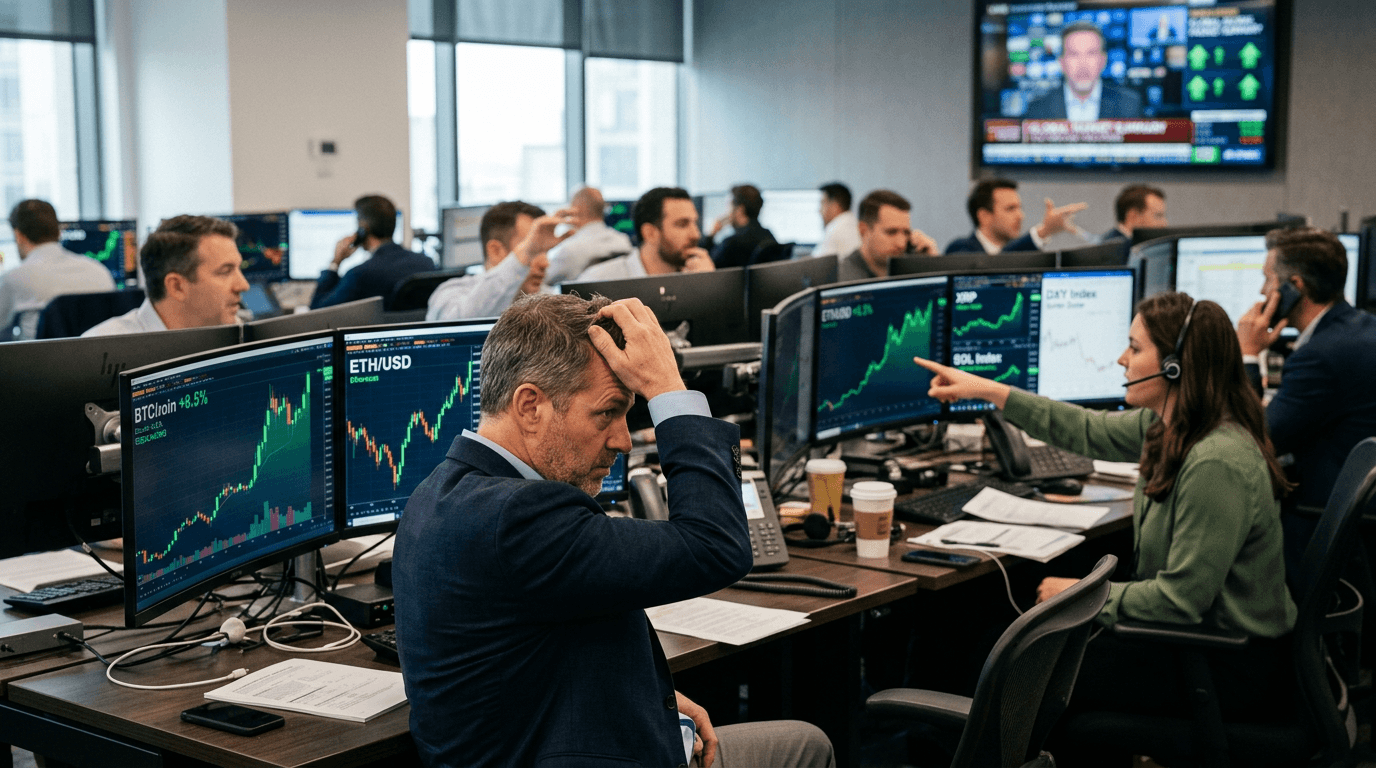
Crypto markets are firming after a bruising stretch, with Bitcoin and other large-cap tokens rebounding as investors tentatively re-engage with risk assets.[3][5][13] Prices have climbed alongside stronger equity futures and a slightly weaker dollar, pointing to an easing in risk aversion that is drawing flows back into BTC and major altcoins while flushing out crowded short positions in Bitcoin and Ethereum derivatives.[3][5][9][14] For traders, this is a classic early-stage recovery pattern: prices move first, positioning adjusts second, and conviction often lags behind.
Risk Sentiment Is Thawing
The rebound in Bitcoin and leading altcoins is closely tied to a broader improvement in risk sentiment rather than any single crypto-specific catalyst.[3][5] Recent sessions saw Bitcoin recapture prior levels as equities staged a strong rally, with tech-heavy indices posting some of their biggest daily gains in months and reinforcing the notion that risk assets are back in favor—for now.[3] At the same time, the crypto market’s Fear and Greed gauges remain volatile, swinging from “extreme fear” readings near 11 to more neutral or even greedy territory as prices stabilize, underscoring how quickly sentiment can flip in this space.[4][7]
Breadth across majors has improved, with Ethereum, Solana and other large-cap altcoins advancing in tandem with Bitcoin, though altcoins generally remain more fragile after underperforming during the prior downturn.[3][6][13] Bitcoin’s market dominance has ticked higher, reflecting the tendency for capital to cluster first in the most liquid, “blue-chip” names before filtering down the risk spectrum.[13] Historically, sustained altcoin strength tends to require a stable or rising Bitcoin, so the current firming in majors is an important precondition for any broader risk-on phase in the crypto complex.[6]
Macro Backdrop: Equities, Dollar And Rates
The latest rebound is occurring against a macro backdrop of stronger equity futures, a modestly softer dollar, and fading fears of aggressive central bank tightening.[3][5] As stock markets recover from recent volatility, crypto’s well-documented correlation with high-beta equities has reasserted itself, with Bitcoin and majors moving higher alongside a rally in growth and tech shares.[3] A slightly weaker dollar helps as well, easing pressure on dollar-denominated assets and making it more attractive for global investors to rotate back into higher-risk instruments, including cryptocurrencies.[3][5]
Rate expectations are another key piece of the puzzle. Earlier in the year, hotter inflation data and hawkish rhetoric fueled concerns that policy makers might need to resume or intensify rate hikes, hurting risk assets across the board.[2][5] As those fears ease and traders reassess the likelihood of further aggressive tightening, the perceived downside for long-duration, speculative assets like crypto narrows, encouraging a measured return of risk appetite.[5] Yet several market analyses still describe the current move in Bitcoin as corrective rather than decisively trend-changing, warning that until growth, liquidity and inflation dynamics show more durable improvement, downside risks cannot be ruled out.[2]
Derivatives: Short Covering Drives Price Action
Under the surface, derivatives markets show that short covering has been a key driver of recent price strength in Bitcoin and Ethereum.[9][14] Sharp upside breakouts in the majors have triggered sizeable liquidations of leveraged short positions, with reports of hundreds of millions of dollars in BTC and ETH shorts being forced out as prices pushed through key resistance levels.[9][14] These short squeezes can produce powerful, fast moves that overshoot fair value in the short term, as forced buying from liquidations adds to organic demand from traders who were already positioned long.
Despite the spot rebound, positioning in crypto derivatives remains cautious. Analytics from major options and futures venues highlight persistent demand for protection via puts, with BTC and ETH risk reversals skewed toward downside hedging and short-dated implied volatility structures still reflecting lingering concern about renewed selloffs.[11][12][15] In some markets, funding rates for perpetual futures have normalized or turned slightly positive, suggesting modest long bias, while short-tenor options show a volatility premium for out-of-the-money puts—a pattern consistent with a market that is recovering but not yet fully convinced.[11][12] This mixed picture reinforces the idea that the rebound is being driven by positioning adjustments and relief rallies rather than a wholesale shift to exuberant bullishness.
How Traders Can Navigate The Rebound
For active traders, the combination of improving risk sentiment, short squeezes, and still-defensive derivatives positioning creates both opportunity and risk. Indicators such as the Relative Strength Index (RSI) on Bitcoin and majors have been climbing from deeply oversold territory, signaling that bearish momentum is easing and opening the door for extended rebounds—but also warning that chasing steep near-term rallies can be dangerous once momentum becomes stretched.[2][8] Price action around prior support and resistance zones remains crucial: breaks above key levels tend to reinforce the narrative of squeezed shorts and renewed risk appetite, while failures or false breakouts often mark the beginning of the next round of volatility.[2][9]
Simulated finance platforms offer a useful sandbox in this environment. Traders can use a risk-free setting to rehearse how they would respond to sudden short squeezes, test rules for scaling into or out of positions as sentiment improves, and practice adjusting hedges when options skew and implied volatility shift.[11][12] This is particularly valuable for newer participants who may not have lived through multiple crypto cycles; simulating scenarios where Bitcoin’s rebound either extends into a new trend or fades into another leg lower helps sharpen risk management discipline without the emotional stress of real capital at stake.
Scenarios To Watch Next
Looking ahead, the key question is whether this firming phase marks the beginning of a more durable recovery or simply another bear-market bounce in a structurally cautious environment. A sustained risk-on scenario would likely feature continued strength in equities, a stable-to-weaker dollar, gradually improving macro data, and a transition in derivatives markets from defensive put-buying toward more balanced positioning.[3][5][11] In that case, altcoins could start to outperform again, Bitcoin dominance might plateau or retreat, and sentiment gauges would move consistently away from extreme fear and toward neutral or moderate greed.[4][7][13]
The alternative is that the current rebound stalls below major resistance, with sentiment indicators slipping back toward fear as macro concerns reassert themselves and speculative flows fade.[2][10] Under this path, derivatives metrics would likely show renewed demand for downside hedges, rising implied volatility at the front end of the curve, and a re-accumulation of short risk by traders looking to fade the rally.[11][12] Monitoring breadth across majors, the evolution of Bitcoin dominance, and the interplay between spot moves and liquidation data in futures markets can give traders early clues as to which scenario is unfolding.[9][13][14]
Ultimately, the latest recovery in Bitcoin and leading altcoins illustrates how quickly crypto markets can respond when risk appetite improves, the dollar softens, and crowded positioning is forced to unwind.[3][5][9] While the move offers short-term relief and tactical opportunities, the underlying message for traders is clear: stay data-driven, respect volatility, and treat every rebound as a chance to refine strategies and risk controls—whether in live markets or through simulated finance—rather than an excuse to abandon discipline.