
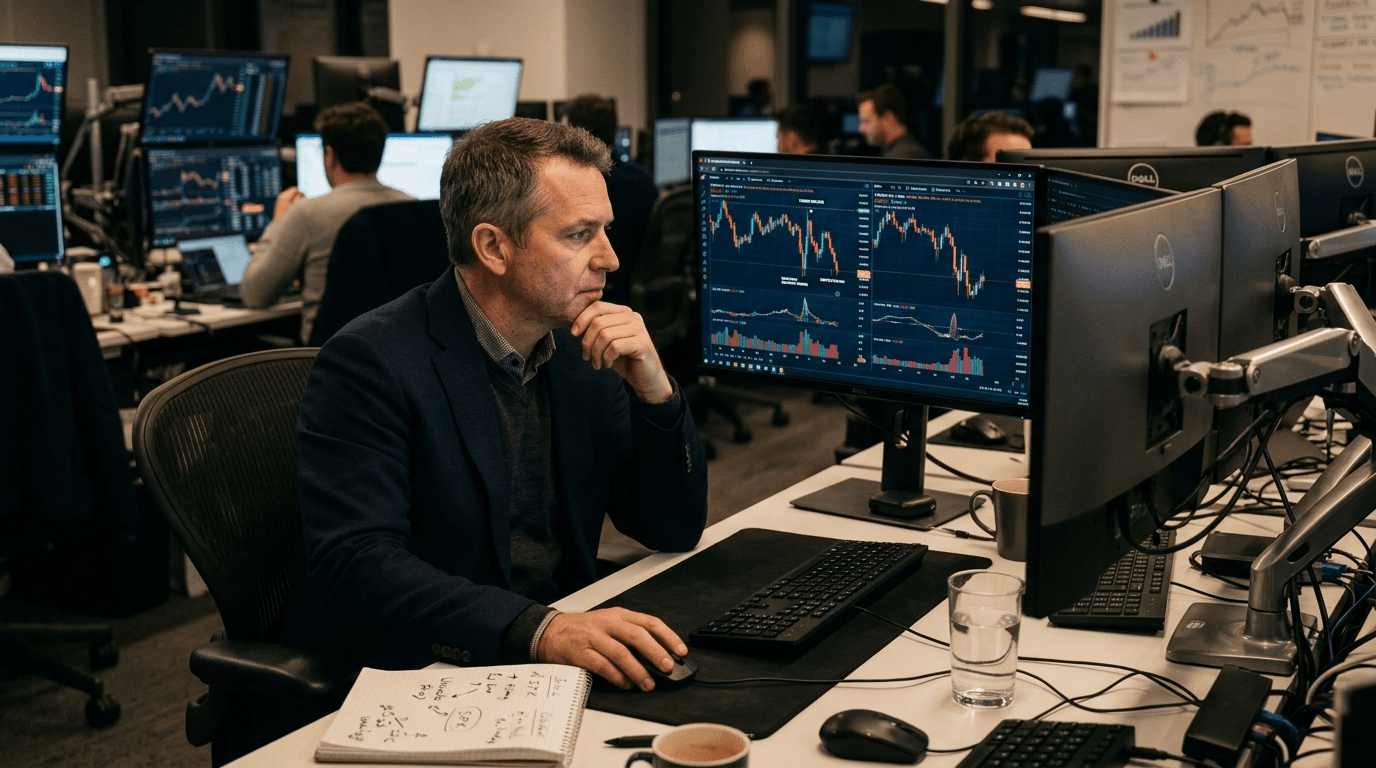
The crypto market is once again fixated on token unlocks, with today’s scheduled releases for ASTER and SPK putting supply dynamics back in the spotlight. Unlock events can reshape short‑term pricing, liquidity, and positioning across both spot and derivatives markets, especially when the amounts involved are meaningful in dollar terms and relative to existing circulating supply[5][8][13].
Market Focus: Aster, Spk And The August 17 Unlocks
Data aggregators tracking vesting schedules show that Aster (ASTER) is set to unlock roughly 164.67 million tokens on August 17, with the tranche valued at around 101 million USD based on recent market prices[1][2][3]. This unlock follows a predetermined schedule and adds a substantial block of previously locked tokens to tradable supply, making it a natural focal point for short‑term traders and risk managers[1][3].
While ASTER grabs attention due to the dollar size of its release, smaller‑capitalization tokens like SPK can experience even sharper relative impacts when unlocks represent a meaningful share of their free float. In thin markets, incremental supply can quickly translate into wider spreads, deeper order‑book slippage, and higher intraday volatility, even if the headline numbers appear modest compared with larger layer‑1 or blue‑chip assets.
For active traders, the key is not simply the presence of an unlock, but its proportional size: how the new supply compares to circulating tokens, average daily volume, and the prevailing risk appetite in the broader market. When those lines intersect unfavorably, unlocks can catalyze outsized price swings, liquidation cascades, and rapid shifts in sentiment[4][6][14].
Why Token Unlocks Move Crypto Prices
At its core, a token unlock is a textbook supply shock. Previously locked tokens are released based on vesting schedules, immediately increasing the circulating supply available on exchanges and in OTC flows[5][6][8]. If demand does not rise proportionately, economic fundamentals suggest that the marginal price of the token should decline as the market reprices the new float[5][11][13].
Empirical studies across tens of thousands of unlock events indicate that the majority of these releases create some degree of negative price pressure, regardless of the recipient category or precise timing[6][7][9][12]. Large unlocks in the range of 5–10% of circulating supply tend to produce the most acute immediate effects, with average price drops more than twice as severe as those associated with smaller releases[6][7][9][12].
Research also shows that markets often begin to price in the impact of major unlocks weeks in advance. Traders who track calendars systematically can observe drift lower in the run‑up to the event, a brief normalization if liquidity proves deep enough to absorb flows, and then renewed selling pressure in the subsequent days or weeks[4][12][14]. In many cases, stabilization occurs within about two weeks, once excess supply is digested and leveraged positions are cleared[6][7][9].
Importantly, the effect is conditional rather than automatic. Detailed analyses suggest that the strongest causal impact appears when a large unlock collides with an early‑stage, thin‑float token, generating median one‑month moves that significantly underperform comparable peers[14]. For more mature assets with diversified holders and robust liquidity, the same absolute unlock size may be absorbed with comparatively muted drawdowns[14].
How Traders Position Around Major Unlocks
Spot and derivatives traders typically approach big unlock days like those for ASTER and SPK through a combination of pre‑positioning, hedging, and tactical liquidity provision. Some participants reduce exposure ahead of the event to avoid potential gap‑downs, especially if the unlock is going to team members, early backers, or other cohorts perceived as likely sellers[5][11][13]. Others seek to fade extreme moves, providing liquidity if prices overshoot to the downside.
Derivatives markets often reflect this tension. Around major unlocks, implied volatility can rise as options traders price in the probability of large intraday swings, while perpetual futures funding rates may skew negative if a wave of short positioning builds ahead of the release[4][14]. These signals help short‑term traders gauge whether the market is crowded on one side of the trade.
Practical positioning starts with a structured checklist. Traders commonly estimate the unlock size relative to circulating supply, compare it with average daily traded volume, monitor on‑chain flows from unlock wallets, and review communications from the project team on how new tokens will be used[5][6][8][11]. Transparent plans for ecosystem growth, liquidity programs, or long‑term staking can soften the immediate impact, while silence or ambiguity may exacerbate selling pressure.
For ASTER, the headline unlock value of about 101 million USD naturally raises questions about holder behavior and secondary‑market capacity to absorb fresh supply[1][2][3]. Traders will watch address movements closely, tracking whether tokens migrate rapidly to exchanges or remain in long‑term wallets—a key tell for whether the event skews toward distribution or strategic deployment.
Using Simulated Finance To Practice Token Unlock Strategies
Because token unlocks combine predictable timing with uncertain market reaction, they are ideal scenarios for simulated trading and stress‑testing. In a SimFi environment, traders can build models that factor in unlock size, historical volatility, liquidity depth, and typical post‑event price paths, then rehearse different strategies without risking real capital.
For example, traders can simulate staggered entry around the ASTER unlock: partially derisking in advance, setting conditional limit orders below the market for potential liquidity provision, and testing dynamic hedges using perpetual futures or options. They can also model worst‑case outcomes, such as a sharp, low‑liquidity sell‑off followed by a reflexive bounce, calibrating position sizing and stop levels accordingly.
Simulated environments are also useful for exploring portfolio effects rather than single‑asset moves. By running scenarios where ASTER and SPK unlocks coincide with broader risk‑off conditions, traders can see how concentrated exposure to unlock‑heavy tokens might amplify drawdowns. Conversely, they can experiment with diversification, pairing unlock‑sensitive assets with more stable, high‑liquidity coins to smooth equity curves.
Key Takeaways For Active Crypto Traders
First, token unlocks are structural features of crypto tokenomics, not isolated anomalies. They can materially affect price, liquidity, and trader behavior, particularly when the unlocked amount is large relative to circulating supply and average daily volume[5][6][8][14]. Events like the August 17 unlocks for ASTER and SPK are reminders that vesting schedules deserve as much attention as chart patterns or on‑chain metrics[1][2][3].
Second, the impact of an unlock is highly context‑dependent. Research consistently shows a tendency toward negative price pressure, but the magnitude varies with market conditions, token maturity, holder composition, and communication quality from project teams[6][7][9][12][14]. Traders who treat unlocks as guaranteed “dump” events risk mispricing both the downside and the potential for post‑event normalization.
Third, preparation is everything. Maintaining a calendar of unlocks, quantifying their relative size, and monitoring derivatives signals can transform these events from unpleasant surprises into tradable opportunities[4][5][11][13]. Leveraging simulated finance tools to rehearse responses and refine risk frameworks adds another layer of resilience, allowing traders to adapt more quickly when real‑world volatility hits.
As today’s ASTER and SPK unlocks unfold, the most effective traders will be those who combine structural awareness of tokenomics with disciplined execution and scenario planning. In an environment where supply schedules are public and measurable, edge increasingly belongs to those who take the time to understand how unlocks translate into price action—and who are ready to act when the market overreacts.