
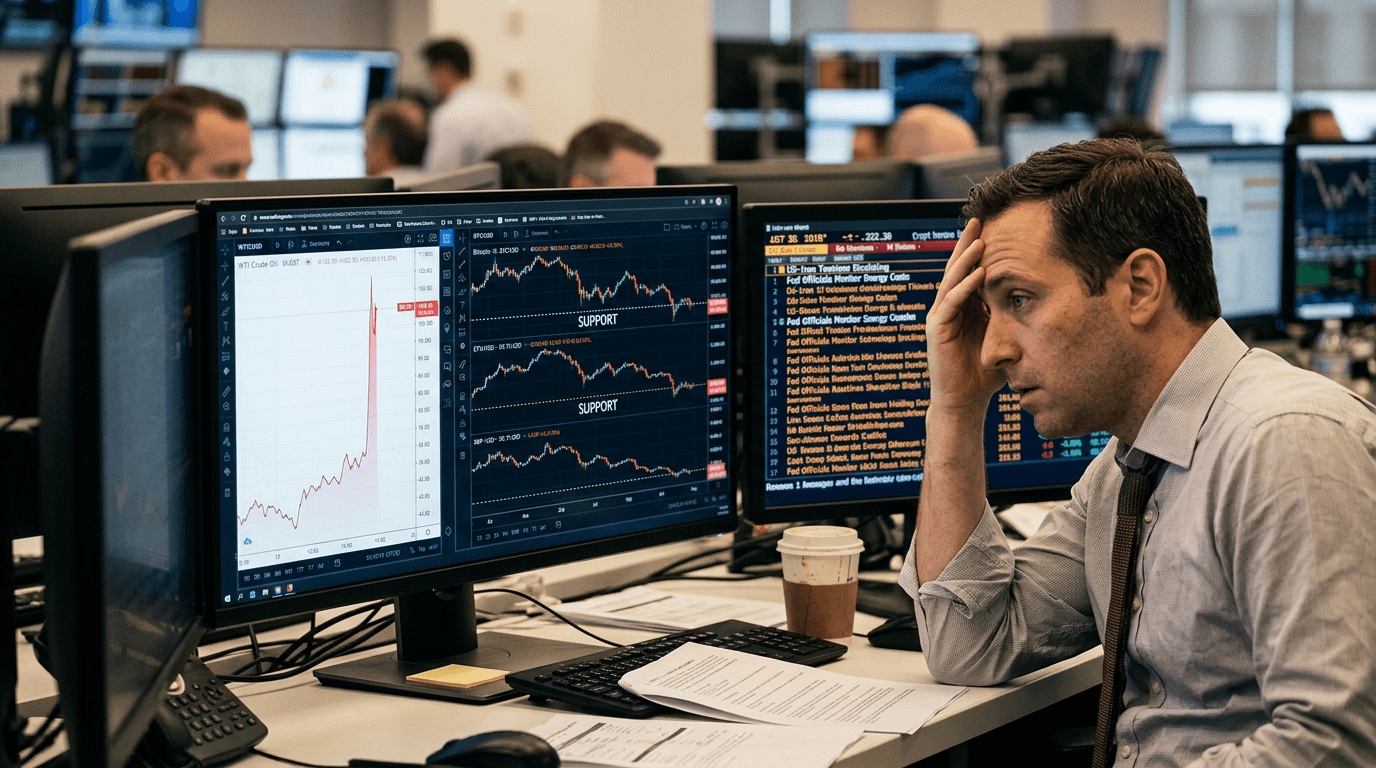
The cryptocurrency market is navigating turbulent waters as Bitcoin, Ethereum, and Ripple struggle to maintain critical support levels amidst escalating tensions between the United States and Iran. With Bitcoin precariously perched above $71,000, Ethereum hovering around $2,000, and XRP steadying at $1.35, traders are grappling with uncertainty over whether these digital assets can withstand renewed selling pressure and broader macroeconomic challenges stemming from an extended geopolitical conflict that has reshaped market dynamics over the past two months.
Geopolitical Catalyst And Market Reaction
The current upheaval in the crypto market can be traced back to intensified military actions launched by the United States and Israel on February 27 and 28, 2026, under an operation known as Shield of Judah. President Trump authorized significant combat operations targeting Iran's missile sites, naval forces, and nuclear infrastructure spread across multiple cities. This led to a swift and severe market reaction, with Bitcoin dropping 6.4%, Ethereum falling 8%, and XRP plunging 9% within hours as traders scrambled to mitigate risks. This synchronized collapse highlighted a fundamental shift in modern cryptocurrency markets: digital assets now function as macro instruments linked to inflation expectations, energy prices, and overall risk sentiment rather than independent assets driven by unique fundamentals.
A brief period of hope emerged when a ceasefire was brokered through Pakistan on April 7, 2026. Bitcoin rose 2.2% to $71,416 within an hour, while Ethereum increased by 1.8%, as traders viewed the diplomatic breakthrough as a potential deterrent to further escalation. However, this relief was short-lived. The ceasefire, with its two-week expiration date based on Iran's 10-point proposal, offered little assurance of lasting peace. When US-Iran talks collapsed on April 13, oil prices surged, prompting a significant crypto selloff that drove Bitcoin from weekend highs near $74,000 down to intraday lows near $70,570.
Technical Vulnerabilities And Support Levels
The technical landscape for major cryptocurrencies presents a challenging scenario for bulls seeking recovery. Bitcoin's immediate support is around $67,800, with breaches potentially leading to declines toward the $65,800 to $65,000 range. If losses deepen, the mid-March base around $63,000 serves as the final major support before descending to levels last seen in early 2025.
Ethereum faces similar vulnerabilities. It has struggled to break through the $2,149 resistance level, indicating buyer reluctance at higher prices. The pullback toward $1,967 with $1,747 as the next critical support point reflects a lack of market confidence in higher valuations. Sustained movements below $1,747 could signify increased downside risk and potentially trigger further declines that test additional support zones.
XRP has experienced comparable pressures, maintaining a range-bound movement between $1.60 and $1.27 over the past six weeks since the conflict began. Despite repeated bounce-backs that prove its resilience, ongoing geopolitical risk remains a negative factor for price and market sentiment across the broader crypto and DeFi space.
Macroeconomic Implications And Monetary Policy Concerns
Beyond technical aspects, the market contends with inflation implications arising from elevated oil prices. Brent crude oil prices have surged beyond $103 per barrel, creating a risk-averse atmosphere that threatens key support levels. Traders fear that persistently high crude prices could sustain inflationary pressures, potentially forcing the Federal Reserve to maintain a restrictive monetary policy stance longer than previously anticipated. This scenario contradicts the liquidity conditions that typically support risk assets like cryptocurrencies.
When central banks maintain restrictive policies, access to cheap capital diminishes, making speculative assets less appealing to investors managing portfolio risk. This relationship between oil prices, inflation expectations, and Fed policy creates a challenging environment where cryptocurrency recovery becomes dependent on factors entirely outside the digital asset ecosystem itself.
Crucial Windows And Forward Guidance
The path forward depends heavily on developments beyond the crypto market. Oil price dynamics, central bank signals, and diplomatic progress between the United States and Iran will significantly influence cryptocurrency direction. Investors should carefully watch for any signs of progress toward lasting de-escalation or warning signs of renewed tensions during this critical period. If tensions ease and ceasefire agreements hold, market analysts suggest that safe-haven flows could rotate back into traditional risk assets, eventually benefiting cryptocurrencies. Lower oil prices would alleviate inflation pressures, potentially increasing the likelihood of more accommodative monetary policy that would support risk assets.
Conversely, any escalation would likely extend the risk-off environment and further test lower support levels. The interplay between military developments and central bank policy responses will determine whether crypto markets can mount a sustained recovery or face additional declines.
Strategic Takeaways For Traders
For investors navigating this turbulent environment, understanding the complex dynamics impacting cryptocurrency valuations during geopolitical conflict is vital for safeguarding investments and identifying recovery opportunities. Monitor oil price movements as a leading indicator for inflation expectations. Track Federal Reserve communications for signals about monetary policy stance adjustments. Watch technical support levels closely, as breaches could trigger cascading selling. Position sizing becomes crucial when external catalysts dominate price discovery rather than fundamental drivers.
The cryptocurrency market's vulnerability to geopolitical shocks underscores how interconnected global financial systems have become. Bitcoin, Ethereum, and Ripple remain caught between technical support levels and macro uncertainty, waiting for either diplomatic resolution or continued escalation to dictate their next significant move.