
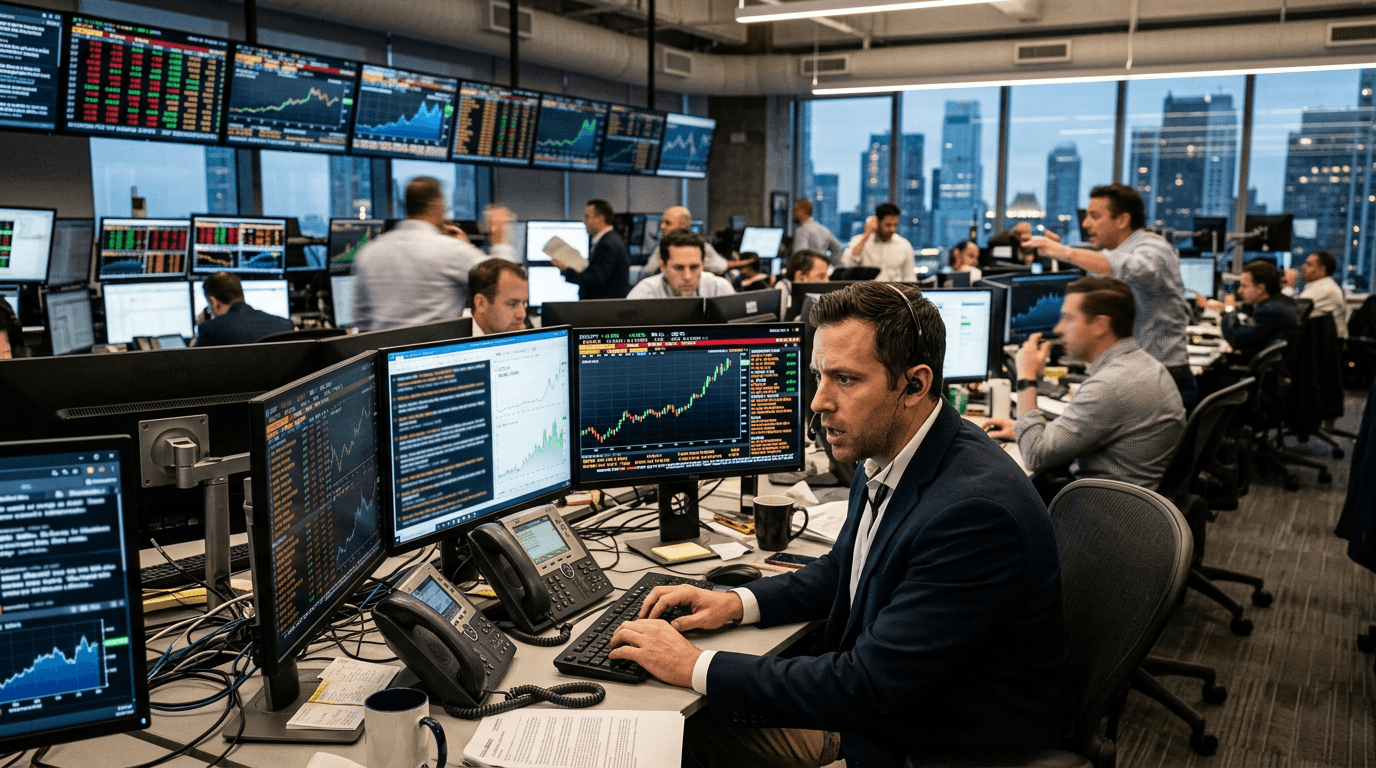
Investors are once again rushing into the U.S. dollar as Middle East tensions flare, pushing global markets into a distinctly risk-off mood.[1][7] The greenback has extended its safe-haven rally, with the dollar index climbing roughly 1.37% over the past week and reaching its highest levels in around four months, even as stocks, bonds and traditional havens like gold struggle to gain traction.[1][7] This dynamic is reshaping trading conditions across foreign exchange, equities, bonds and commodities, and it is a textbook example of how geopolitics can override fundamentals in the short term.
Safe-haven Flows And Risk-off Dynamics
To understand the current move, it helps to unpack what a “safe-haven rally” really means. Safe-haven assets are those investors turn to when uncertainty spikes, prioritizing capital preservation and liquidity over return.[6] In this episode, the U.S. dollar and U.S. Treasuries are acting as the primary refuges, reflecting their deep liquidity, global reserve status and perceived institutional stability.[1][6] As headlines around Middle East conflict and energy supply risks intensify, risk appetite has faded, and traders have rotated out of higher-yielding, risk-sensitive currencies into the dollar.[7][9]
The risk-off tone is reinforced by rising oil prices, which heighten global inflation worries and complicate the outlook for monetary policy.[1][4][7] Higher energy costs threaten to keep price pressures elevated, limiting the scope for central banks – particularly the Federal Reserve – to deliver aggressive rate cuts.[4][7] That mix of geopolitical uncertainty plus sticky inflation expectations strengthens the dollar’s appeal, because it combines safe-haven status with the potential for relatively higher real yields.[1][4]
Why The Dollar, Not Gold, Is Leading This Crisis
One striking feature of the current episode is that the dollar, not gold, has been the dominant early-stage haven.[1][6] While gold remains an important long-term store of value, short-term panic flows often favor the asset that offers maximum liquidity and ease of transaction – in other words, the dollar and the U.S. Treasury market.[6] The U.S. Treasury market is still the deepest pool of capital in the global financial system, capable of absorbing enormous inflows quickly when risk sentiment deteriorates.[6]
When capital needs to move fast, investors prioritize speed and familiarity over alternative stores of value.[6] That is why, during the ongoing confrontation in the Middle East, the dollar index has pushed higher even as some traditional havens and risk assets have underperformed.[1][7] For traders, this is a reminder that “safe haven” is not a static label; the preference can shift depending on whether the dominant concern is liquidity, inflation, or long-term systemic risk.
Fx Winners, Losers And The Role Of Rate Expectations
In foreign exchange, the strongest impact is visible in major USD pairs. The euro has slipped around 0.18% to roughly $1.1610, while sterling has dipped about 0.1% to $1.3358 as the dollar index pushes toward the 99 area.[1][7] These moves highlight a broad pattern: currencies of economies seen as more exposed to energy shocks or with less policy flexibility tend to weaken against the dollar when geopolitical tensions spike.[4][7]
At the same time, the yen – another classic haven – has seen more mixed performance, partly because of the interest-rate differential between Japan and the U.S.[5][7] When markets price in a Fed that stays “higher for longer,” the yield advantage on dollar assets can overshadow the yen’s safe-haven status, limiting its upside.[4][7] Risk-sensitive currencies such as emerging-market FX and commodity-linked units are also vulnerable as carry trades get unwound, volatility rises and funding in dollars becomes more expensive.[3][7] For traders, aligning FX positioning with both geopolitical risk and rate expectations is crucial in this environment.
Cross-asset Ripple Effects: Equities, Bonds, Commodities, Crypto
The dollar’s safe-haven rally is not just an FX story; it is rippling across asset classes. Equities have come under pressure as higher oil prices and geopolitical risk compress valuations and challenge growth assumptions.[1][4][7] Bonds are experiencing cross-currents: U.S. Treasuries benefit from haven demand, but inflation worries can push yields higher at the longer end, creating a complex curve shape for fixed-income traders to navigate.[4][7]
Commodities sit at the center of the crisis. War-driven oil rallies above key psychological levels intensify concerns over supply disruptions and second-round inflation effects.[2][4][7] Yet the stronger dollar can weigh on non-oil commodities priced in USD, from industrial metals to some agricultural products, by making them more expensive in local-currency terms.[4] Even in crypto, where narratives often focus on “digital gold,” recent price action has shown modest pullbacks after strong prior gains, as investors redistribute capital toward the dollar during peak uncertainty.[7] For multi-asset traders, this environment demands close attention to correlations, which can change quickly when stress is driven by geopolitics rather than pure macro data.
What Traders Can Do: Practical Playbook In A Safe-haven Rally
For active traders and those using simulated finance platforms like E8 Markets, this kind of environment is an opportunity to refine crisis playbooks without taking real-world balance-sheet risk. One immediate takeaway is the importance of position sizing and leverage: risk-off phases often come with sharp intraday moves, widening spreads and potential gaps, making conservative sizing and disciplined stop-loss placement essential.[1][3]
Second, it pays to think in scenarios rather than single-point forecasts. Traders can simulate different outcomes – for example, escalation with further energy disruption, or partial de-escalation and diplomatic progress – and observe how USD, oil, equities and high-beta currencies respond under each.[1][3][7] Scenario-based practice helps build intuition for how markets transition from pure panic to re-pricing and, eventually, normalization. Third, focusing on relative strength can be more effective than trying to time the absolute top of the dollar. Pairs where domestic vulnerabilities are most exposed (such as economies heavily reliant on imported energy) may offer clearer trend opportunities than major pairs where positioning is already crowded.[1][4][7]
WHAT COULD REVERSE THE DOLLAR’S SAFE-HAVEN RUN?
History shows that safe-haven rallies can reverse quickly when the underlying shock is perceived to ease. A previous example came when U.S. authorities delayed military strikes against Iranian infrastructure after constructive talks, triggering a rebound in risk assets and a pullback in the dollar as immediate supply-shock fears faded.[5] Once markets sense that worst-case scenarios are less likely, capital tends to rotate back into higher-yielding and growth-linked assets, and the dollar can surrender some of its haven premium.[3][5]
Looking ahead, three catalysts could meaningfully alter the current trajectory. First, any credible de-escalation in the Middle East – ceasefires, diplomatic breakthroughs, or secure energy corridors – would likely soften safe-haven demand.[1][5][7] Second, clear evidence that inflation is stabilizing despite higher oil, such as benign core inflation prints, could give central banks more room to ease without undermining credibility.[4][7] Third, changes in Fed communication that emphasize growth risks over inflation risks might reduce the dollar’s yield advantage, particularly against other developed-market currencies.[4] Traders should monitor these catalysts closely, as they will dictate whether the current dollar strength becomes a prolonged trend or a sharp but ultimately transient spike.
Looking Through The Volatility
For now, the U.S. dollar’s extended safe-haven rally underscores how quickly global markets can pivot from chasing carry to seeking shelter when geopolitical tensions rise.[1][7] For traders, the lesson is not simply “buy dollars in a crisis,” but rather to understand the underlying mechanics: liquidity preferences, energy-price shock channels, inflation expectations and policy responses all interact to shape the path of major assets.[1][4][6]
By using simulated environments to practice under stress, traders can develop robust frameworks that work across regimes – from risk-on melt-ups to risk-off flight-to-quality episodes. In an era where geopolitical risk is not an occasional disruption but a recurring feature of the landscape, having a well-rehearsed plan for navigating safe-haven flows is no longer optional; it is a core component of resilient trading.