
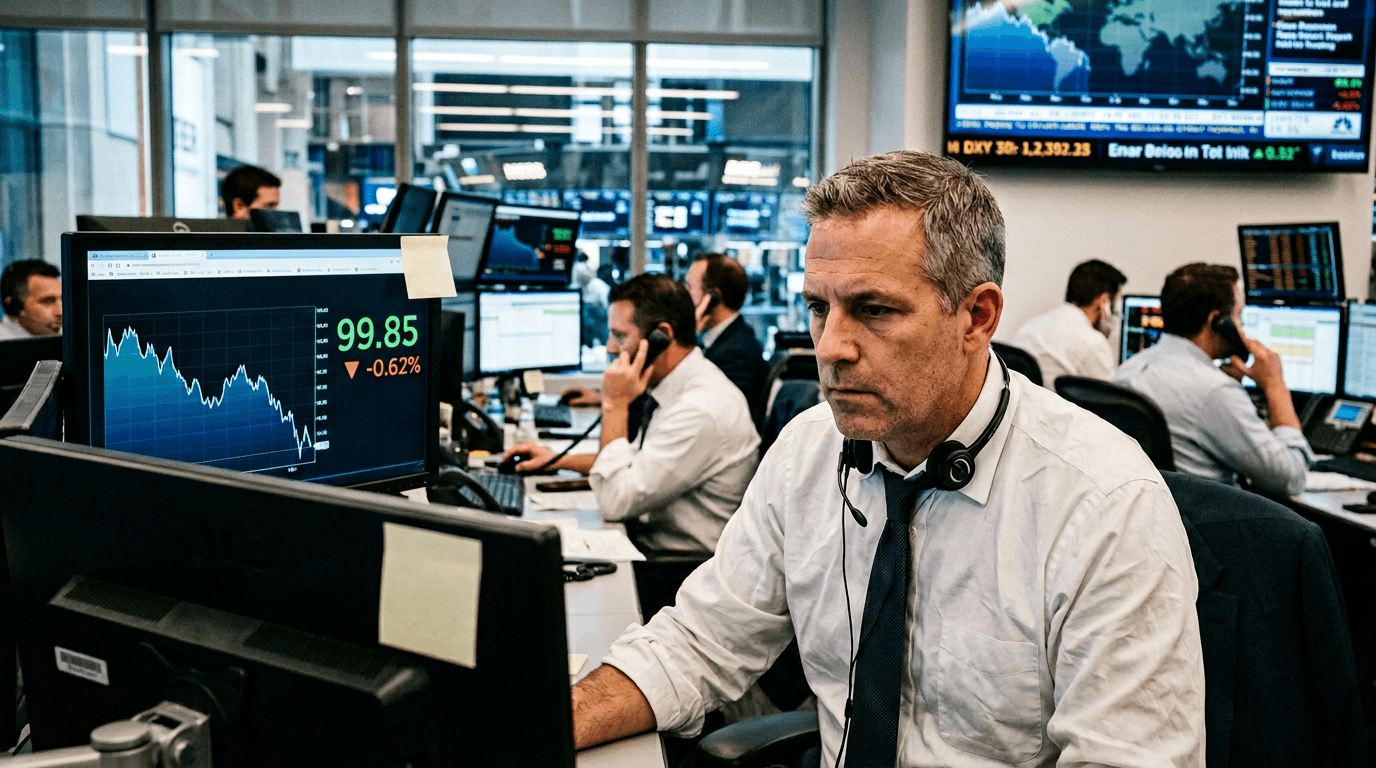
The U.S. Dollar Index has tumbled below 100 for the first time since the onset of the Hormuz Strait crisis, marking a significant shift in the forex markets as the safe-haven trade unwinds. With Iran declaring the strategic waterway fully open to commercial traffic, traders have quickly unwound conflict hedges, moving away from defensive dollar positions. This has sent the DXY down 0.5% intraday to its lowest since February 27, illustrating how swiftly market sentiment can change when geopolitical tensions ease, redirecting capital toward higher-yielding assets and growth opportunities.
The Strait Of Hormuz Reopening And Its Immediate Market Impact
The catalyst for this currency sell-off was Iran's announcement of the full reopening of the Strait of Hormuz, a crucial oil chokepoint responsible for about a fifth of the world's seaborne crude flows. During the conflict, this vital corridor was blockaded, causing severe supply concerns that pushed oil prices above $100 per barrel and drove investors to seek refuge in U.S. dollars and other safe-haven assets. The news of the reopening, coupled with a negotiated peace plan between Iran and the USA, sparked what analysts describe as a "geopolitical breakthrough sparking market euphoria."
The currency market reacted swiftly and negatively for dollar bulls. The DXY fell to levels unseen in over a month, with technical indicators confirming a bearish trend through key moving average crossovers. The drop in oil prices dragged the dollar down as it relinquished gains accumulated during the period of uncertainty. Currency pairs like EUR/USD rose above 1.18, returning to levels seen before the Middle East conflict, when market narratives focused more on anticipated U.S. interest rate cuts rather than geopolitical risks. The dollar faced widespread pressure against other major currencies as safe-haven flows reversed and investors shifted back to riskier assets.
Why The Dollar's Conflict Premium Evaporated So Quickly
The rapid reversal of the dollar highlights a key aspect of currency markets: the longevity of safe-haven trades is dependent on the persistence of the threats they hedge against. According to Jayati Bharadwaj, head of foreign exchange strategy at TD Securities, "Safe-haven buying has begun to fade. That is the reason for the dollar's decline." During the conflict, the dollar was bolstered by geopolitical uncertainties, benefiting from rising oil prices which reinforced its safe-haven status compared to the yen and franc, while also supporting U.S. energy exporters and necessitating dollar accumulation by oil importers.
Once the Strait of Hormuz reopened and headlines shifted from escalation risks to ceasefire mechanics, the entire rationale for safe-haven dollar positions unraveled. Traders moved from short-term hedging to focusing on medium-term rate expectations and growth differentials. This shift reflected a logical recalibration: with stable energy prices and ongoing de-escalation, the justification for maintaining defensive dollar positions vanished. Investors began pricing in a durable ceasefire and negotiations toward a broader agreement, fundamentally altering their valuation of the dollar relative to other currencies.
Monetary Policy: The Next Driver Of Dollar Momentum
With the conflict premium dissipating, monetary policy has re-emerged as the primary driver of currency volatility. Market positioning has already shifted significantly regarding U.S. rate expectations. The swap market has ceased pricing in U.S. rate hikes entirely, while the European Central Bank shows a 98% probability of a hawkish 25 basis point increase in July. ECB officials have reinforced this hawkish stance, creating an expanding divergence between expected monetary policy paths across the Atlantic.
This policy differential is crucial for EUR/USD and broader dollar trends. Before the conflict, the prevailing scenario involved further Federal Reserve rate cuts, which would have pressured the dollar downwards. Now, with geopolitical stress removed, that pre-war rate-cut scenario is reasserting itself while the ECB maintains a hawkish stance. If the ceasefire holds and energy prices stabilize, strategists at major banks warn that the dollar may continue to weaken as investors rebuild positions in risk assets and the Fed's dovish bias becomes the main narrative.
Key Takeaways For Traders And Investors
The dollar's drop below 100 shows how quickly geopolitical risk premiums can reverse. For traders, the lesson is to recognize when the fundamental thesis behind a position has changed. The war premium was justifiable amid conflict and uncertainty, but once de-escalation became tangible, that premium turned into a liability. Moving forward, the durability of the ceasefire and energy price stability will be key in determining whether the dollar's decline persists or reverses.
The trajectory of U.S. and European monetary policy will shape the next phase of dollar performance, with the Fed's dovish stance posing challenges for the greenback relative to a hawkish ECB. Position accordingly.