
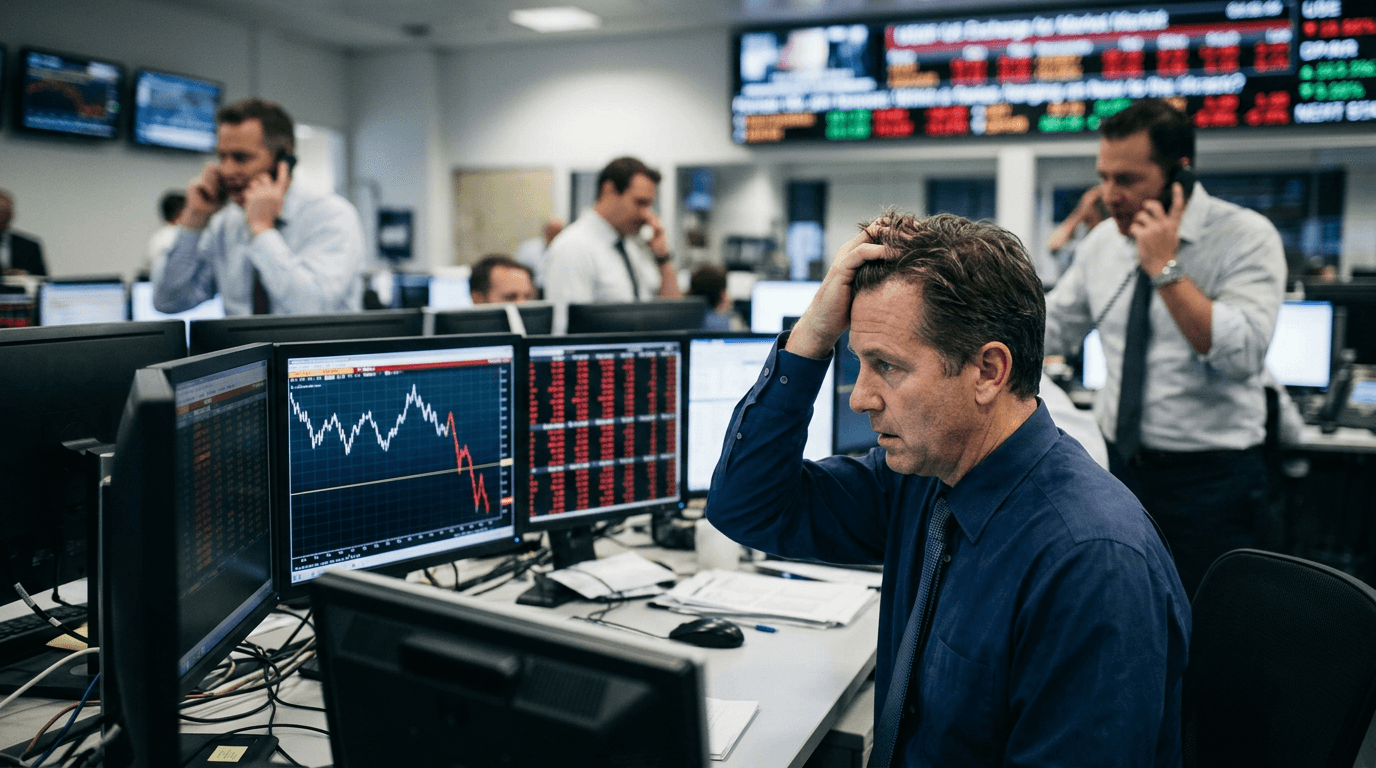
The US Dollar Index recently fell below the 100 mark for the first time since July 2023, a significant development for currency traders and global markets. This drop signifies more than just a routine fluctuation; it highlights a fundamental reassessment of the risk factors that have bolstered the dollar in recent months. As the DXY hovers near multi-month lows and approaches crucial support levels, it's imperative for traders and investors to grasp the underlying causes of this decline and anticipate what may unfold next.
The dollar's plunge below 100 is particularly notable because it was trading near five-month highs just days before. This sharp reversal wasn't gradual—the dollar has dropped approximately 2.5% in recent sessions, marking one of the most significant weekly declines in recent history. Furthermore, the dollar is down 7.3% from its 2025 peak on January 13th, showcasing a significant loss of value in a short period. This sudden shift has left traders questioning the fundamental factors behind such a dramatic turnaround.
Driving Forces Behind The Dollar's Decline
The main catalyst for the dollar's sharp drop is a reassessment of trade and tariff policies, coupled with broader economic concerns. Initially, traders shrugged off tariff announcements, but as details of implementation emerged and potential economic consequences became apparent, investor sentiment shifted dramatically. Concerns about tariffs have led some market participants to fear that these policies could slow US economic growth and reduce expected returns on dollar-denominated investments, prompting a move away from the greenback.
Compounding these concerns, comments from President Donald Trump about potential changes to Federal Reserve leadership have sparked additional unease. The central bank's independence is crucial for market stability, and any perceived threat to that independence can trigger risk-aversion. European funds, in particular, have started selling their dollar-denominated debt holdings, reducing overall demand for the currency. This mix of policy uncertainty and changing investor positioning has created a perfect storm for dollar weakness.
Interestingly, this decline is occurring against a backdrop of rising US interest rates. Historically, higher US Treasury yields support dollar strength as investors seek higher returns. However, the fact that the dollar is weakening even as US rates rise suggests the sell-off is driven more by risk-aversion and changing expectations about future economic growth than traditional interest rate dynamics.
Technical Breakdown And Crucial Levels
From a technical standpoint, the break below 100 is a significant level that traders have been closely monitoring. The index is now testing key support zones around 96.50 to 97.00, aligning with 2025 lows established earlier this year. How the dollar behaves around these levels will be crucial in determining whether this decline is a temporary correction or the start of a more sustained downtrend.
The technical landscape has shifted dramatically. The dollar recently traded near 99.50, with bulls attempting to push the index higher, but bear divergences and deteriorating fundamentals halted the advance. A consolidation range between 96.80 and 97.30 is highly probable in the near term, especially with the Federal Reserve's next interest rate decision approaching. Resistance levels to watch include 98.00, 98.80-99.00, and 99.40-99.50, while support extends down to 96.20 and ultimately 95.00 as a psychological level.
Implications Of The Fomc Meeting
The timing of this dollar breakdown is significant as it coincides with growing anticipation around the Fed's next policy decision. Markets have been positioning for potential rate cuts, and the dollar weakness suggests traders are increasingly comfortable with scenarios involving lower US interest rates. However, the outcome of the FOMC meeting will likely prove decisive in determining the dollar's direction moving forward.
If the dollar closes above 97.00 after the FOMC meeting, analysts anticipate a gradual but consistent rebound toward 99.00. Conversely, a break below that level could pave the way for the dollar to test its 2025 lows. The key question for traders is whether the current slowdown in the downtrend will become a genuine buying opportunity or merely a pause before further weakness.
Implications For Traders And Investors
For traders, this moment presents both risk and opportunity. The dollar's technical breakdown suggests caution is warranted for those holding significant long dollar positions, while those looking to establish short positions must respect the support levels currently in place. For investors with international exposure, a weaker dollar could enhance returns from foreign assets, though this benefit must be weighed against currency volatility.
The broader implication is that geopolitical and policy uncertainty has once again become the primary driver of currency markets, superseding traditional interest rate differentials. As markets seek clarity on trade policies and Federal Reserve direction, volatility is likely to remain elevated.
The US dollar's decline below 100 marks a crucial inflection point that traders will be closely monitoring in the coming sessions.